The era of searching for a local SIM card or paying exorbitant daily roaming fees while traveling abroad may soon be a relic of the past. SpaceX has officially received the green light from the Federal Communications Commission (FCC) to provide international telecommunications services, marking a significant shift in its strategy to transform Starlink into a global mobile carrier. By moving beyond its current domestic partnership with T-Mobile, SpaceX is positioning its satellite constellation to act as a universal network that bypasses the traditional constraints of ground-based infrastructure.
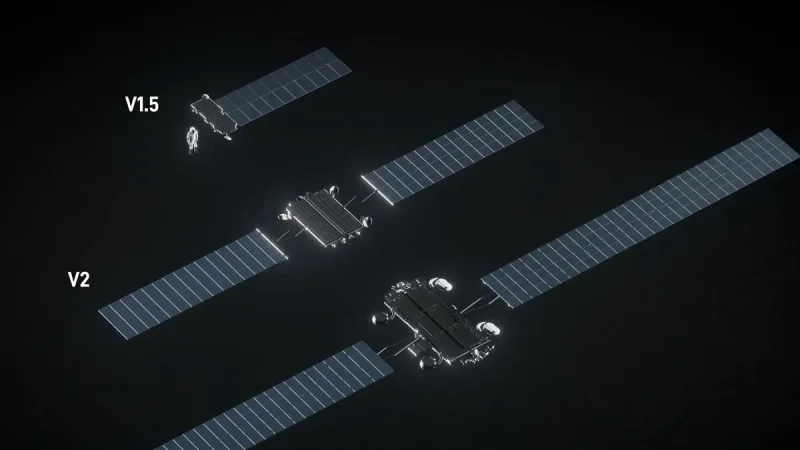
While current satellite-to-phone efforts, such as the collaboration with T-Mobile, focus primarily on emergency messaging and basic connectivity in remote dead zones, the long-term roadmap is far more ambitious. SpaceX is currently deploying upgraded satellites engineered to function as orbital cell towers, aiming to deliver 5G-level performance directly to standard, unmodified smartphones. The company claims these systems could eventually reach download speeds of up to 150 Mbps, a massive leap that would make high-definition video streaming and app usage possible from anywhere on the planet.
The Global Roaming Revolution
The true value proposition of Starlink Mobile lies in its potential to offer a single, unified global plan. Unlike traditional carriers that rely on a patchwork of international roaming agreements and local partnerships, SpaceX owns and operates the infrastructure providing the signal. CFO Bret Johnsen has emphasized that this native global roaming capability is a cornerstone of the company's strategy, designed to make cellular dead zones an engineering problem of the past rather than a common consumer frustration.
This aggressive expansion is already underway beyond North America. SpaceX has solidified an alliance with Japanese telecommunications giant KDDI to launch 'Starlink Mobile V2.' The company asserts that this new iteration will offer a 100-fold increase in data density compared to previous tests, finally enabling reliable voice calls and data throughput that feels indistinguishable from a standard terrestrial 5G connection.
Can Satellites Really Replace Cell Towers?
Despite the enthusiasm, the industry remains divided on whether satellites can truly compete with the sheer capacity of terrestrial networks. Legacy carriers like AT&T and Verizon argue that the physics of space-based signals cannot match the density and reliability of localized cell towers. The concern is that as more users connect to the same orbital beam, bandwidth will inevitably throttle, potentially leading to a lackluster experience in densely populated urban centers.
To bridge this gap, reports suggest SpaceX is developing small-scale ground equipment known as femtocells to supplement its satellite coverage. While this hybrid approach is designed to bolster capacity, it has sparked skepticism among telecom analysts who question the logistics of deploying such hardware at scale. Nevertheless, with the regulatory authority now in hand, SpaceX is moving rapidly to establish operational footholds across Latin America, Europe, Asia, and Africa. Whether or not it can dismantle the dominance of established terrestrial carriers, the push for a truly global, satellite-powered mobile network is no longer a theoretical concept - it is a race that has already begun.