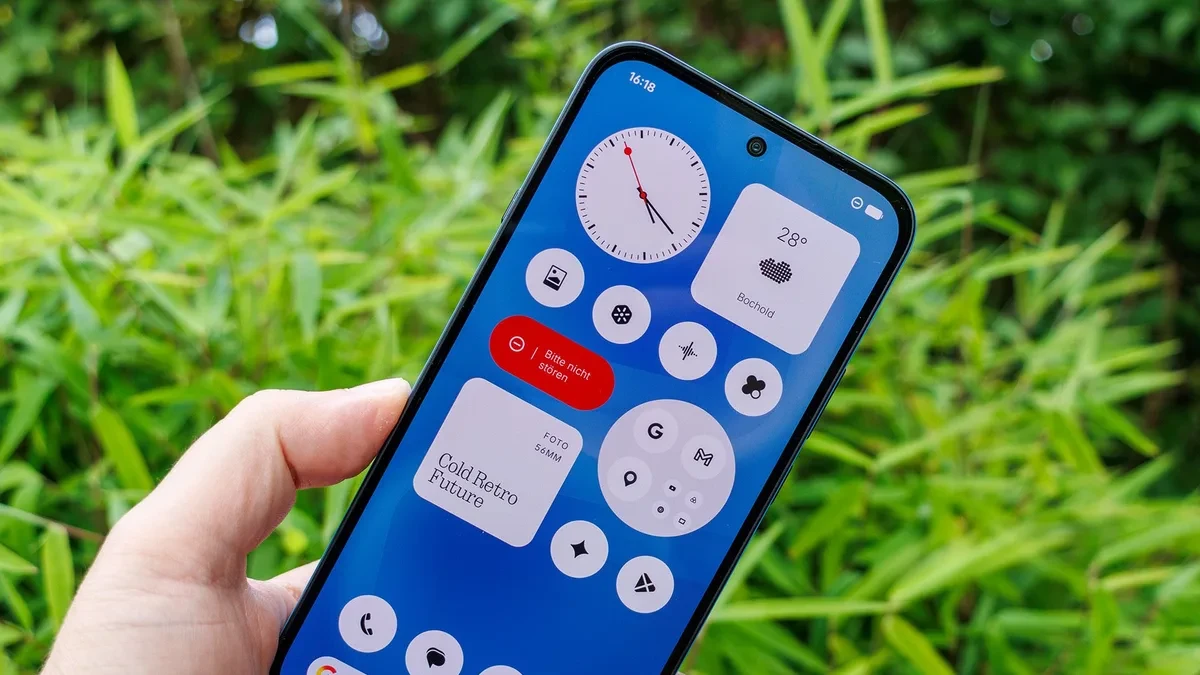
The smartphone industry remains locked in an escalating numbers race over display brightness, with manufacturers regularly touting specs reaching 2,000 or even 3,000 nits. Nothing claims a peak brightness rating of 2,000 nits for the 6.77-inch AMOLED panel on the Nothing Phone (4b). However, objective laboratory testing reveals a noticeably different reality once the device steps outside ideal testing conditions.
In real-world measurements, the display on the Nothing Phone (4b) maxes out at 1,160 cd/m² (nits). While this output provides plenty of luminance for standard indoor reading, media consumption, and casual web browsing, it falls significantly short of the figure plastered on promotional sheets. Users who routinely rely on their smartphones for midday turn-by-turn navigation, framing camera shots in bright sunlight, or reading lengthy messages outdoors will find the panel reaching its practical limits sooner than expected.
The Gap Between Marketing Specs and Sustained Brightness
To understand why the Nothing Phone (4b) delivers 1,160 nits during standardized testing instead of the claimed 2,000 nits, it helps to understand how manufacturers calculate brightness metrics. Promoted peak brightness numbers are almost exclusively measured across a tiny window of the display, known as a small Average Picture Level (APL), usually representing just 1 percent to 5 percent of the screen area for a brief fraction of a second during HDR playback.
Sustaining 2,000 nits across the entire 6.77-inch surface would generate excessive heat and drain the battery at an unsustainable rate. As a result, the display controller throttles total output to protect internal hardware. While 1,160 nits is by no means dark for a mid-range device, the gap between theoretical lab peaks and real-world full-screen performance highlights why specification sheets can often be misleading for everyday buyers.
Display Quality, Refresh Rate, and Eye Comfort
Beyond maximum brightness, the AMOLED display on the Nothing Phone (4b) presents a solid visual package. The 120 Hz dynamic refresh rate delivers smooth UI transitions, fast scrolling, and responsive touch feedback during mobile gaming. Colors appear rich and vivid, with deep contrast levels that make movie playback engaging indoors or in shaded environments.
However, sensitive users should take note of the panel's pulse-width modulation (PWM) frequency. The Nothing Phone (4b) utilizes a PWM dimming rate of 480 Hz to control screen brightness at lower levels. Compared to rival devices offering high-frequency PWM dimming at 1,920 Hz or 3,840 Hz, a 480 Hz frequency may induce subtle flicker that leads to eye strain or headaches for users prone to screen fatigue during late-night reading sessions.
Practical Usability and Market Context
Evaluating a smartphone display requires balancing real-world utility against marketing claims. For general daily routines, including indoor productivity, social media browsing, and video streaming, the display on the Nothing Phone (4b) performs comfortably well. The 6.77-inch canvas offers ample screen real estate without feeling unwieldy.
Where the device compromise becomes obvious is during direct sun exposure. If your daily workflow involves frequent outdoor photography or outdoor field work, panels with higher sustained full-screen luminance will provide superior legibility. Global pricing for the Nothing Phone (4b) generally places it in the competitive mid-range market, starting around $380 (roughly €350 / 2,700 Yuan). At that price point, 1,160 nits of actual sustained brightness remains respectable, but buyers should evaluate the phone based on real-world test figures rather than high marketing claims.