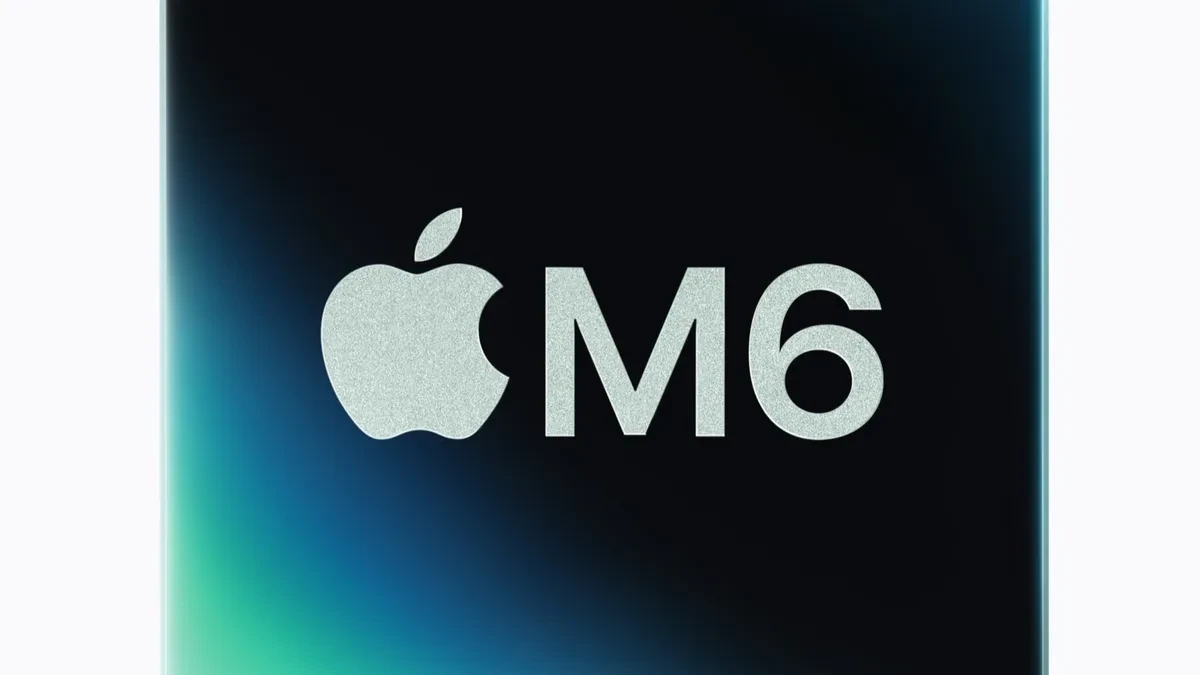
The landscape of mobile computing silicon is shifting again as fresh benchmark data suggests Apple has achieved a significant leap in efficiency and power with its upcoming M6 processor. A recent Geekbench 7 result for an M6-powered Mac mini indicates that the chip is capable of rivaling the multi-core performance of the M3 Max, a professional-grade chip that previously sat atop Apple's performance hierarchy.
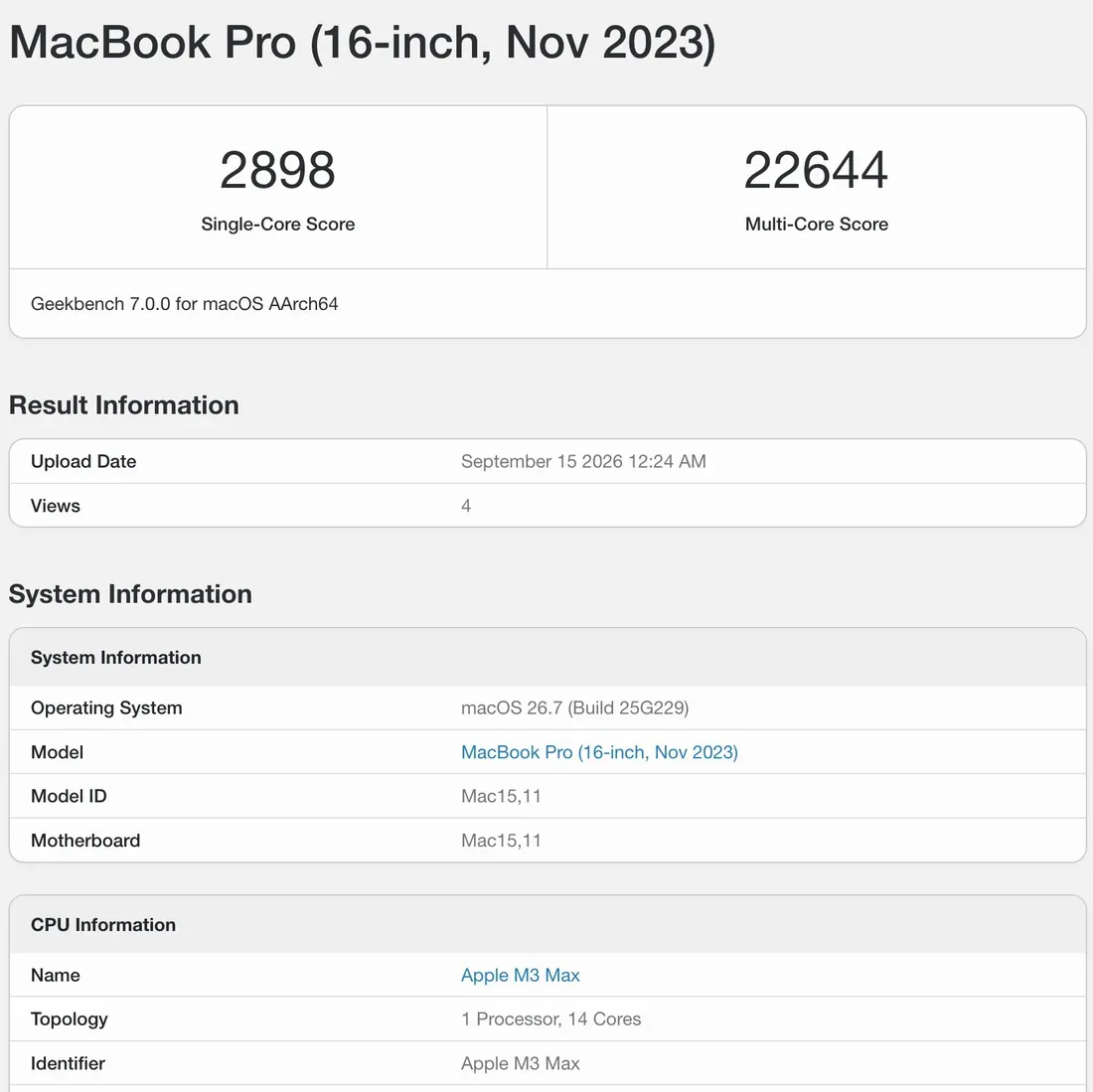
This latest test recorded a multi-core score of 22,783, narrowly edging out the 22,644 score typically seen from the M3 Max found in the 2023 MacBook Pro. What makes this feat particularly noteworthy is the architectural difference: the M6 utilizes a 12-core design, whereas the M3 Max relies on a 14-core configuration. This implies that Apple's new 'super core' architecture is delivering substantial gains in per-core efficiency, allowing for higher throughput with fewer physical cores.
Rethinking Core Efficiency
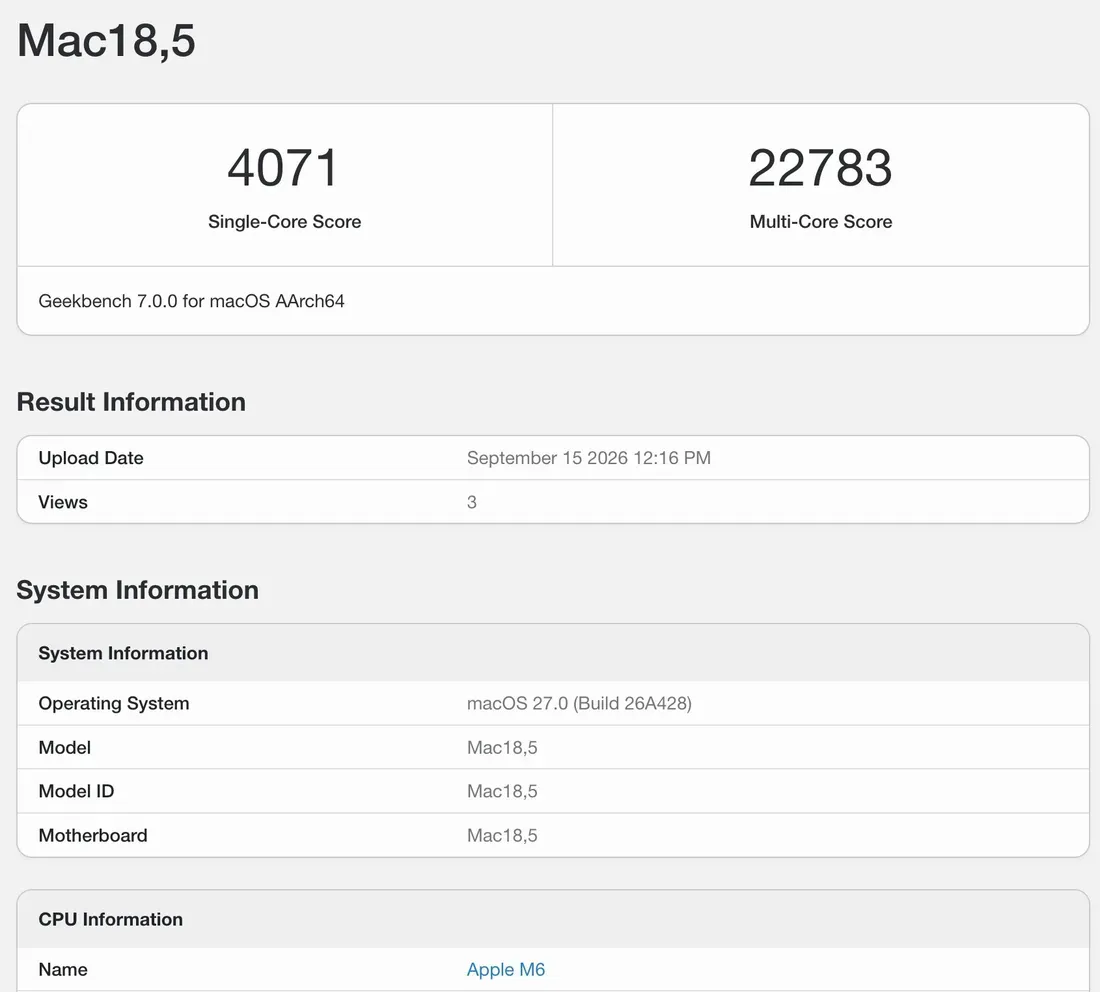
The M6's configuration consists of two super cores, four performance cores, and six efficiency cores. By contrast, the M3 Max utilizes 10 performance cores and four efficiency cores. The ability of a 12-core design to surpass a 14-core predecessor highlights that raw core count is no longer the sole metric for performance. Apple appears to be prioritizing the individual power of its high-performance cores, likely utilizing a refined manufacturing process to squeeze more operations per clock cycle.
While the single-core score of 4,071 in this latest test fluctuated slightly from previous reports, the consistency in multi-core output confirms that the M6 is not just an incremental update. For users who rely on heavy multitasking, video rendering, or complex software development, this transition suggests that even entry-level or mid-tier Mac hardware will soon handle workloads that previously required a costly 'Max' series chip.
Availability and Market Impact
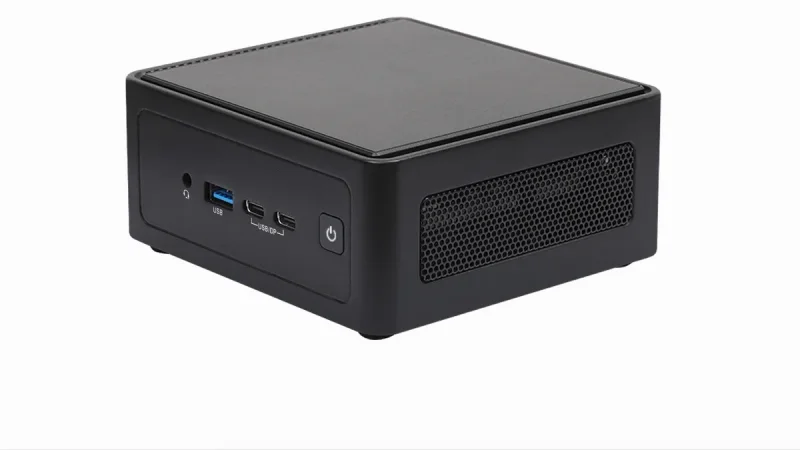
For those looking to integrate this hardware into their workflow, the wait is nearly over. The new Mac mini featuring the M6 chipset is scheduled for release on September 22nd, with a starting price of $899. This pricing strategy positions the M6 as a compelling value proposition, especially for professionals who need high-end performance without the premium cost associated with the MacBook Pro line.
As benchmarks continue to surface, the real-world application of these chips will be the test. If the M6 can sustain these thermal and performance levels during extended rendering tasks or gaming sessions, it may force a reassessment of what 'professional' performance actually requires in a compact desktop form factor. With the official launch just around the corner, the industry will soon see if these synthetic gains translate into everyday productivity dominance.