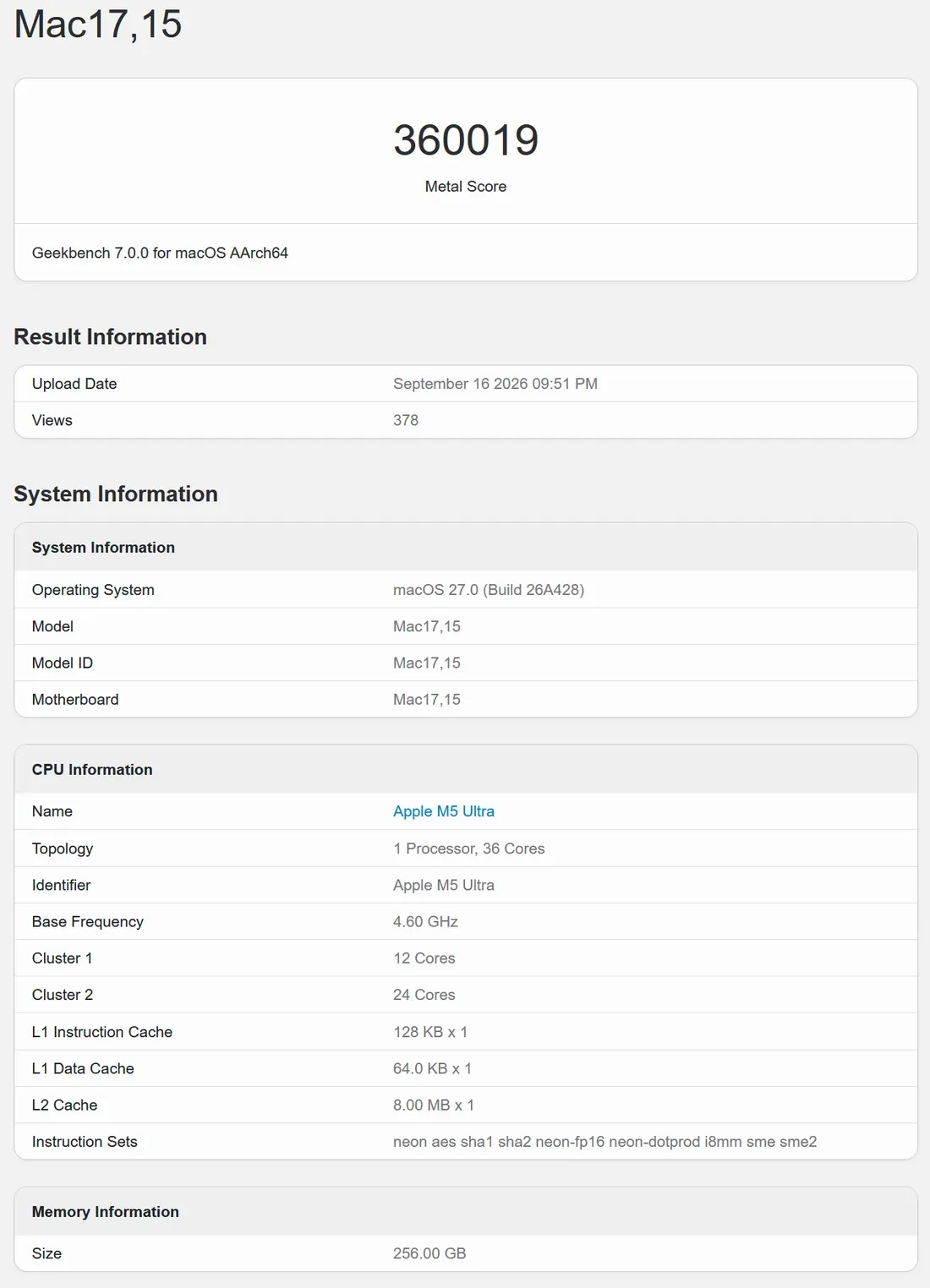
The of Apple silicon is beginning to take shape, and the latest data suggests a significant performance trajectory for the company's high-end workstation chips. A new entry for the unreleased Apple M5 Ultra has appeared in the Geekbench 7 database, revealing a formidable 360,019 score in the Metal graphics benchmark. This figure provides the clearest look yet at the potential power residing within Apple's upcoming flagship hardware.
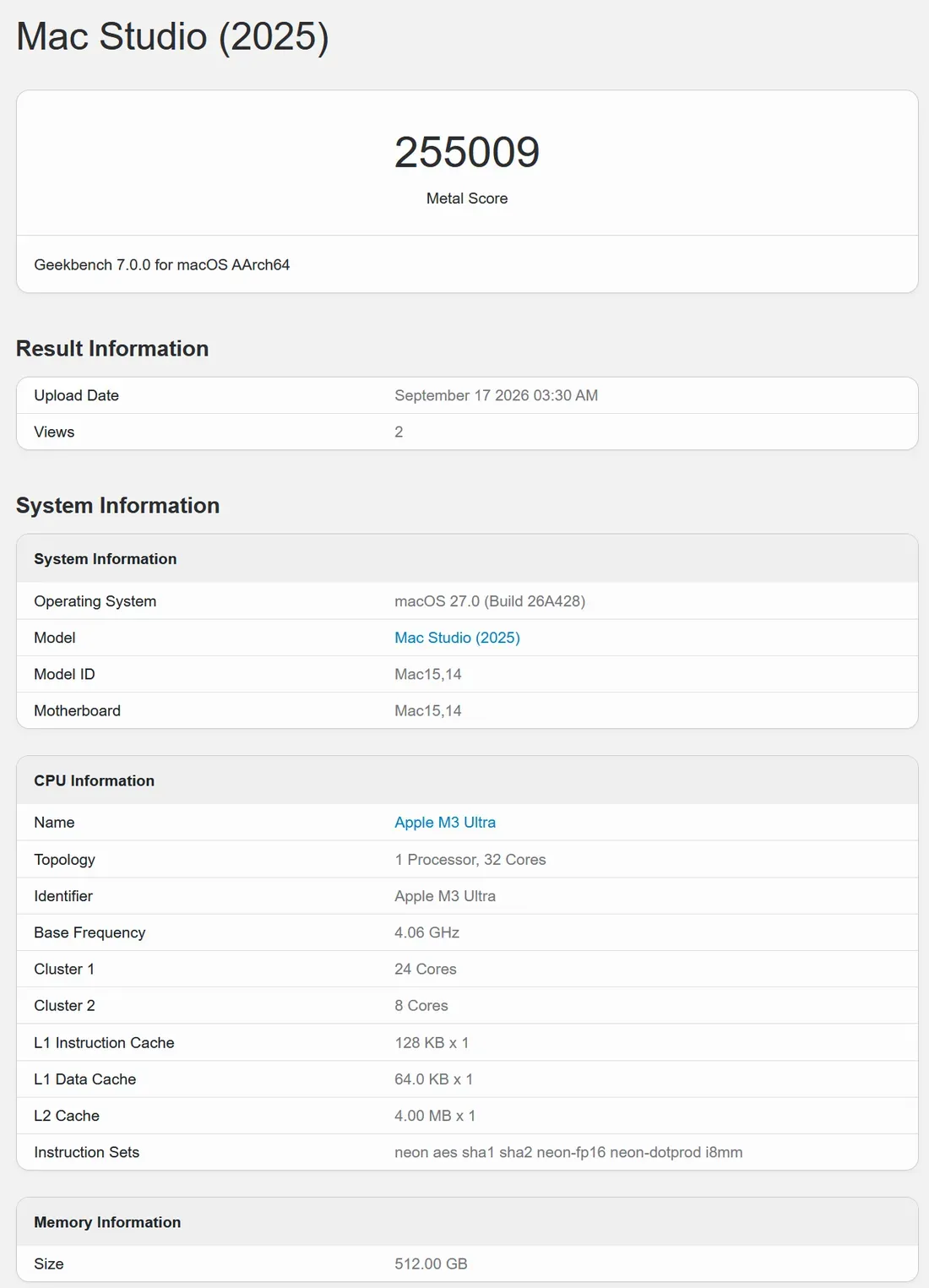
Tested inside a Mac Studio configuration equipped with 256 GB of unified memory, the M5 Ultra utilized a 40-core GPU setup to achieve these results. When placed alongside the previous generation M3 Ultra, which managed a score of 255,009 in the same testing environment, the new silicon demonstrates a roughly 41% performance increase. This substantial uplift suggests that Apple is prioritizing meaningful generational gains for its creative and professional-focused desktop lineup.

Understanding the Metal Benchmark Context
While a 41% improvement in the Metal API is eye-catching, it is important to contextualize what this score represents. Geekbench 7's Metal test is specifically optimized for Apple's graphics architecture, meaning it excels at highlighting how well software interacts with Apple's proprietary hardware. Because it is a platform-specific benchmark, these numbers do not provide a direct comparison against discrete desktop graphics cards from industry rivals like Nvidia or AMD.
To understand how the M5 Ultra will perform in cross-platform professional workflows, we will need to wait for benchmarks that utilize OpenCL or Vulkan. These tests will offer a more balanced view of how the M5 Ultra handles raw compute tasks when compared to the broader PC ecosystem. Nevertheless, the current results confirm that the chip is hitting its performance targets with significant headroom.
A Balanced Look at the Architecture
The tested M5 Ultra unit features a 36-core CPU, divided into 12 high-performance cores and 24 efficiency-focused cores. This architectural split, combined with the 40-core GPU, indicates that Apple is leaning into a highly refined multi-core strategy designed to balance heavy compute tasks with power efficiency.
It is worth noting that benchmark scores from pre-release hardware should be viewed with a degree of caution. Thermal conditions, the state of current macOS software optimization, and run-to-run variances can all influence the final output. However, coupled with earlier CPU-centric leaks, the current data suggests that the M5 Ultra is shaping up to be a substantial upgrade for those relying on the Mac Studio for intensive video rendering, 3D modeling, and complex data processing. As development continues, the focus will shift toward how this thermal efficiency translates into sustained workloads in real-world professional environments.