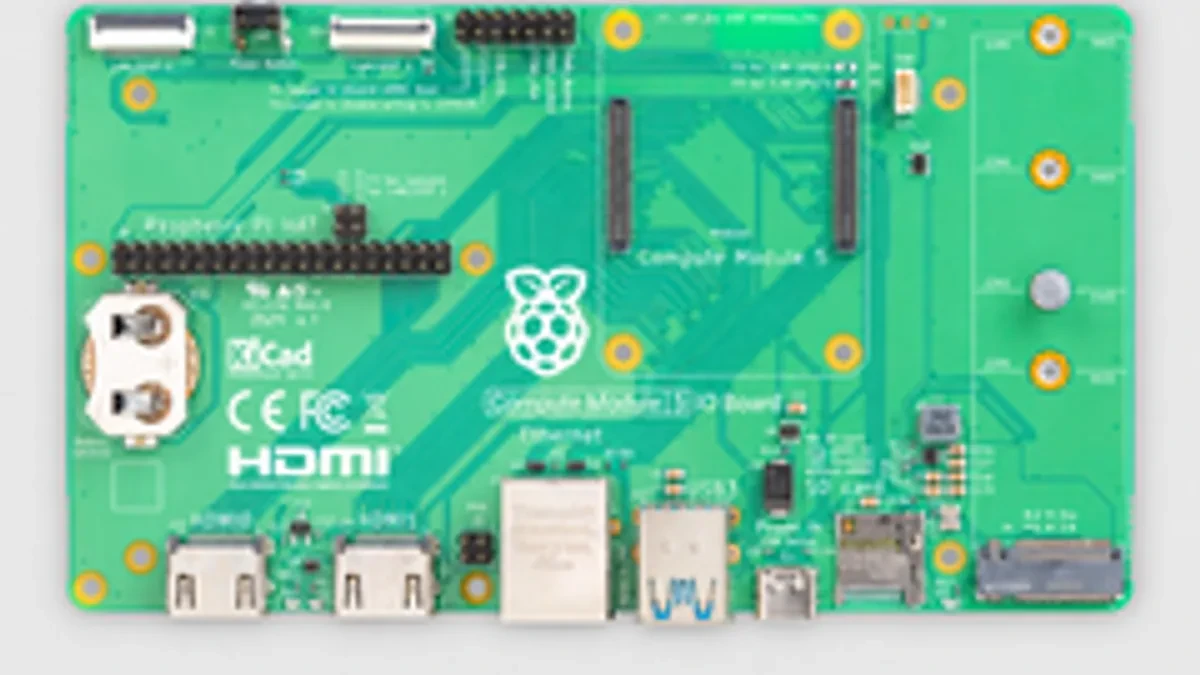
Raspberry Pi is deliberately preventing some newer boards from recognising upgraded memory, even when a replacement chip is technically compatible. The policy affects enthusiasts working with devices such as the Compute Module 5 and can stop a 2 GB board from becoming an 8 GB model after a difficult soldered-memory replacement.
There is no announced price change behind the move. Instead, Raspberry Pi says the restriction is meant to discourage unofficial high-capacity resales and limit support problems caused by modified hardware that has not passed the company's validation process. For most owners, it changes little. For repair specialists and hardware tinkerers, it closes one of the few remaining paths to extend a board's useful life.
Why Raspberry Pi is blocking the upgrade path

The policy came to light after a user attempted to upgrade the RAM on a Compute Module 5. The original 2 GB memory package was replaced with a known-good 4 GB chip taken from another CM5, yet the system continued to recognise only 2 GB.
Raspberry Pi engineer and forum moderator PhilE explained that newer devices can be locked to the memory capacity they had when they left the factory. The stated reason is commercial and practical: third parties could buy lower-capacity boards, fit cheaper memory from uncertain sources, and resell them as higher-capacity models.
Those modified boards would not have gone through Raspberry Pi's validation process. If unstable memory later caused crashes or other faults, customers could still blame the company and request support. Raspberry Pi also says it buys memory in high volumes under negotiated commercial terms, leaving little legitimate financial incentive for most users to perform the upgrade themselves.
This is more than a simple capacity lock

The restriction is not limited to a stored 2 GB, 4 GB or 8 GB label. Raspberry Pi says it now programs additional memory information into some systems because it must support a growing number of SDRAM suppliers and configurations.
That information includes memory density, organisation, timing and tuning parameters. As a result, even a replacement chip carrying the same part code may not work reliably. A memory transplant can be viable as a repair in some circumstances, but swapping in a different compatible chip with the same capacity is not guaranteed to succeed.
Moving officially supported memory between boards with different capacities also does not create a straightforward upgrade route. A chip that works in an 8 GB board cannot simply be expected to turn a 2 GB board into an 8 GB model.
What the policy means for enthusiasts

Physically replacing Raspberry Pi memory was never a casual weekend upgrade. The LPDDR package is soldered directly to the board, so the job requires BGA rework equipment, precision and considerable experience. Unlike a conventional desktop DIMM, the memory cannot be removed by opening a latch and inserting a replacement module.
That technical barrier limits the number of people affected, but it does not make the policy irrelevant. Raspberry Pi boards are widely used by people who repair, repurpose and experiment with compact computers. A board that could once be viewed as a platform for advanced modification is now more tightly tied to its original factory configuration.

The policy also creates a clearer distinction between repair and enhancement. Replacing a failed memory package with an identical, supported part may still work, but increasing capacity is intentionally blocked on affected devices. Owners considering a used board should therefore treat its advertised RAM configuration as fixed and verify that the capacity matches their needs before buying.
A trade-off between support control and repairability

Raspberry Pi's reasoning is understandable from a support and resale perspective. Unvalidated memory combinations can create failures that are difficult to reproduce, while misleadingly upgraded boards could damage customer confidence in the platform.
However, the decision also reduces the flexibility that has made Raspberry Pi hardware attractive to technically skilled users. The company is choosing predictable configurations and clearer product boundaries over an enthusiast upgrade path that was already difficult but technically possible in some cases.
For ordinary buyers, the practical advice is simple: choose the required RAM capacity at purchase and do not assume that a compatible replacement chip can provide a future upgrade. For repair specialists, the message is even more direct. On affected Raspberry Pi devices, memory replacement may remain possible as a repair, but higher-capacity modifications are no longer a dependable route.