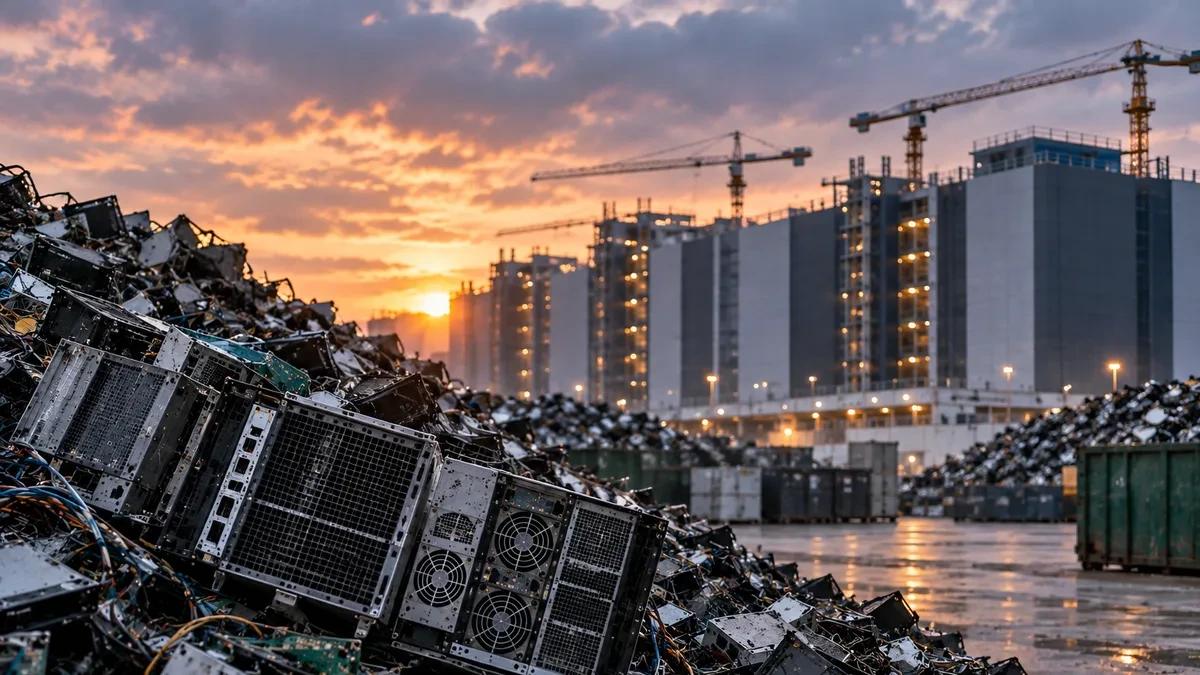
The frantic race to build artificial intelligence data centers is threatening to trigger a massive ecological backlash. According to a striking projection from environmental nonprofit Basel Action Network (BAN), hardware churn driven by AI computing could generate up to 13 million metric tonnes of electronic waste annually by 2030, potentially tripling global e-waste output over the next 25 years.
While public discussions around the environmental footprint of artificial intelligence often focus on massive electrical draw and cooling water consumption, the physical hardware required to run these workloads represents an urgent hardware retirement dilemma. With technology companies swapping out heavy-density server racks every two to five years, hyperscale operators risk overwhelming global recycling supply chains with discarded silicon, heavy metals, and physical infrastructure.
The Physical Scale of the AI Hardware Boom
The total volume of discarded components envisioned in the BAN study extends far beyond standard enterprise server replacements. Running large language models requires specialized high-density hardware stacks, including AI accelerator GPUs, high-speed optical switches, custom liquid cooling loops, power distribution units, and heavy-gauge copper cabling. A single fully populated modern server rack can weigh up to 1,360 kilograms (3,000 pounds), making infrastructure upgrades far heavier in physical mass than traditional cloud data center installations.

Market analysts project that tech companies will add roughly 100 gigawatts of new computing capacity globally by 2030. To illustrate the physical scale of this expansion, the BAN report notes that the total volume of hardware discarded over the coming decades could fill enough standard shipping containers to circle the Earth six times over.
The Two-Year Replacement Cycle Problem
At the center of this rapid waste curve is an aggressive silicon replacement schedule. Fueled by rapid architectural advancements from chipmakers like Nvidia, AMD, and Intel, data center operators are shortening equipment lifecycles down to two to five years. The primary goal is maintaining maximum compute density and energy efficiency per square foot of real estate, leading companies to replace functional hardware rather than designing platforms for long-term component reuse or modular repair.
This hardware turnover is not restricted to commercial data facilities. The report highlights a secondary hardware cycle expanding to personal electronics, where localized AI features are pushing consumer upgrades for dedicated AI PCs, smartphones, and home networking equipment.

Hazardous Materials and Low Recycling Efficiency
The core environmental threat stems from what happens after hardware is decommissioned. Server racks and supporting systems contain toxic heavy metals such as lead, cadmium, and mercury, along with synthetic PFAS chemicals found in direct-to-chip liquid cooling systems and circuit boards. Although retired assemblies hold valuable precious metals including gold, copper, and rare earth elements, economic and technical hurdles keep recovery rates low.
Currently, only about 20 percent of global electronic waste is formally collected and recycled, according to environmental estimates. The remaining 80 percent is frequently routed to informal scrap facilities or municipal landfills, where toxic elements risk contaminating local soil and water tables. Environmental advocates argue that without standardized modular hardware guidelines and mandatory manufacturer take-back programs, the rapid expansion of AI infrastructure will leave a substantial toxic legacy long before the end of the decade.