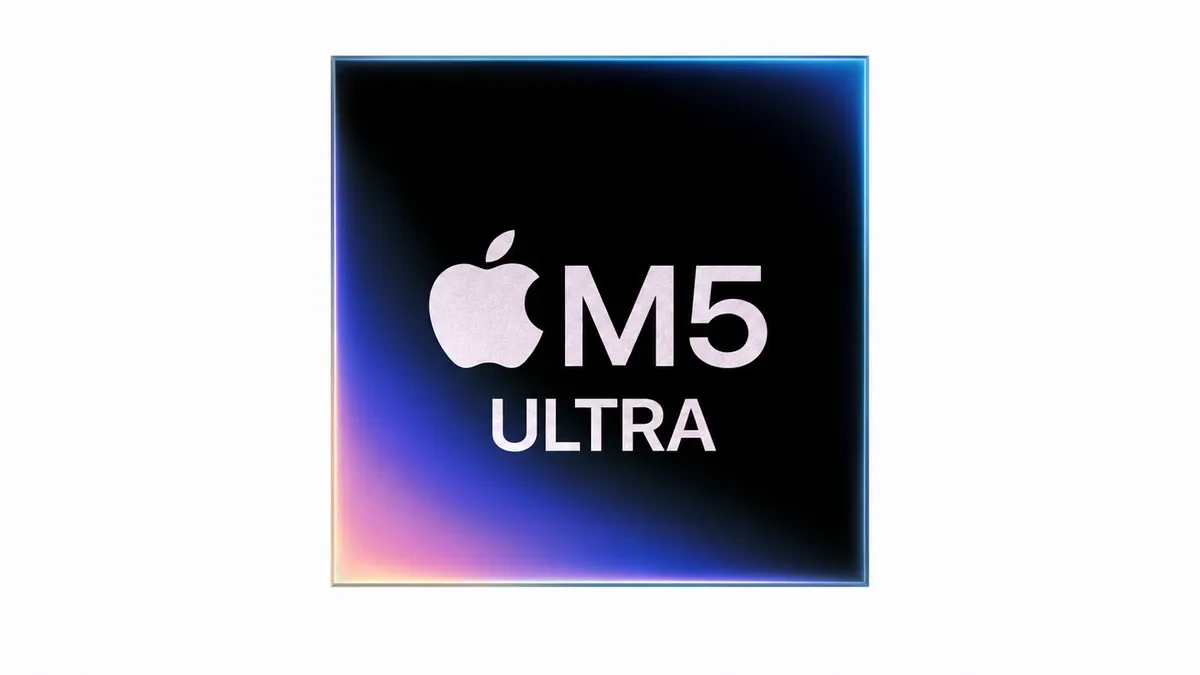
The landscape of desktop computing is shifting as Apple's latest silicon pushes into territory once reserved exclusively for specialized workstation hardware. A recently surfaced Geekbench 7 result for the 36-core M5 Ultra reveals a chip that is not just an incremental upgrade, but a serious contender against enterprise-grade processors from AMD. Found within a test unit of what is likely the upcoming Mac Studio, this silicon is paired with 256 GB of unified memory and is running macOS 27.0.
At the heart of this performance is a 36-core architecture, split into 12 high-efficiency cores and 24 performance cores, capable of reaching a peak clock frequency of approximately 4.6 GHz. In the latest Geekbench 7 multi-core benchmark, the chip posted a staggering 52,516 points. This result aligns with internal performance projections suggesting a 30 percent improvement over the M3 Ultra, effectively positioning the M5 Ultra as a viable alternative for heavy-duty creative and scientific workloads.
Challenging the Threadripper Hegemony
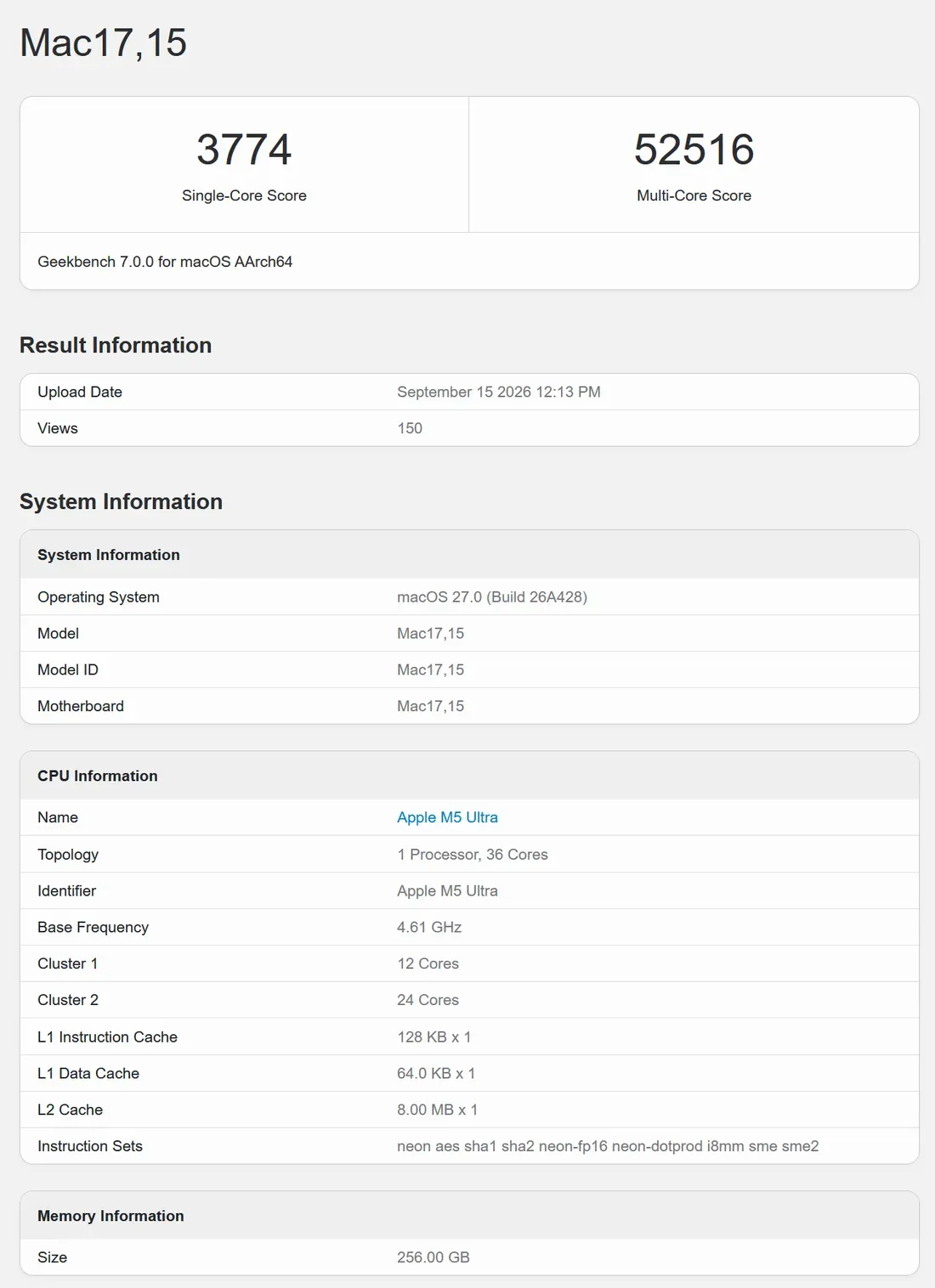
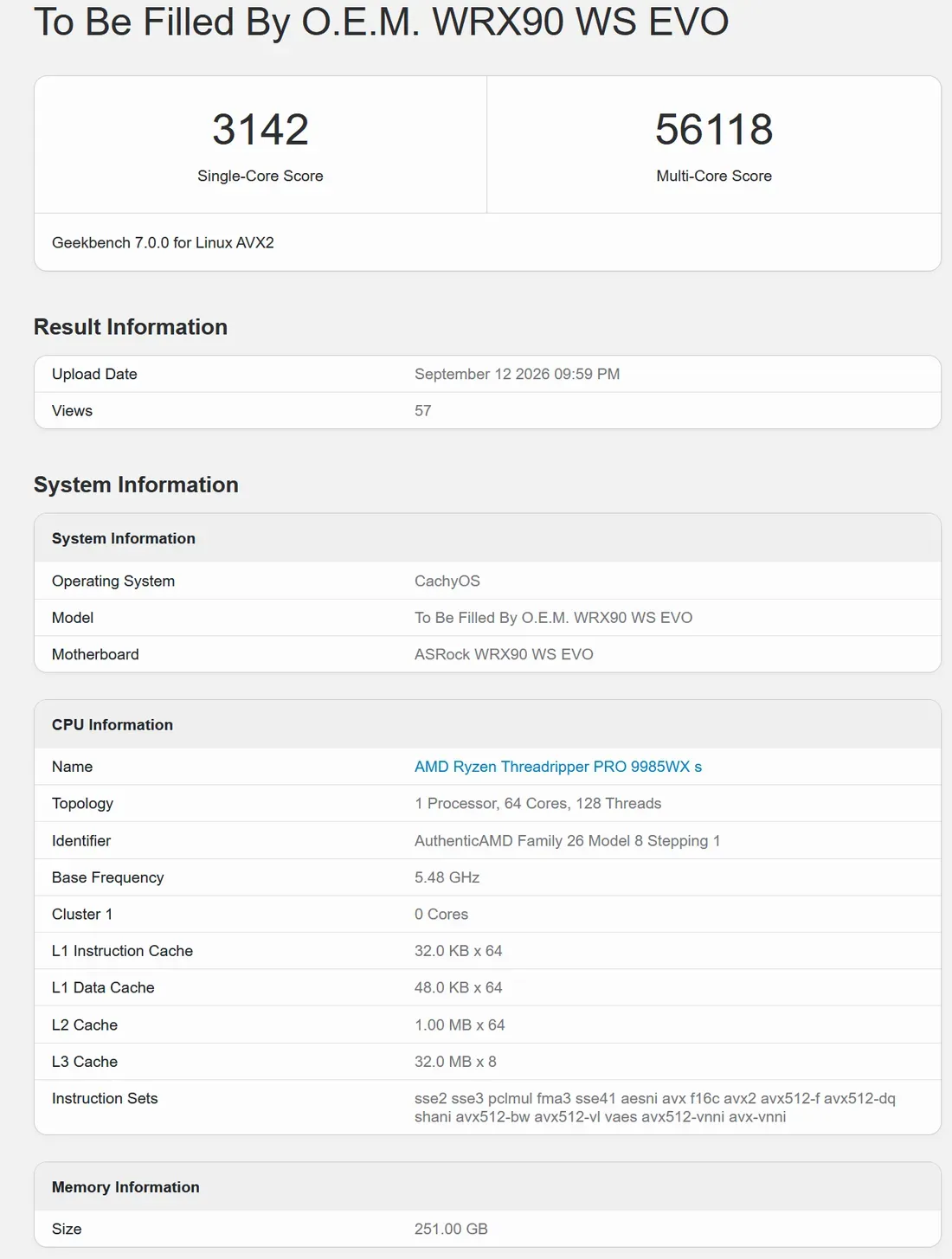
The most striking aspect of these benchmarks is how the M5 Ultra stacks up against AMD's Threadripper Pro series, which has long been the gold standard for high-end workstation performance. When compared to the 64-core AMD Ryzen Threadripper Pro 9985WX, the M5 Ultra trails by only about 6.4 percent. Perhaps even more impressively, the 36-core Apple chip actually edges out the 96-core Threadripper Pro 9995WX in specific runs, showcasing the efficiency and raw throughput of Apple's unified memory architecture.
While Geekbench provides a snapshot of performance, it is important to contextualize these numbers. Synthetic benchmarks do not always account for the thermal headroom or sustained load handling required by professional workstations. The 96-core Threadripper chips are designed for massive parallelization that goes beyond the scope of a standard benchmark. Nevertheless, seeing a compact desktop chip from Apple hold its own against platforms that require massive cooling and multi-socket setups marks a turning point in silicon engineering.
A Foundation for Future Servers
Looking beyond the current M5 Ultra, these results provide a glimpse into Apple's roadmap for high-performance computing. The efficiency demonstrated here serves as a baseline for the rumored M7 Ultra, which is expected to support up to 1.5 TB of unified memory. By pushing memory capacity to these levels, Apple is clearly positioning its silicon to compete in the server and data center space.
As the industry moves toward more specialized, localized AI processing and heavy simulation tasks, the ability to pack such high performance into a power-efficient, unified architecture offers a distinct advantage for developers and power users. While the M5 Ultra may not replace every multi-socket server in existence, it certainly forces a conversation about the necessity of massive, power-hungry workstation towers in modern professional workflows.