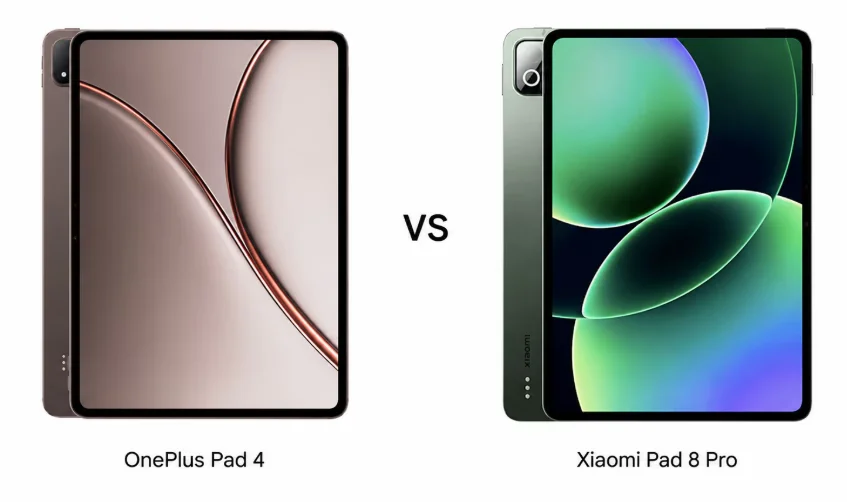
The android tablet comparison between the OnePlus Pad 4 and Xiaomi Pad 8 Pro highlights two distinct approaches to premium tablets in 2026. Whether you prioritize a massive immersive screen or portability combined with balanced power, both models offer impressive features worth considering.
Display and Design: Size vs Portability
The OnePlus Pad 4 stands out with its enormous 13.2-inch IPS display, delivering sharp visuals with Dolby Vision support, a 144Hz refresh rate, and peak brightness up to 1000 nits. Its aluminum body is ultra-thin at 5.9mm but weighs 672g, making it heavier for handheld use over extended periods.
In contrast, the Xiaomi Pad 8 Pro opts for a more portable form factor, weighing under 500g with a denser 3:2 aspect ratio display optimized for reading and productivity. It also features convenient additions such as a side-mounted fingerprint scanner and magnetic stylus integration, enhancing ease of use on the go. Related coverage: Xiaomi Pad 8 Pro vs iPad Air 11 (2026):.
Performance and User Interface
The OnePlus Pad 4 is powered by the Snapdragon 8 Elite Gen 5 chipset paired with Adreno 840 graphics, delivering superior raw performance for gaming, AI tasks, and multitasking. OxygenOS 16 offers a clean, smooth user interface with minimal distractions.
Xiaomi’s Pad 8 Pro, equipped with the Snapdragon 8 Elite chipset, remains a powerful contender but slightly trails in CPU and GPU benchmarks. Its HyperOS 3 system emphasizes ecosystem connectivity but has a busier visual style. The Xiaomi tablet also supports an optional 16GB RAM variant, appealing to users needing extra multitasking flexibility. For more context, you may also want to read OnePlus 11 vs OnePlus 13 vs OnePlus 15: Should You Upgrade.
Battery Life and Accessories
Battery endurance is a clear dividing factor. The OnePlus Pad 4 houses a massive 13,380mAh battery paired with 80W fast charging, designed for heavy users who demand all-day performance without frequent recharging.
The Xiaomi Pad 8 Pro, with its 9,200mAh battery and 67W charging, balances efficiency with portability. Its reverse wired charging adds versatility, allowing it to charge other devices in a pinch. Both tablets support stylus accessories, but Xiaomi’s ecosystem integration and magnetic stylus attachment provide a slightly smoother experience.
Camera and Multimedia Capabilities
While tablets generally aren’t camera-centric devices, the Xiaomi Pad 8 Pro offers a notable advantage with its 50MP rear camera featuring PDAF and a 32MP ultra-wide front camera. This setup is well-suited for video conferencing, document scanning, and content creation.
The OnePlus Pad 4 provides a simpler 13MP rear and 8MP front camera configuration sufficient for basic needs. However, it excels in multimedia audio with an 8-speaker setup delivering immersive sound and Dolby Vision-enhanced video playback, making it ideal for movies and gaming.
Pricing and Value Proposition
The Xiaomi Pad 8 Pro is priced around $500 / ₹47,000, offering flagship performance, strong cameras, and premium build at a more accessible cost. It suits users seeking a lightweight, versatile tablet without compromising power.
The OnePlus Pad 4 commands a higher price near $630 / ₹60,000, targeting users who prioritize a larger display, longer battery life, and superior audio for productivity and entertainment. It appeals to power users willing to invest in a premium experience.
Choosing Between the Two Android Tablets
For those valuing expansive screen real estate and robust battery life, the OnePlus Pad 4 presents a compelling choice, especially for productivity and immersive entertainment. Meanwhile, the Xiaomi Pad 8 Pro delivers a balanced blend of portability, camera capabilities, and ecosystem convenience at a lower price point.
Your decision ultimately depends on whether you prioritize mobility or endurance and which features align best with your daily tablet usage.
(Via)