Huawei is pitching its so-called “Tao Law” as an alternative path for the semiconductor industry stuck at the limits of transistor miniaturization. This matters because the old playbook of “smaller is better” is hitting a wall — and chipmakers need fresh ideas if they want to keep pushing performance.
- Huawei’s Tao Law focuses on reducing signal delay inside chips, not just shrinking transistors.
- Logic folding, a core Tao Law concept, compacts chip circuits into stacked layers, shortening signal travel time.
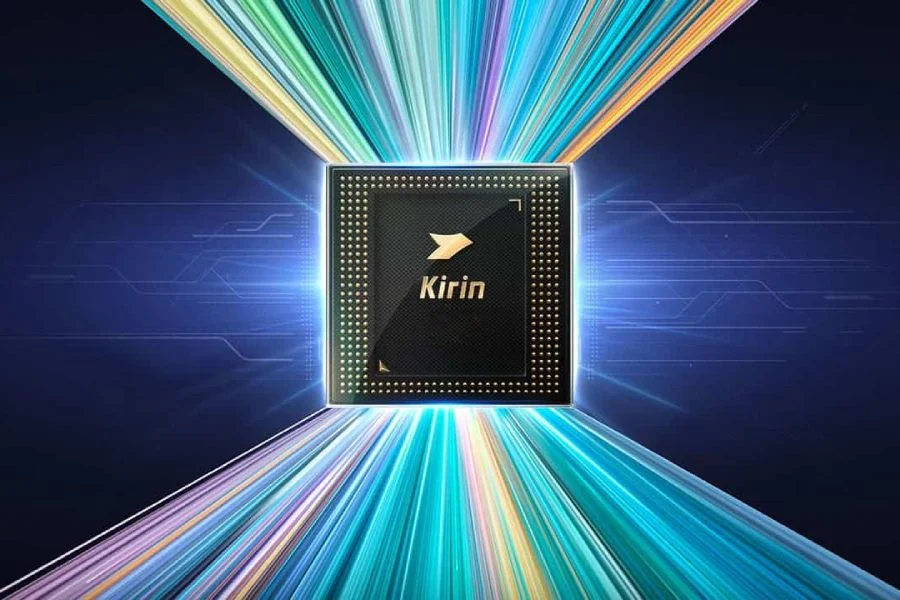
- The upcoming Kirin 2026 chip is reportedly the first commercial product using this approach.
- Huawei claims this could deliver transistor density comparable to a 1.4nm process by 2031 — without physically making transistors that small.
Flagship Power, Mid-range Compromises: What Tao Law Actually Means
Moore’s Law has been the semiconductor North Star for decades — more transistors packed into smaller spaces meant faster, more efficient chips. But the catch is simple: this geometric shrinkage is getting prohibitively expensive and physically brutal to pull off.
Huawei’s Tao Law pivots from shrinking geometry to “time shrinkage” — cutting down how long signals take to zip through circuits. The idea is that if signals get where they need to go faster, overall chip speed and power efficiency improve.
Logic Folding: Folding Roads Instead of Shrinking Cars
The logic folding concept is the heart of Tao Law. Imagine a straight, long road folded neatly into layers so cars reach destinations quicker without actually making the cars smaller. That’s what Huawei wants to do with chip logic — stack and fold circuit paths to reduce latency.
This isn’t just a single-layer trick. Huawei says it applies logic folding across devices, circuits, chips, and even entire computing systems. The company claims 381 chips using ideas linked to Tao Law have already been designed and produced over six years — but details remain scarce.
Kirin 2026: The Testbed for Tao Law’s Promise
The Kirin 2026 mobile chip is slated to be the first commercial rollout of logic folding. Huawei promises better performance and energy efficiency, but how much better remains to be seen. Early reports suggest this chip will be the real proof point — or failure — for Tao Law’s viability.
Huawei also asserts that chips designed under Tao Law might hit transistor densities equivalent to an advanced 1.4nm process by 2031. Don’t hold your breath for actual 1.4nm fabs, though — this is about smarter architecture, not physical transistor size.
Why This Still Feels Like a Long Shot
Huawei’s approach is intriguing, but it’s unproven outside theory and internal prototypes. Signal delay reduction has limits, and stacking layers risks complexity and heat issues. Plus, the broader semiconductor ecosystem still relies heavily on shrinking nodes.
The company’s call for industry collaboration is a tacit admission this problem can’t be solved in isolation. Without buy-in from fabs, design houses, and tool makers, Tao Law might remain just another chip theory.
GizmoIndo’s Take
Huawei’s Tao Law is an ambitious pivot in a stubborn industry. Based on the spec sheet and early claims, it could extend the life of Moore’s Law by sidestepping physical scaling challenges. But the catch is that the semiconductor world is notoriously conservative and slow to adopt unproven methods.
Real-world gains depend on execution — and Huawei’s Kirin 2026 chip will be the first real test. If it delivers on performance and efficiency, expect other players to at least explore similar concepts.
For consumers, this means the chip race might slow down but won’t stall. For the industry, it’s a reminder that innovation increasingly hinges on architectural creativity, not just transistor count.
(Via)