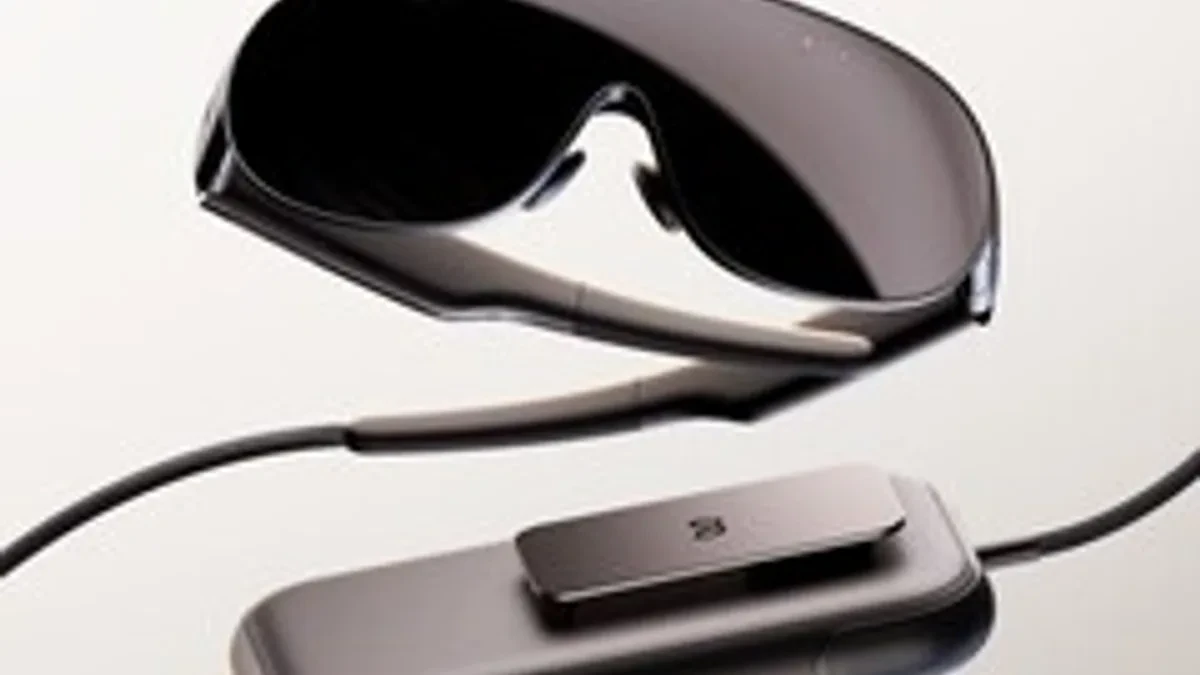
Meta has unveiled the Meta VR Glasses, a lightweight wearable designed to drastically reduce head-mounted weight by shifting power delivery to an external unit. Weighing just 100 grams (3.5 oz)-less than half the weight of an iPhone 18 Pro-the headset targets long virtual work sessions and immersive media consumption without the facial pressure typical of traditional virtual reality hardware. Global pricing has not yet been announced.
The reduction in physical bulk represents a significant shift in Meta's hardware engineering strategy. Rather than cramming heavy lithium-ion cells and active thermal solutions into the main visor, Meta moved the battery off the face entirely into a tethered external pack. This design choice delivers a dramatic drop in weight while maintaining high-end visual and audio performance for spatial computing tasks.
High-Density 5K OLED Visuals and Premium Audio Standard
Despite its featherweight frame, the Meta VR Glasses do not sacrifice display quality. The headset features 5K OLED micro-displays engineered to deliver deep contrast, crisp text rendering, and vibrant color output critical for virtual workspace productivity and high-definition video playback. High pixel density in near-eye optics helps minimize the screen-door effect that plagued earlier wearable generations, making extended reading and multi-monitor virtual setups significantly easier on the eyes.
To match the display pipeline, the Meta VR Glasses come certified with Dolby Vision, Dolby Atmos, and IMAX Enhanced standards. This audiovisual suite ensures dynamic contrast tuning and multi-channel spatial sound for compatible content. For remote professionals running virtual desktop environments or users looking for a portable personal theater, the inclusion of cinema-grade standards positions the device directly against traditional spatial monitors.
Tethered Battery Architecture and Ergonomics
The defining engineering choice of the Meta VR Glasses is its tethered power setup. The device connects via a thin cable to an external battery unit that supplies up to three hours of continuous runtime for virtual work or media consumption. While running a physical cable to a pocket or waist clip introduces a tethered wire to manage, it eliminates the front-heavy lever effect that creates facial fatigue and neck strain during long wear sessions.
Offloading the energy source also addresses thermal management. Lithium-ion batteries generate notable heat during operation, which typically requires larger internal fans and bulky heatsinks inside front-mounted headsets. By separating the battery from the optic housing, Meta keeps heat generation away from the user's face and temples, enabling a slimmer chassis with passive cooling characteristics.
Utility and Ecosystem Positioning
At 100 grams, the Meta VR Glasses occupy a distinct operational space between bulky standalone VR headsets and lower-resolution smart glasses. With three hours of battery longevity per charge, the device targets seated productivity, desk extension, and private entertainment during travel rather than high-intensity room-scale gaming setups that require zero cable tethering.
While adopting an external battery requires users to manage a tethered cable, cutting head-worn mass by over half addresses one of the primary barriers to daily wearable adoption. As spatial computing workflows mature, reducing physical discomfort remains a fundamental step toward making wearable displays a practical alternative to physical monitors.