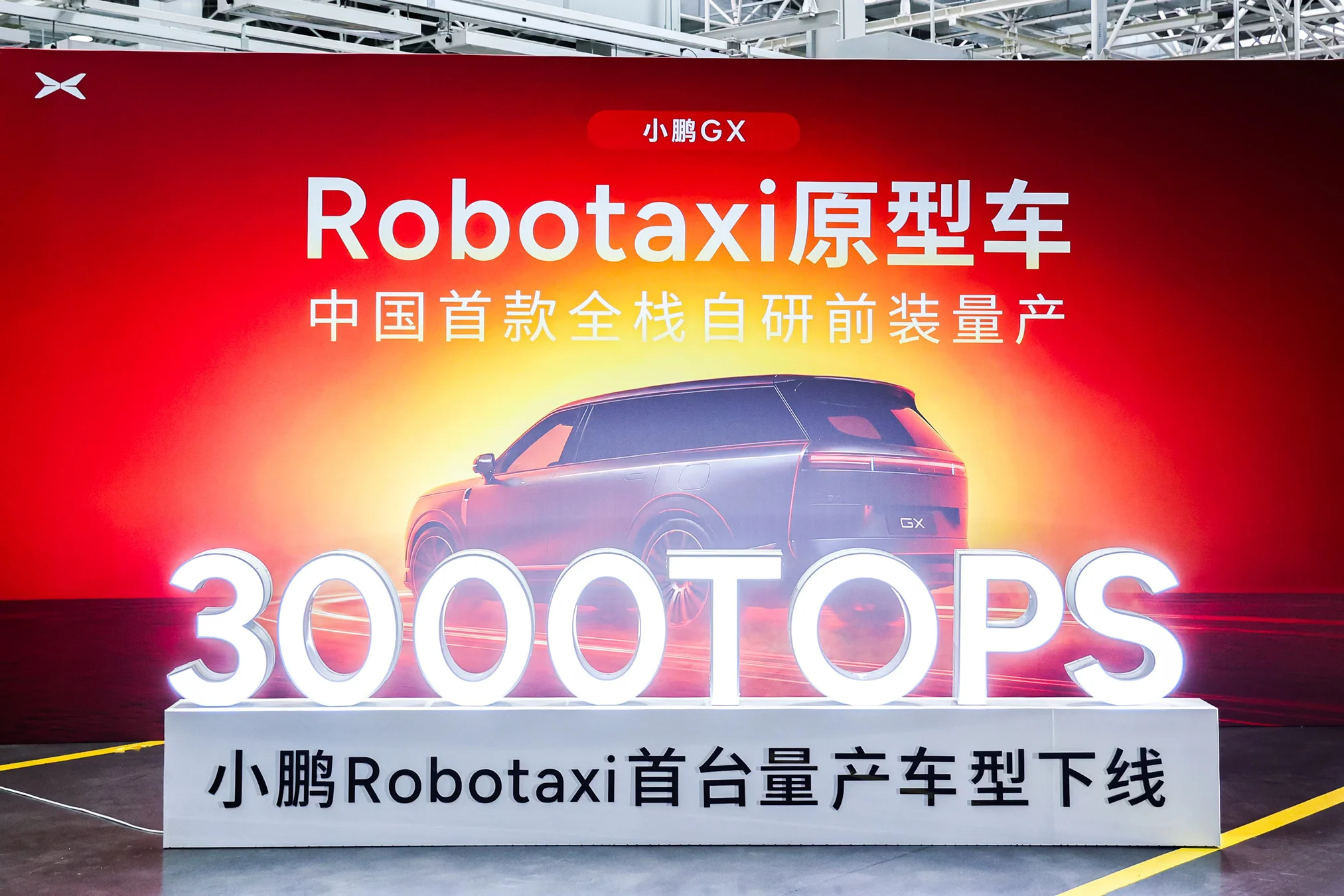
Urban commuters know the challenge: navigating dense traffic with minimal stress while relying on safe, reliable transport. Xpeng aims to meet this need with its GX L4 robotaxi, designed to operate fully autonomously in busy city environments by early 2027. This vehicle doesn’t just test autonomous driving — it’s built for real service, moving beyond prototypes to production-ready deployment.
- Level 4 autonomy with no safety driver expected by 2027
- Powerful onboard AI with 3,000 TOPS processing capacity
- Uses pure camera vision, no LiDAR or HD maps
- Luxurious cabin designed for passenger comfort and privacy
High-Powered AI Onboard Removes Cloud Dependence
The GX L4 operates as a rolling supercomputer, processing massive data streams from urban traffic in real time. Unlike many competitors that rely on cloud computing or expensive LiDAR sensors, Xpeng’s approach uses four proprietary Turing AI chips delivering up to 3,000 trillion operations per second (TOPS) within the vehicle itself. This reduces latency and enhances reliability, critical for navigating complex city streets where milliseconds matter.
Pure Camera Vision and VLA 2.0 AI for Quick Reactions
Instead of LiDAR or pre-mapped environments, the GX L4 depends solely on optical cameras. This pure-vision system is powered by Xpeng’s new Vision-Language-Action (VLA) 2.0 model, which integrates perception and driving decisions directly. The result is a reaction latency under 80 milliseconds, allowing the vehicle to adapt quickly to new or unfamiliar surroundings — a key advantage for varied urban landscapes.
Designed for Passenger Comfort and Practical Use
While the tech is complex, the cabin remains passenger-focused. Zero-gravity seats improve ride comfort, and tinted windows ensure privacy amidst city bustle. Entertainment screens and an intelligent voice assistant allow easy control of climate and media, making the robotaxi a comfortable choice for daily commutes or longer trips.
Early Pilot Runs and Commercial Plans Set the Timeline
Since early 2024, Xpeng has been testing the GX L4 on public roads in Guangzhou, with an independent robotaxi unit managing operations. By the second half of 2026, pilot rides will open to the public, aiming for fully driverless service by 2027. Integration with Alibaba’s Amap platform will facilitate easy ride bookings, supporting rapid adoption within megacities.
The trade-off is reliance on camera-only perception, which excels in many conditions but may face challenges in poor visibility scenarios compared to LiDAR-based systems. However, this design choice reduces hardware costs and complexity, potentially making the service more scalable.
Consider the GX L4 robotaxi if you value hands-free urban mobility with strong AI processing and a premium passenger experience. Skip it if you prefer systems heavily backed by LiDAR or if regional availability remains uncertain in your market. Prices and service rollouts will likely vary globally as deployment progresses.
(Via)