The arrival of Intel’s Panther Lake-X series brings a curious dilemma for high-end laptop buyers. While the Core Ultra X9 388H sits at the top of the hierarchy, early testing reveals that it does not always translate into superior real-world output compared to the Core Ultra X7 386H. Because both chips share identical core counts and feature sets, the performance variance relies heavily on the thermal management systems implemented by individual manufacturers.
- The Core Ultra X9 388H occasionally trails behind the X7 386H in sustained workloads.
- Thermal headroom dictates performance more than the raw clock speed advantage of the X9.
- Choosing the Core Ultra X7 can save users several hundred dollars without meaningful losses.
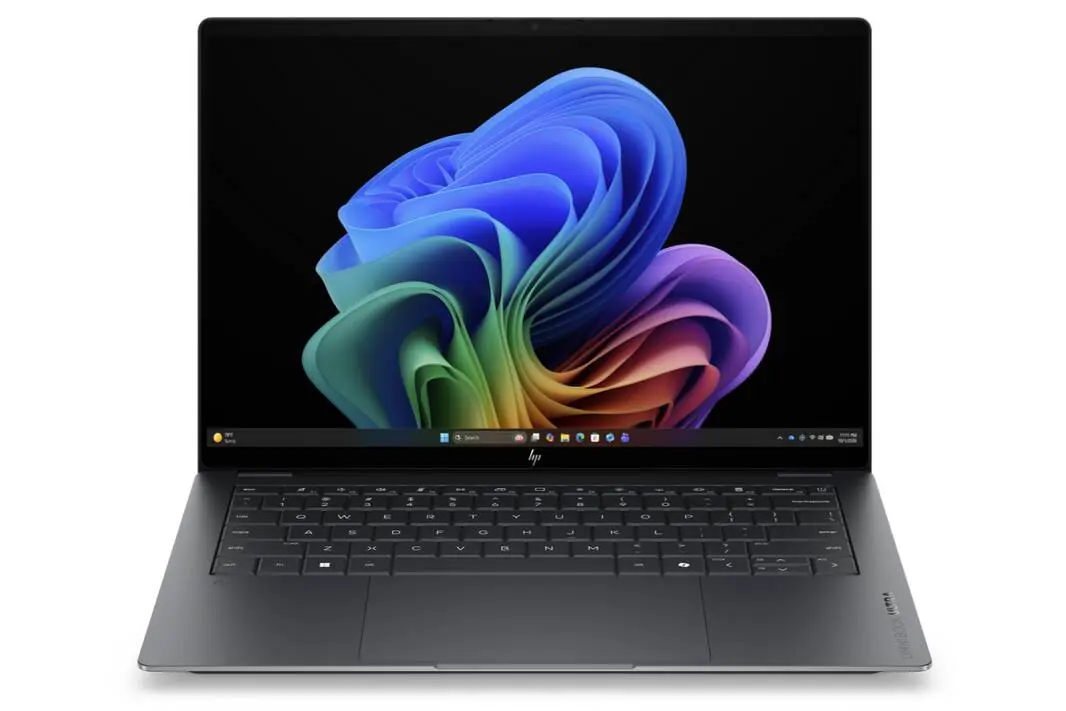
- The HP OmniBook Ultra 14 shows lower performance than devices running the X7 chip.
Thermal Constraints Overrule Clock Speeds
The gap between these two processors highlights how modern mobile silicon behaves under pressure. When a laptop chassis cannot effectively dissipate the heat generated by the higher clock rates of the Core Ultra X9, the chip throttles to maintain stability. This creates a scenario where a well-cooled machine running an X7 386H can consistently outpace a constrained system equipped with the more expensive X9 388H.
Testing data confirms this trend. The HP OmniBook Ultra 14, for instance, records scores approximately 11 percent lower in multi-threaded tasks and 7 percent lower in graphics performance compared to the Asus Zenbook Duo. This discrepancy places the HP model behind several machines utilizing the lower-tier X7, such as the Dell XPS 14 or the Asus ExpertBook Ultra.
Strategic Buying Decisions
Consumers looking to maximize their budget should prioritize the Core Ultra X7. The performance delta is often negligible in daily usage scenarios, making the premium price tag for the X9 difficult to justify. Redirecting those funds toward increased RAM or faster storage yields a more tangible improvement in system responsiveness than the marginal gains offered by the flagship chip.
Some manufacturers force the X9 into their high-end lineups without offering an X7 alternative. Potential buyers should scrutinize these specific models, as they may pay a significant premium for a processor that fails to deliver a clear advantage over its cheaper stablemate. Evaluating the cooling solution of a chassis is now just as important as checking the processor label on the box.
Source: Notebookcheck