
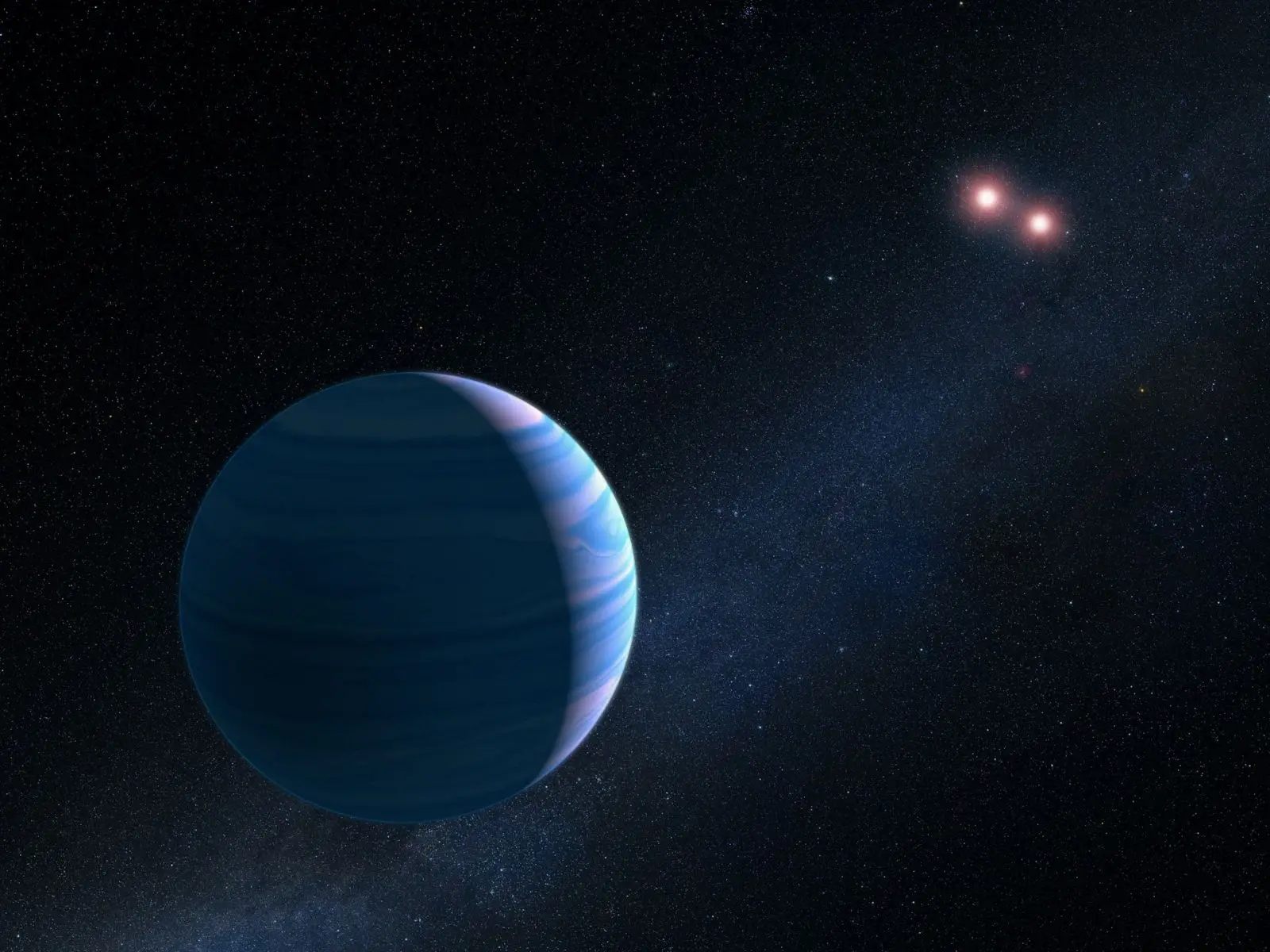
Discovering planets beyond our solar system is common, but identifying those that might support life remains challenging. A recent find, Ross 318 b, orbits a nearby red dwarf star just 28 light-years away and offers intriguing clues about atmospheric presence and habitability.
- Ross 318 b is a super-Earth with 6.21 times Earth’s mass and 1.74 times its radius.
- It orbits its red dwarf star every 51.5 days at 0.16 AU, inside the conservative habitable zone.
- Data from spectrographs and NASA’s TESS satellite were crucial in confirming its properties.
- The planet’s substantial atmosphere makes it a key target for future studies on potential life.
Close Orbit but Within the Habitable Zone
Ross 318 b circles its red dwarf star at just 0.16 AU, much closer than Earth’s orbit around the Sun. Despite this proximity, the star’s lower luminosity means the planet lies within the habitable zone where liquid water could theoretically exist. This zone is crucial when assessing planets that might host life.
However, Ross 318’s high magnetic activity could affect atmospheric retention and surface conditions on the planet. Understanding this interaction is important for evaluating habitability realistically.
Mass and Atmosphere Suggest a Rocky World
The planet’s mass, over six times that of Earth, and its radius point toward a super-Earth classification rather than a gas giant. This size range often implies a rocky composition with a substantial atmosphere, unlike smaller rocky planets or larger gaseous ones.
A thick atmosphere could provide insulation and protection from stellar radiation, but it also raises questions about atmospheric composition and pressure—factors critical to habitability assessments.
Data From Multiple Instruments Enabled Discovery
The team combined measurements from the Carmenes spectrograph, the High Resolution Echelle Spectrometer (HIRES), and NASA’s TESS satellite. This multi-instrument approach helped separate planetary signals from the star’s magnetic noise, a common challenge when studying red dwarfs.
Such collaboration between ground-based and space telescopes highlights how exoplanet science is evolving to address complex detection environments effectively.
Considerations for Future Exploration
While Ross 318 b’s characteristics make it an interesting candidate in the search for life, the trade-off is the star’s activity. Red dwarfs often produce flares and strong radiation that can strip atmospheres or hinder habitability.
Nevertheless, this super-Earth’s location and atmospheric indications position it as a prime subject for future telescopic studies, including atmospheric composition analysis and potential biosignature detection.
Availability of advanced observation tools will determine how soon we can learn more about this planet’s environment and its potential to support life.
Which Readers Should Follow This Discovery?
Consider following Ross 318 b if you are interested in exoplanet research, the search for life beyond Earth, or developments in astronomy involving red dwarf systems. It may not impact consumer tech but offers valuable insights into planetary science.
Skip if you prefer technology with immediate practical applications, as this discovery is more about long-term scientific exploration than current usability or products.
(Via)