Why it matters: The semiconductor industry is hitting a wall with Moore’s Law as transistor shrinking gets prohibitively expensive and yields diminishing returns. Huawei’s new “Tau Law” claims to sidestep this bottleneck by focusing on reducing signal delay inside chips rather than just making transistors smaller.
- Huawei introduces Tau Law to cut chip signal delay instead of transistor size
- Logic folding stacks chip circuits to shorten signal travel and boost efficiency
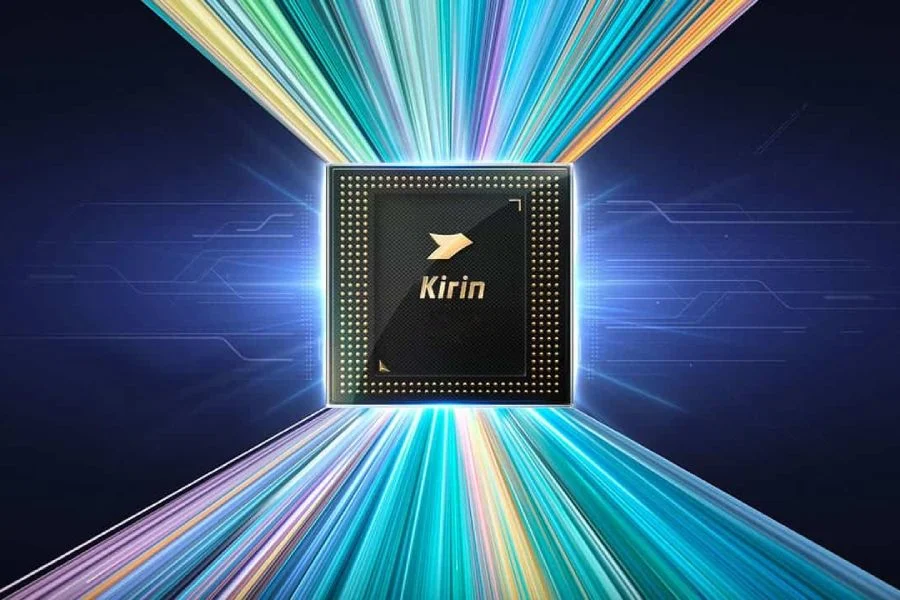
- First real-world use expected in Kirin 2026 mobile chip this autumn
- Huawei predicts achieving 1.4nm chip-like density via architecture, not fabrication
Flagship Power, Mid-range Compromises: What Tau Law Actually Promises
On paper, Tau Law sounds like a smart workaround for the limits of transistor miniaturization. Instead of focusing purely on geometric shrinkage—the traditional approach of packing more transistors into less space—Huawei shifts to “time shrinkage,” aiming to reduce the delay signals experience as they travel through the chip.
This involves “logic folding,” a technique that stacks circuit pathways to shorten the routes signals must take, akin to folding a long road into a compact multi-layered highway. By doing so, Huawei claims it can increase transistor density and reduce latency simultaneously.
However, this is not about producing a physical 1.4nm chip. What this actually means is Huawei bets on smarter chip architecture to mimic the performance and density of future nodes without the insane costs and engineering headaches of extreme lithography.
Three Hours to Full Charge? That’s the Trade-off in Real-World Implementation
The first product to showcase Tau Law’s benefits will reportedly be the Kirin 2026 mobile chip launching this autumn. Huawei claims improved performance and energy efficiency, but the catch is simple: real-world gains may be modest and will heavily depend on software optimization and manufacturing quality.
Also, while Huawei talks about 1.4nm-level transistor density, it’s important to remember this is an architectural equivalence, not a physical one. The industry has seen such claims before, where architecture tricks deliver incremental boosts but don’t replace the raw gains from smaller process nodes.
Why Cooperation Is the Only Way Out for the Semiconductor Industry
Huawei’s executive He Tingbo emphasized that no single company can solve semiconductor scaling issues alone. The industry is fragmented, and the complexity of next-gen chips requires collaboration across design, manufacturing, and software layers.
This is a tacit admission that Tau Law won’t be a silver bullet but rather one piece in a larger puzzle. Without broad cooperation, these architectural innovations may never reach their full potential in consumer products.
GizmoIndo’s Take
Huawei’s Tau Law is an intriguing pivot in a semiconductor landscape desperate for alternatives to Moore’s Law scaling. The focus on reducing signal delay via logic folding is clever, but it’s not revolutionary magic. It’s a refined engineering trade-off that may push chip performance forward modestly without the astronomical costs of smaller nodes.
For consumers and smartphone users, the impact will depend on how quickly Huawei can integrate these ideas into mass-produced chips and how software leverages the new architecture. The Kirin 2026 will be the first real test—don’t hold your breath for dramatic leaps, but expect incremental improvements.
Ultimately, Tau Law’s success hinges on industry-wide collaboration, which Huawei acknowledges but cannot guarantee. The semiconductor industry’s future will likely be a patchwork of architectural tricks, manufacturing advances, and cooperative innovation—not a single magic bullet.
(Via)