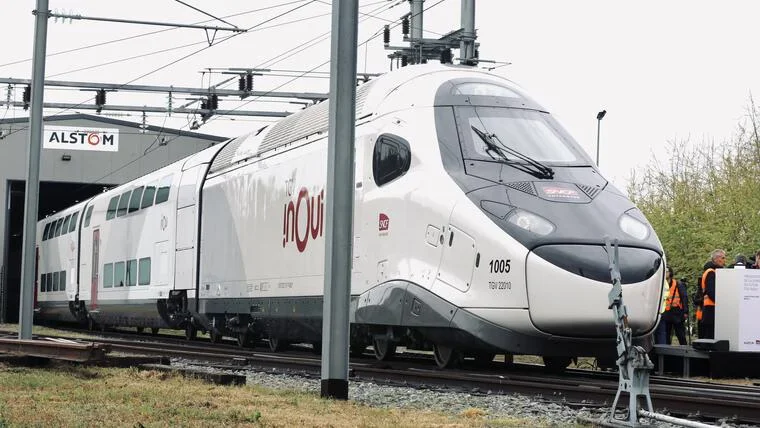
High-speed rail travelers in France can expect a new option by 2026, as the TGV-M train recently received approval from the European Union Agency for Railways. This green light clears a major hurdle for Alstom’s next-generation train, designed to run at speeds up to 320 km/h on France’s high-speed lines.
The TGV-M is built on Alstom’s Avelia Horizon platform and represents an evolution of the classic TGV design. SNCF, France’s national railway operator, initially ordered 100 of these trainsets, with more added later. Scheduled service entry is tentatively set for August or September 2026, although SNCF has yet to confirm exact dates.
- Approved by EU rail authorities for up to 320 km/h operation
- 20% more seating capacity with double-deck design, totaling 740 seats
- Improved energy efficiency, reducing consumption by about 20%
- Equipped with 5G-based Wi-Fi and compatibility with two electrification voltages
The 320 km/h Speed Depends on the Rail Network
The maximum speed of the TGV-M varies depending on the train protection system in use. On high-speed LGV lines equipped with ETCS or TVM systems, the train can reach 320 km/h. However, on other networks such as those using KVB or Crocodile systems, speeds drop to 220 km/h and 160 km/h respectively. This variability means that the top speed is only achievable on specific routes designed for high-speed travel.
More Seats Without Sacrificing Comfort
The TGV-M returns to a double-deck layout, but Alstom has managed to increase seating capacity by over 20% compared to previous trains. At 740 seats, it offers more options for travelers, especially during peak periods. This capacity boost comes without major compromises in passenger comfort, making it suitable for both regional and long-distance journeys.
Energy Savings and Practical Flexibility
Energy consumption is expected to drop by roughly 20%, which aligns with wider sustainability goals for rail travel. The trainsets measure 200 meters in length and cannot be easily shortened or lengthened in regular operation. However, they can operate in multiple unit formations, allowing SNCF to adjust capacity by coupling trains together as demand requires.
Availability and Regional Context
The TGV-M is designed primarily for the French rail network, supporting two electrification voltages (1.5 kV and 25 kV). This differs from Alstom’s Eurostar Horizon trains, which will support four voltages for cross-border travel through the Channel Tunnel. Availability and pricing details have yet to be publicly shared, and service rollout may vary by region and network readiness.
The trade-off is capacity flexibility. While the fixed length limits easy resizing of a single trainset, operating multiple units offers a practical workaround for varying passenger volumes. Consider the TGV-M if you need a modern, efficient train capable of high speeds and higher seating capacity. Skip it if you require trains with more adaptable trainset length for less predictable demand.
(Via)