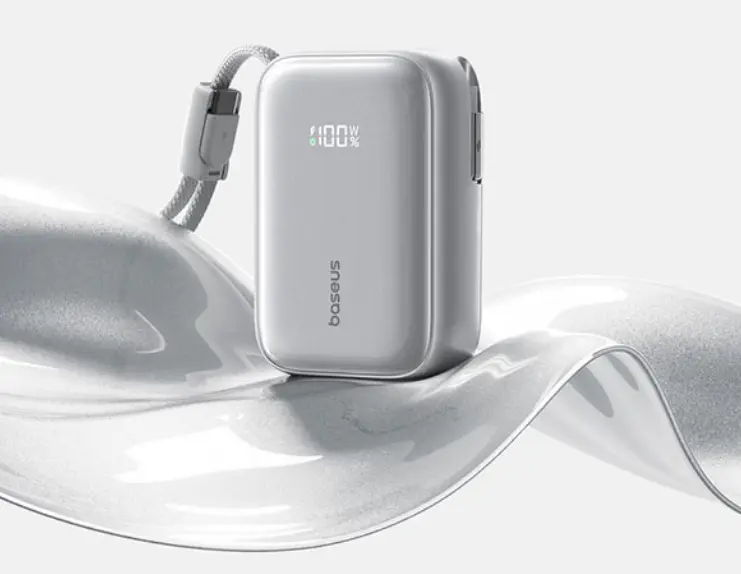
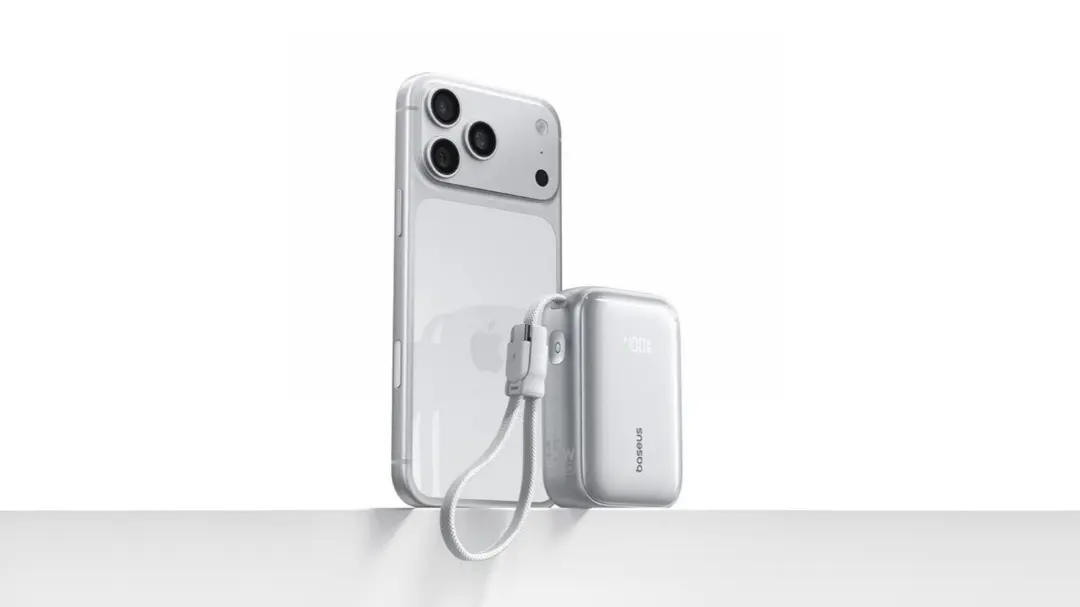
Baseus’ new PicoGo AR11 power bank is grabbing attention for its built-in charging cables and 10,000mAh capacity. The catch is simple: does integrating cables into the device actually solve a problem or just add bulk and complexity? Pre-orders in China clock in at 219 yuan ($32) with a May 27 release date.
- Integrated 72cm retractable and 20cm detachable charging cables
- 10,000mAh dual-cell battery with stacked internal design
- 45W USB-C fast charging output plus 33W USB-A port
- NFC-based battery health and thermal monitoring features
Flagship Power, Mid-range Compromises
On paper, a 45W output on a 10,000mAh power bank sounds impressive—enough to fast-charge phones, tablets, and some ultra-light laptops. The dual 5,000mAh cells stacked inside keep the size relatively compact at 83 x 56.5 x 38.5mm and 230 grams. Yet, the integrated cables add mechanical complexity that could be a failure point down the road.
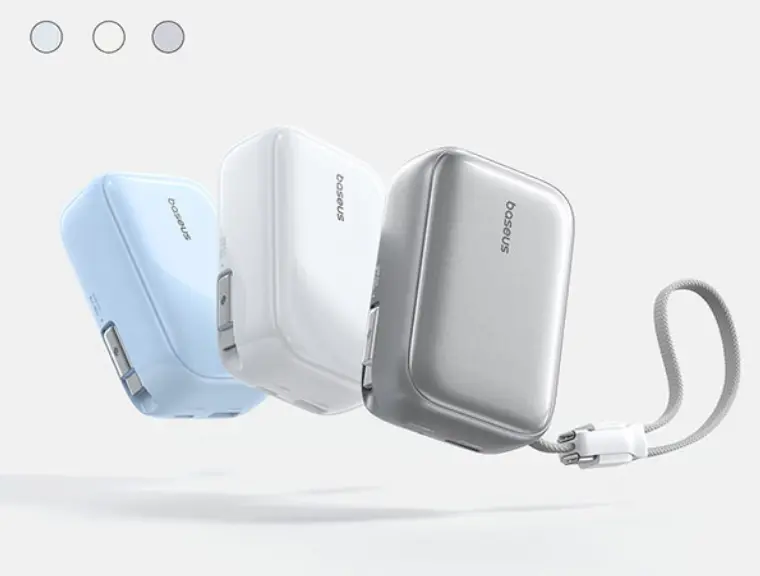
The main selling point is the two cables: one 72cm cable that retracts using a constant force shaft rated for 20,000 bends, and a 20cm detachable cable that doubles as a lanyard. You get to pick between USB-C + Lightning or dual USB-C combos—handy if you want to avoid carrying extra cables. But the catch is this: the retractable mechanism adds thickness and possibly limits repair options if the cable breaks.

Two Ports, One Power Budget
The PicoGo AR11 includes an additional USB-A port with 33W output. However, the total output drops to a mere 15W when both ports are used simultaneously—typical for power banks in this class but easily overlooked in marketing. This means charging two devices at full speed at the same time is off the table.
Charging the power bank itself takes about two hours thanks to 30W input support, which is decent but not outstanding for this capacity. The device also features a digital display showing battery percentage—helpful but becoming standard across competitors.

Heat Is the Silent Dealbreaker
Baseus includes an NFC feature to monitor battery health, charge cycles, and temperature in real time. It’s paired with a thermal management system using a chip that checks heat 50 times per second and layers of aerogel and graphene to disperse heat during fast charging.
These are solid inclusions, especially since 45W charging can push heat beyond what most small power banks handle. But don’t hold your breath for miracle cooling—the actual performance will depend on ambient conditions and how often you max out the output.
The Big Picture
The Baseus PicoGo AR11 is interesting for users who value cable integration and a clean, all-in-one charging solution. However, the practicality of built-in cables comes at the expense of size and potential durability issues. The 45W fast charging is competitive, but the shared output limit and rapid wear on retractable cables might frustrate power users.
At $32, it’s priced reasonably for what you get—but in a crowded market with cheaper, simpler power banks and standalone cables, this feels more like a niche convenience product than a must-have. If you’re juggling multiple devices and hate cable clutter, it’s worth a look. Otherwise, expect trade-offs in bulk and repairability.
(Via)