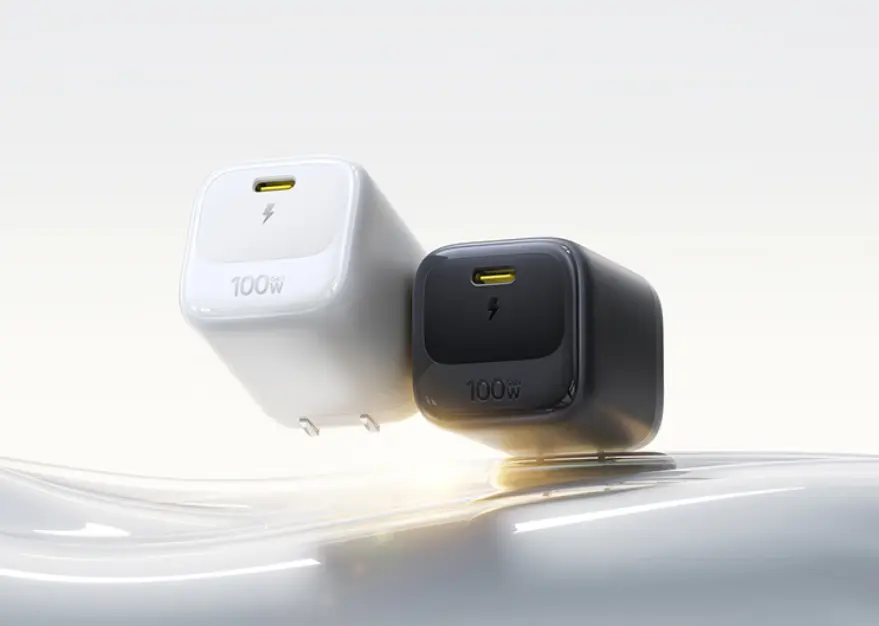
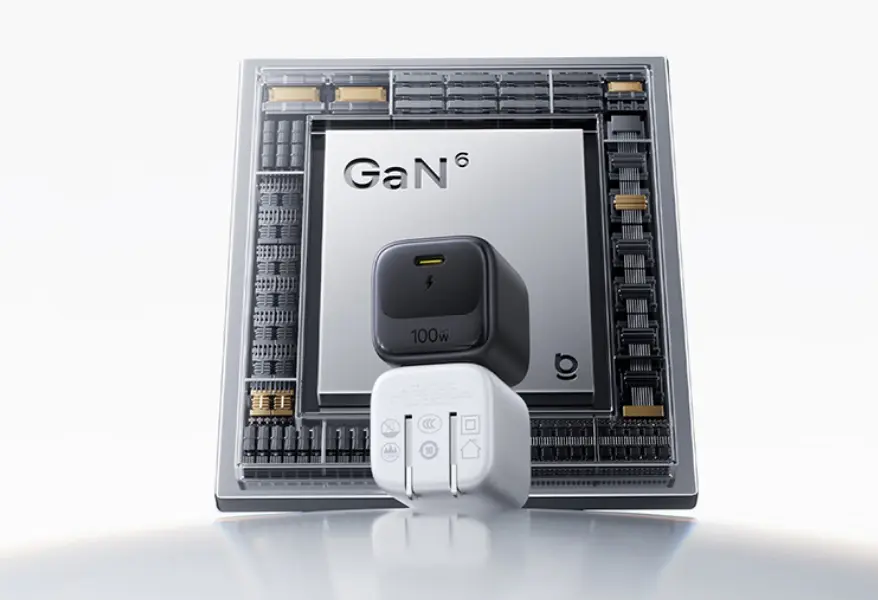
The Baseus EnerFill FH22 is the latest 100W GaN charger that tries to pack laptop-level power into a tiny, travel-ready shell. It matters now because high-wattage chargers rarely shrink this much without a catch.
- 100W output with sixth-gen GaN tech in a 65% smaller body than typical 96W bricks
- Foldable prongs and mixed matte/glossy finish for practical portability
- Supports PD 3.0, QC 5.0, PPS, and UFCS fast-charging protocols
- Thermal management uses copper foil, aerogel, and temperature monitoring
- Limited to 200-240V input — not compatible with North American 110V sockets
Flagship Power, Mid-range Compromises
On paper, squeezing 100 watts into a charger roughly one-third the size of a typical laptop brick sounds like a win. Baseus claims the EnerFill FH22 is 65% smaller than a standard 96W adapter, weighing just 104.5 grams with dimensions of 36.5 x 36.5 x 48mm.
The design mixes matte and glossy plastics with rounded edges. It’s not going to win any industrial design awards, but the foldable prongs are a thoughtful touch. Toss it in a backpack or laptop sleeve without worrying about it snagging or scratching other gear.

Fast Charging Standards or Just Buzzwords?
The charger supports a wide range of fast charging protocols: PD 3.0, QC 5.0, PPS, and the newer UFCS. That covers most modern laptops and phones from Apple, Samsung, Xiaomi, and OnePlus. This compatibility means the FH22 should be a reliable all-in-one charger for multiple devices.
But the catch is simple—while it supports these standards, real-world charging speed depends heavily on cable quality, device firmware, and power delivery negotiation. Don’t hold your breath for full 100W charging on every phone or laptop.
Heat Is the Silent Killer Here
Packing 100W into such a small chassis generates heat. Baseus counters this with a copper foil layer and aerogel insulation inside the charger. These materials help prevent the plastic shell from overheating.
There’s also a built-in temperature monitor. When your device hits 80% charge, the charger switches to a trickle mode to slow power delivery and protect battery health over time. These features suggest Baseus is aware of the thermal and safety challenges but don’t guarantee the unit will stay cool under heavy use.
Voltage Limits That Could Kill Your Plans
One glaring limitation is the charger’s input voltage range: 200-240V. This makes it unsuitable for North American users relying on 110V outlets. If you’re buying this for travel or international use, keep this in mind.
It’s clear Baseus designed this for markets in Europe and Asia, not the US or Canada. That severely limits the charger’s versatility despite its otherwise attractive specs.
Bonus: Power Bank Also Makes an Appearance
Alongside the FH22 charger, Baseus announced a compact 10,000mAh, 45W power bank with dual built-in charging cables. It’s a neat companion for on-the-go users, but details remain sparse.
GizmoIndo’s Take
Baseus’s EnerFill FH22 is a solid example of how GaN tech is shrinking high-wattage chargers to backpack-friendly sizes. The foldable prongs and thermal management features show some practical thinking.
That said, the 200-240V limitation tosses a big wrench in its global appeal. North American users need to look elsewhere or risk buying a charger that won’t work out of the box.
In a crowded market, the FH22 is a decent budget pick if you live in compatible voltage regions and want a compact 100W charger. But don’t expect miracles—heat management and real-world charging speeds will vary, and the design is functional rather than flashy.
(Via)