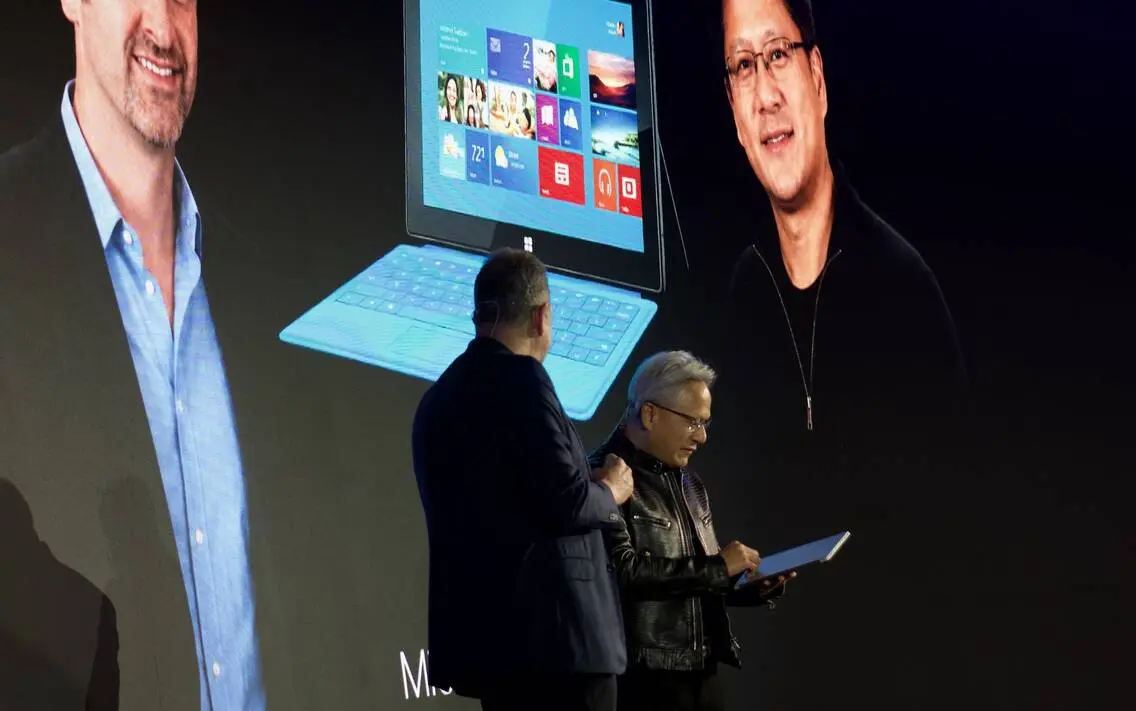
Arm’s Computex event ended with a nostalgic surprise that highlighted the early, challenging days of ARM in the Windows ecosystem. Arm CEO Rene Haas invited Nvidia CEO Jensen Huang on stage to present him with a Surface RT, a device that once symbolized a bold but flawed attempt to merge ARM architecture with Windows.
- The Surface RT was one of the first Windows devices powered by an ARM chip, specifically Nvidia’s Tegra 3.
- It promised fanless design and long battery life but struggled with software limitations and performance issues.
- The device’s legacy reflects both the promise and pitfalls of ARM-based Windows devices in the early 2010s.
- Arm and Nvidia’s early collaboration laid foundational work for ARM’s ongoing role in Windows platforms.
Surface RT as a symbol of early ARM ambition in Windows
The Surface RT represented a significant but difficult experiment in 2012. Powered by Nvidia’s Tegra 3 ARM chip, it aimed to offer a fanless design and up to ten hours of battery life. This was a sharp contrast to the dominant x86-based Windows devices, which typically sacrificed battery life for performance.
At the time, Rene Haas was working for Nvidia and played a key role in launching this device. The Surface RT was notable for its energy-efficient platform, but it also marked a departure from the original Surface concept, which was envisioned as a large, touchscreen-enabled table with sensors. Microsoft had pivoted towards tablets and notebooks under the Surface brand instead.
Software challenges and market reception
Despite its hardware innovations, the Surface RT struggled due to software limitations. Windows RT, the operating system variant for ARM devices, had a restricted app ecosystem and compatibility issues, making it challenging for users to install programs outside the Windows Store. This limited functionality made the device less appealing, especially compared to traditional Windows PCs.
The Surface RT’s user-friendly design made it suitable for less tech-savvy users, minimizing risks like malware or misconfigured settings. However, the device’s slower performance and limited software support led to poor market reception and ultimately a commercial failure.
Our 2012 review of the Surface RT reflected this mixed reality: promising hardware hampered by an immature software environment. Microsoft’s first attempt to bring ARM to Windows users did not succeed immediately, requiring several more iterations and industry partnerships to gain traction.
Legacy and implications for ARM in Windows
Despite the Surface RT’s failure, Microsoft, ARM, and Nvidia laid important groundwork for ARM’s role in the Windows ecosystem. ARM’s energy efficiency and evolving performance have become increasingly relevant as mobile computing demands grow.
Jensen Huang highlighted this ongoing collaboration at the ARM keynote, noting that the new RTX Spark platform will continue to operate on Windows. This signals a future where ARM-based Windows devices could overcome past trade-offs and deliver more balanced performance and power efficiency.
The Surface RT’s story is a reminder of the trade-offs inherent in platform shifts. Early devices may struggle with software ecosystems and user expectations, but they set the stage for long-term innovation and market realignment. Understanding these dynamics is crucial for stakeholders across technology, business, and policy domains.
Via: Notebookcheck