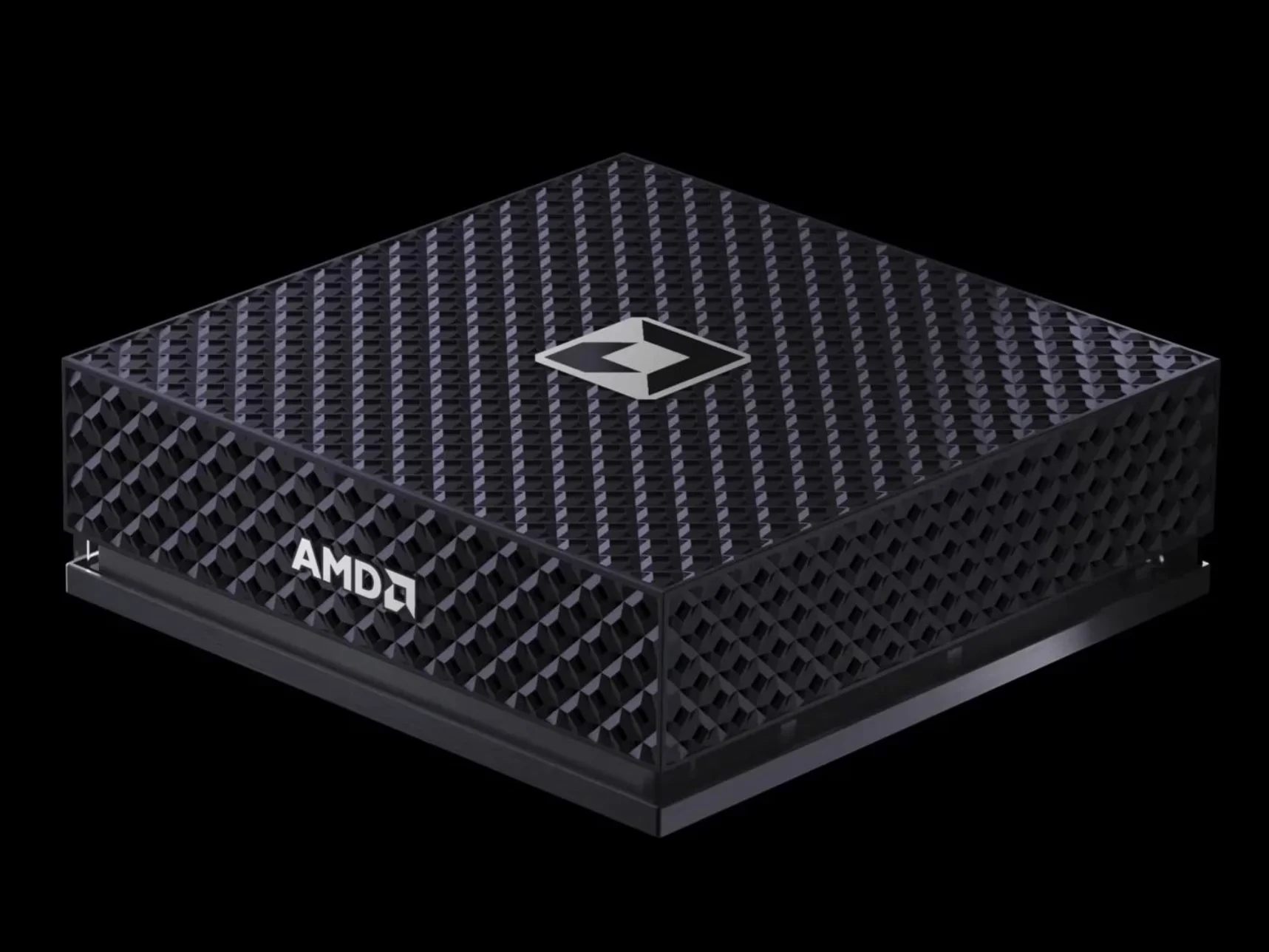
Running large AI models locally remains a challenge for many developers who want to avoid ongoing cloud subscription fees. AMD’s new Ryzen AI Halo platform offers a compact yet powerful solution aimed at this exact problem. It’s designed to handle heavyweight models like GPT OSS (120B) and Qwen 3.5 (122B) without relying on external cloud services.
- Powered by the Ryzen AI Max+ 395 chip with a 50 TOPS Neural Processing Unit (NPU)
- Equipped with 128 GB of LPDDR5-8000 memory and a 2 TB PCIe Gen4 SSD
- Supports both Windows and Linux operating systems
- Connectivity includes Wi-Fi 7, Bluetooth 5.4, HDMI 2.1b, and multiple USB-C ports
AMD’s AI Powerhouse Fits Your Desktop, Not Just Laptops
Though built around a laptop-grade Ryzen AI Max+ 395 chip, the Ryzen AI Halo is designed primarily as a mini-PC or desktop device. Its compact dimensions (5.9 x 5.9 x 1.7 inches) make it suitable for developers needing a dedicated AI workstation without the bulk of traditional desktops.
The 120 Watt TDP keeps power consumption manageable, especially considering the high-performance components inside. This balance makes it practical for home offices or small labs where space and cooling are concerns.
Large Memory and Storage Support the Heaviest AI Models
One of the biggest hurdles in running large language models locally is memory bandwidth. The Ryzen AI Halo addresses this with 128 GB of ultra-fast LPDDR5-8000 MT/s RAM. Combined with a 2 TB PCIe Gen4 SSD, it offers the speed and capacity needed for large datasets and AI model weights.
This setup enables smooth execution of demanding workloads that typically require powerful cloud instances.
Windows Support Broadens Developer Access
Most AI-focused hardware platforms tend to be Linux-only, which can limit adoption. AMD’s choice to support Windows alongside Linux makes the Ryzen AI Halo accessible to a wider pool of developers and applications.
This flexibility is useful for teams working with mixed software environments or those integrating AI workloads into Windows-based workflows.
The Trade-Off Is Availability and Price
AMD has positioned the Ryzen AI Halo as a developer platform rather than a consumer product, which means it may not be widely available or affordable for all users. The components and capabilities suggest a premium price point that fits professional use more than casual AI enthusiasts.
Consider it if you need local AI model execution to reduce cloud costs and want a compact, Windows-compatible solution. Skip it if you prefer broader availability, lower prices, or simpler AI workloads that cloud services can handle efficiently.
Overall, the Ryzen AI Halo emphasizes practical local AI compute with a balanced power envelope and solid connectivity, making it a noteworthy option for developers focused on AI model experimentation and deployment without ongoing cloud dependencies.
(Via)