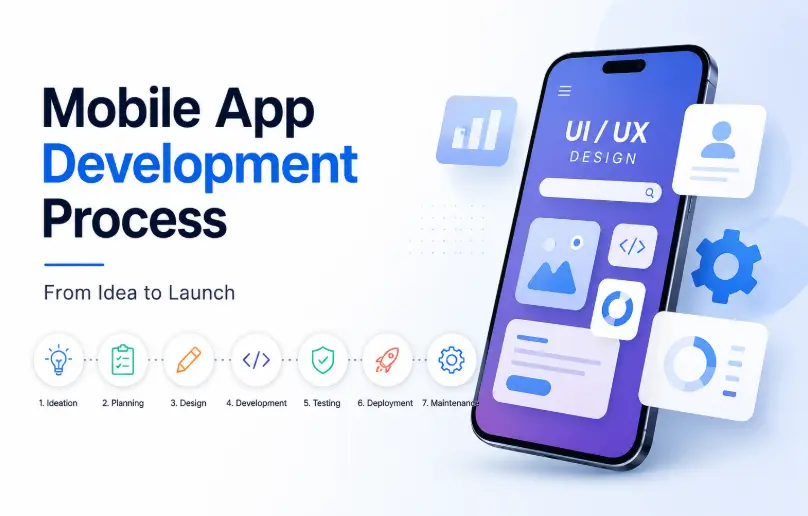
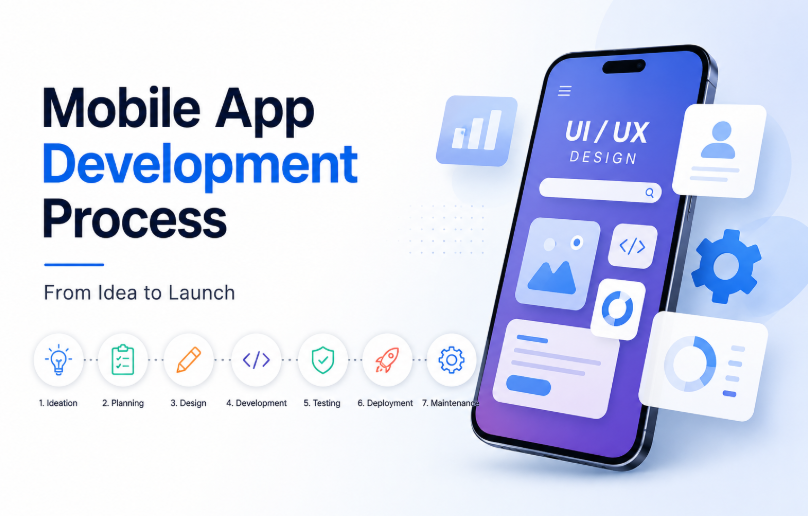
Building a successful mobile application is rarely just about writing code. Whether you are a startup founder or a business owner, the journey from an initial concept to a polished product requires a structured approach to ensure your software actually solves user problems rather than just adding to the clutter on app stores.
- Market research identifies unique value propositions and user needs.
- Native and cross-platform frameworks offer different performance benefits.
- Prototyping helps visualize user flows before expensive development begins.
- Agile methodologies and MVP strategies allow for iterative improvements.
- Post-launch maintenance is required for security and compatibility.
Strategic Planning and Market Research
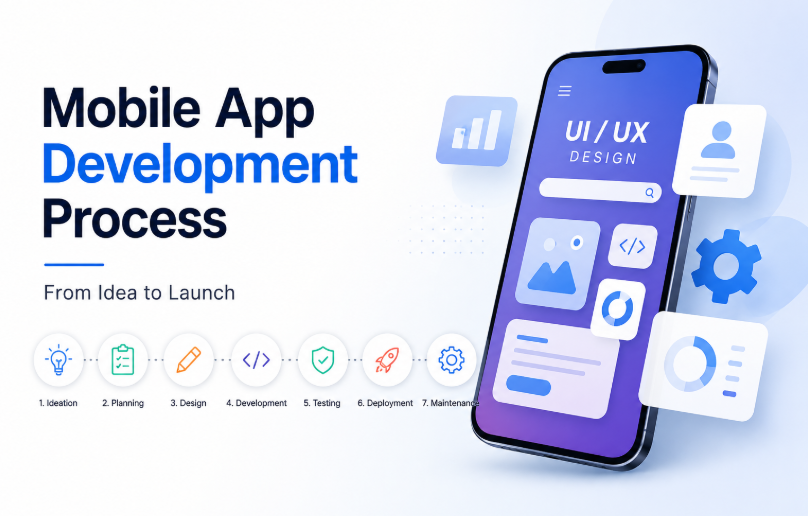
Every app begins with an idea, but the real work starts by identifying a genuine problem. Research shows that 71% of consumers expect personalized experiences, and failing to provide this often leads to immediate user frustration. Before writing a single line of code, teams must validate their concept through market analysis and competitor research to ensure there is a clear unique value proposition.
Choosing the Right Development Path
Deciding between native and cross-platform development is a major decision that impacts your budget and long-term scalability. Native development using Swift for iOS or Kotlin for Android remains the standard for performance-heavy applications. However, frameworks like React Native have become popular for teams that want to maintain a single codebase across multiple platforms, significantly reducing development time and costs.
Focusing on User Experience and Prototyping
Design is where your app takes shape. Creating wireframes and interactive prototypes allows stakeholders to test navigation paths early, which helps avoid costly changes during the later stages of development. Accessibility is also a major factor here, as following guidelines ensures your application is inclusive for all users.
The Reality of Development Costs
Budgeting is often the most challenging part of the process. While simple applications might start around $10,000 to $30,000, complex platforms with advanced backend requirements can easily exceed $500,000. These costs are influenced by the number of supported platforms, third-party integrations, and the infrastructure needed for long-term security and maintenance.
Source: Gizmochina