Zepp Health continues to challenge the premium smartwatch market by enhancing the Amazfit T-Rex 3, a rugged wearable priced at $279, with significant software updates that deepen its navigation capabilities and optimize battery life. This ongoing commitment disrupts the conventional upgrade cycle, offering users substantial feature additions without pushing for new hardware purchases.
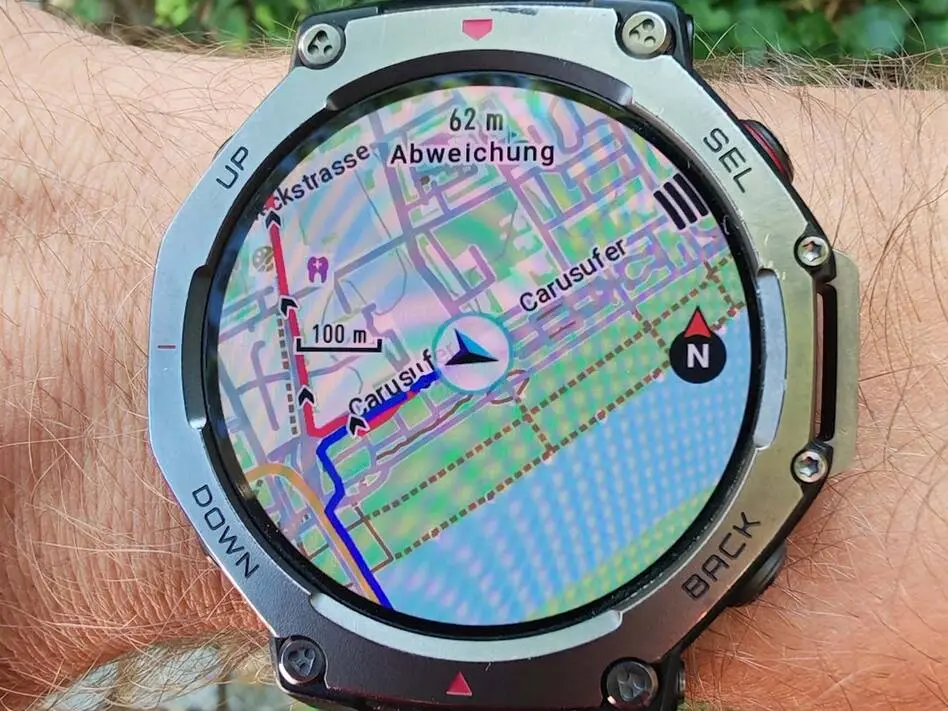
- The new software version 4.9.4.4 introduces a map download manager and better route visualization on the T-Rex 3.
- Offline navigation now allows route planning directly on the watch without constant smartphone reliance.
- Automatic dive recording and enhanced multi-day activity power management extend usability for outdoor enthusiasts.
Reimagining Offline Navigation for Rugged Smartwatches
Before recent updates, the Amazfit T-Rex 3 offered offline maps and navigation features but required partial dependence on a smartphone. The introduction of fully autonomous route planning on the watch itself marks a strategic pivot. Users can select points and generate real-world routes considering roads and paths, a capability typically reserved for higher-priced competitors like Garmin’s Fenix series.
This move reflects Zepp Health’s understanding of outdoor users who demand reliable navigation tools without the burden of carrying multiple devices. It also signals a broader industry trend where software enhancements extend the lifespan and utility of existing hardware, disrupting traditional upgrade economics.
Streamlining Map Management for Real-World Use Cases
The latest update brings a map download manager that empowers users to pause, delete, or update map downloads. This granular control is essential for travelers and adventurers who manage data storage and prioritize critical maps based on their journey segments. The improved UX, including route names and history displayed before activity start, enhances situational awareness and planning efficiency.
Moreover, optimized map scales during navigation and activities improve readability and user interaction, addressing common pain points in wearable navigation interfaces.
Expanding Activity Tracking with Battery Efficiency
Beyond navigation, the software update introduces system-wide automatic dive recording, eliminating the need to manually initiate specific activity modes. This feature expansion caters to niche yet demanding user segments, such as divers and water sports enthusiasts.
Additionally, the update addresses power consumption during multi-day activities that involve frequent pauses and resumptions. By reducing energy drain, Zepp Health extends the T-Rex 3’s operational endurance, a critical consideration for users in remote or extended expeditions.
Implications for the Wearable Tech Ecosystem
Zepp Health’s approach disrupts the status quo by providing substantial feature upgrades to existing customers, challenging the industry norm of hardware-driven innovation cycles. This strategy not only strengthens brand loyalty but also raises questions about the long-term sustainability of rapid hardware refreshes prevalent among Big Tech and wearable manufacturers.
From a regulatory and privacy standpoint, expanding offline capabilities reduces dependency on cloud services and smartphones, potentially mitigating data privacy concerns linked to continuous connectivity. However, it also shifts the responsibility for accurate map data and route safety onto the device firmware, underscoring the importance of rigorous quality assurance.
For competitors, Zepp Health’s trajectory pressures premium brands to reconsider their software development and update policies, potentially catalyzing a market-wide emphasis on software longevity and user empowerment.
Reference: NotebookCheck