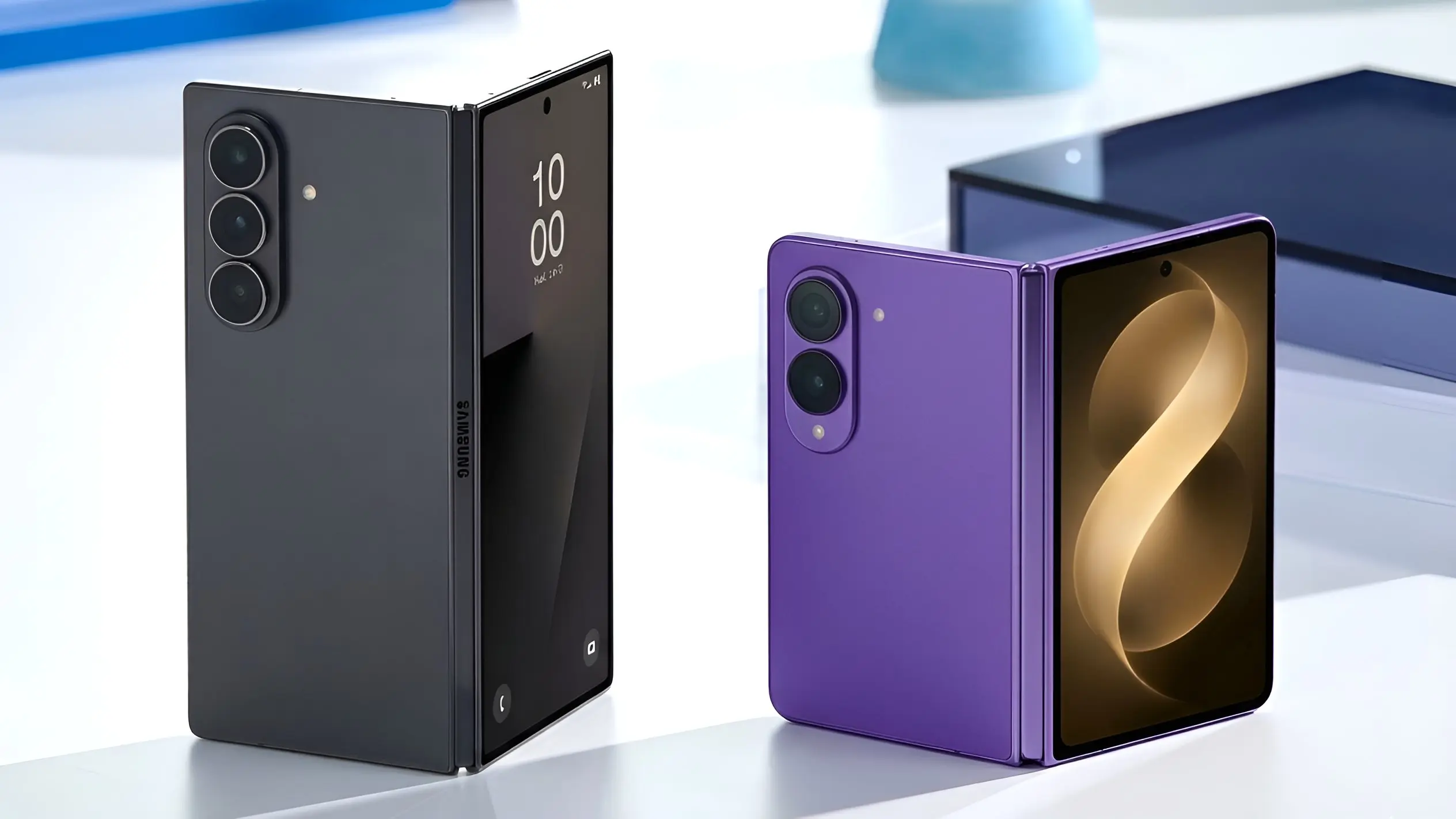
Samsung is preparing a significant hardware shift for its upcoming foldable lineup. Recent reports indicate that the company plans to utilize a thicker Ultra Thin Glass (UTG) layer in its compact and wider foldable model. This design choice aims to address one of the most persistent issues in foldable technology, specifically the visible crease across the flexible AMOLED panel.
- Samsung integrates 60 micrometer thick UTG in the wider foldable model.
- The thicker glass layer provides a more crease free user experience.
- This model acts as a technical test case for future foldable generations.
- The standard Galaxy Z Fold 8 Ultra retains a thinner 45 micrometer glass.
Engineering a More Refined Foldable Surface
The technical approach involves increasing the UTG thickness to 60 micrometers, a 30 percent increase compared to the hardware found in the standard Galaxy Z Fold 8 form factor. For context, previous iterations like the Galaxy Z Fold 6 featured 30 micrometer glass, while the Special Edition models utilized 45 micrometers. By moving to a 60 micrometer standard for the wider variant, Samsung is prioritizing display durability and surface smoothness.
This hardware adjustment serves a clear purpose for users who demand premium aesthetics. While the Galaxy Z Fold 8 Ultra maintains the traditional tall aspect ratio, the wider model is positioned to compete directly against high end flagship devices. The reduced crease depth is expected to enhance the visual appeal of the large internal display, making it a more attractive option for media consumption and productivity tasks.
Technical Trade Offs and Future Implications
Increasing the thickness of foldable glass presents unique engineering challenges. A thicker UTG layer offers improved structural integrity during drops but potentially increases the risk of damage during the folding mechanism’s operation. Samsung is treating this specific model as a testing ground to evaluate the long term reliability of 60 micrometer glass.
If the testing phase yields positive results, this technology will likely become the standard for the Galaxy Z Fold 9 in 2027. The current implementation suggests a shift in focus toward refining the user experience of foldables rather than merely increasing device dimensions. This development positions the wider foldable variant as a critical piece of hardware for those who prioritize a clean and modern display aesthetic over the classic tall design.
Source: Samsung | Notebookcheck