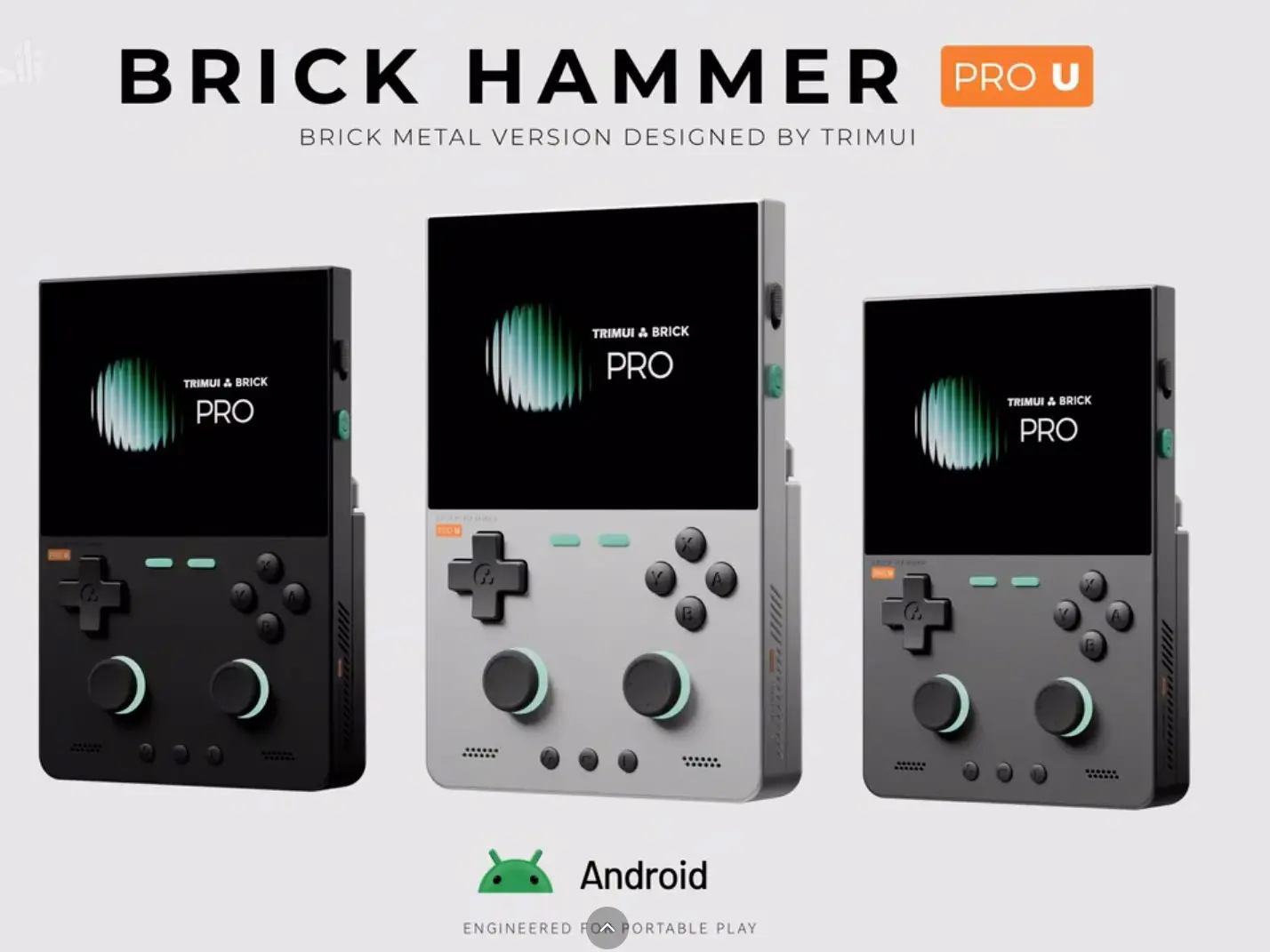
TrimUI is poised to shake up the handheld gaming market with the imminent launch of two vertical handheld devices: the Brick Hammer Pro U and the Brick Pro. This move signals the company’s strategic push to cater to diverse segments within the portable gaming ecosystem, balancing premium performance with cost efficiency.
- The Brick Hammer Pro U boasts a Snapdragon G2 Gen 1 chipset with an Adreno A21 GPU, targeting high-performance Android gaming.
- The Brick Pro opts for an Allwinner A133p quad-core processor and Linux OS, emphasizing affordability and open-source flexibility.
- Both devices feature a 3.95-inch IPS display at 1024 x 768 resolution, catering to vertical gaming experiences.
- Material choices differentiate the models: metal shell for the premium Brick Hammer Pro U and polycarbonate for the Brick Pro.
Strategic Diversification in Handheld Gaming Hardware
TrimUI’s unveiling of the Brick Hammer Pro U alongside the Brick Pro highlights a calculated approach to capturing multiple tiers of the handheld gaming market. The Brick Hammer Pro U, powered by the Snapdragon G2 Gen 1 chipset, represents TrimUI’s foray into premium vertical handhelds with a focus on delivering robust Android-based gaming performance. This chipset, coupled with the Adreno A21 GPU and a 6-axis gyroscope, suggests an intent to appeal to gamers demanding fluid graphics and responsive controls.
Conversely, the Brick Pro, equipped with the Allwinner A133p quad-core processor running at 1.8GHz and shipping with Linux, positions itself as a more accessible, open-platform device. Its hardware aligns with cost-conscious consumers and enthusiasts who prefer open-source environments, possibly fostering a niche community around homebrew and indie game development.
Materiality and Design Reflect Market Positioning
The choice of materials further delineates the two models’ market intentions. The Brick Hammer Pro U’s metal chassis, available in Black, Silver, and Gray, conveys premium build quality and durability, aligning with its higher-end hardware. In contrast, the Brick Pro’s polycarbonate shell and color options including Light Grey, Black, and White suggest a focus on affordability and practicality without sacrificing the vertical handheld form factor.
Despite these differences, the devices share a unified design language, including button placement, ports, and ventilation, which could streamline manufacturing and brand recognition while catering to varied consumer preferences.
Implications for the Vertical Handheld Market and Beyond
TrimUI’s dual-launch strategy reflects a nuanced understanding of the handheld gaming landscape, where consumers are increasingly segmented by performance expectations, software ecosystems, and price sensitivity. By offering both Android and Linux-based vertical handhelds, TrimUI taps into distinct user bases, those seeking mainstream gaming experiences and those invested in open-source, customizable platforms.
This diversification may pressure competitors to broaden their own offerings or risk ceding market share in emerging handheld niches. Moreover, the emphasis on vertical screen orientation challenges the conventional horizontal paradigm, potentially influencing game developers to optimize titles for this form factor.
Pending Questions and Market Reception
While TrimUI has yet to disclose RAM, storage, battery specifications, and official release dates, the announced features and design choices provide a glimpse into their strategic priorities. The absence of detailed specs leaves room for speculation about pricing and global availability, factors that will significantly impact market reception.
As TrimUI prepares for launch, stakeholders across the gaming and tech industries will be watching closely to assess how these devices influence user engagement, software development, and competitive dynamics within the handheld segment.
Reference: notebookcheck.net