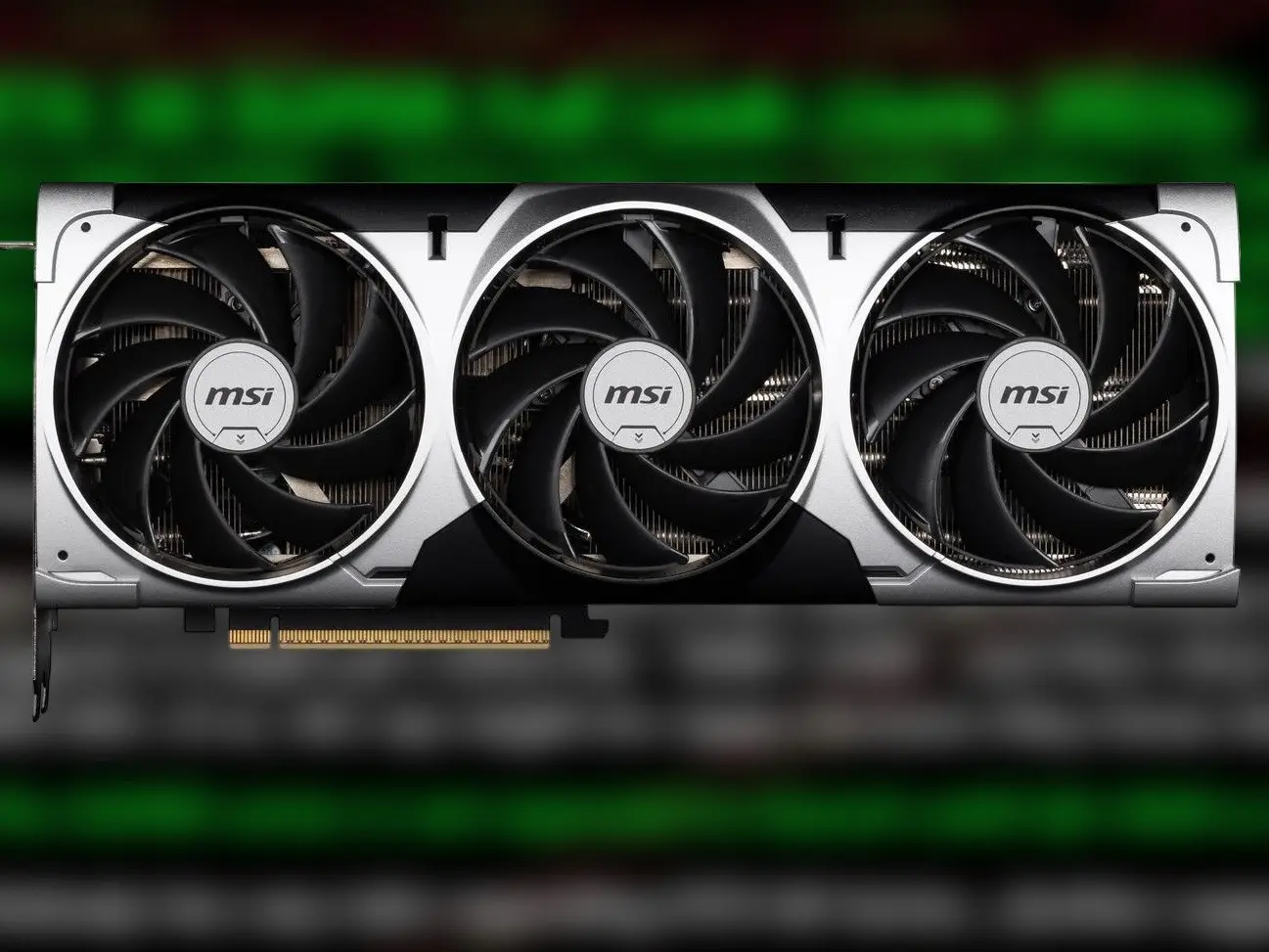
Nvidia’s rumored GeForce RTX 50 Super series appears poised to re-enter the desktop gaming GPU conversation with promises of enhanced VRAM and modest performance gains. After earlier rumors of a 2025 Super refresh failed to materialize, recent leaks shed light on detailed specifications and performance targets for several models, including the RTX 5080 Super, RTX 5070 Ti Super, RTX 5070 Super, and RTX 5060 Super.
- The RTX 50 Super series mainly upgrades VRAM and power consumption compared to their standard RTX 50 counterparts.
- Leaked specs suggest the RTX 5080 Super offers 24 GB of GDDR7 VRAM and a 7 to 14% performance boost over the RTX 5080.
- Pricing rumors indicate potential competitive positioning, with the RTX 5080 Super possibly priced between $999 and $1,199.
- Despite promising specs, Nvidia’s current market approach raises doubts about availability and pricing fairness.
RTX 50 Super Specifications Signal Strategic VRAM Increases
According to leaks shared by Moore’s Law Is Dead, the RTX 50 Super GPUs focus on increasing VRAM capacity alongside higher thermal design power (TDP) to push performance. The flagship RTX 5080 Super reportedly retains the same 10,752 CUDA cores as the RTX 5080 but doubles VRAM to 24 GB of 32 Gbps GDDR7 memory, accompanied by a TDP increase from 360 W to 415 W.
Similarly, the RTX 5070 Ti Super maintains its CUDA core count but upgrades VRAM from 16 GB to 24 GB with 28 Gbps GDDR7, while its TDP rises from 300 W to 350 W. The RTX 5070 Super not only adds 6 GB more VRAM for a total of 18 GB but also increases CUDA cores by 4% to 6,400, with a TDP increase to 275 W. The RTX 5060 Super (potentially named RTX 5060 12 GB) doubles VRAM to 12 GB while keeping the 3,840 CUDA cores unchanged, with power consumption details still unconfirmed.
Performance Gains Driven by Bandwidth and Clocks, Not Architecture
The anticipated performance improvements stem predominantly from increased memory bandwidth and higher clock speeds enabled by the elevated TDP. For instance, the RTX 5080 Super is expected to deliver a 7 to 14% boost over the RTX 5080. Pricing leaks suggest a $999 to $1,199 range, which, if accurate, could make it an attractive proposition given the substantial VRAM upgrade.
The RTX 5070 Ti Super could outperform its predecessor by 5 to 10%, with rumored pricing between $749 and $799. This contrasts with the original RTX 5070 Ti’s launch price of $749 and current inflated market prices exceeding $900. The RTX 5070 Super is projected to offer 8 to 12% better performance than the RTX 5070, with leaked prices around $549 to $599, potentially positioning it well for mid-range gamers.
Market Realities Temper Enthusiasm for RTX 50 Super Launch
Despite these promising specifications and performance figures, Nvidia’s recent market behavior raises skepticism about whether the RTX 50 Super series will meaningfully improve the gaming GPU landscape. Concerns include potential pricing above leaked estimates and limited supply that could fail to meet demand. Without a shift in Nvidia’s strategic approach, the RTX 50 Super series might struggle to deliver the expected value to gamers and enthusiasts.
Ultimately, the RTX 50 Super leaks reveal a tactical move toward higher VRAM and incremental performance gains, but the broader implications hinge on Nvidia’s execution in pricing and availability, which remain uncertain.
Reference: Notebookcheck.net