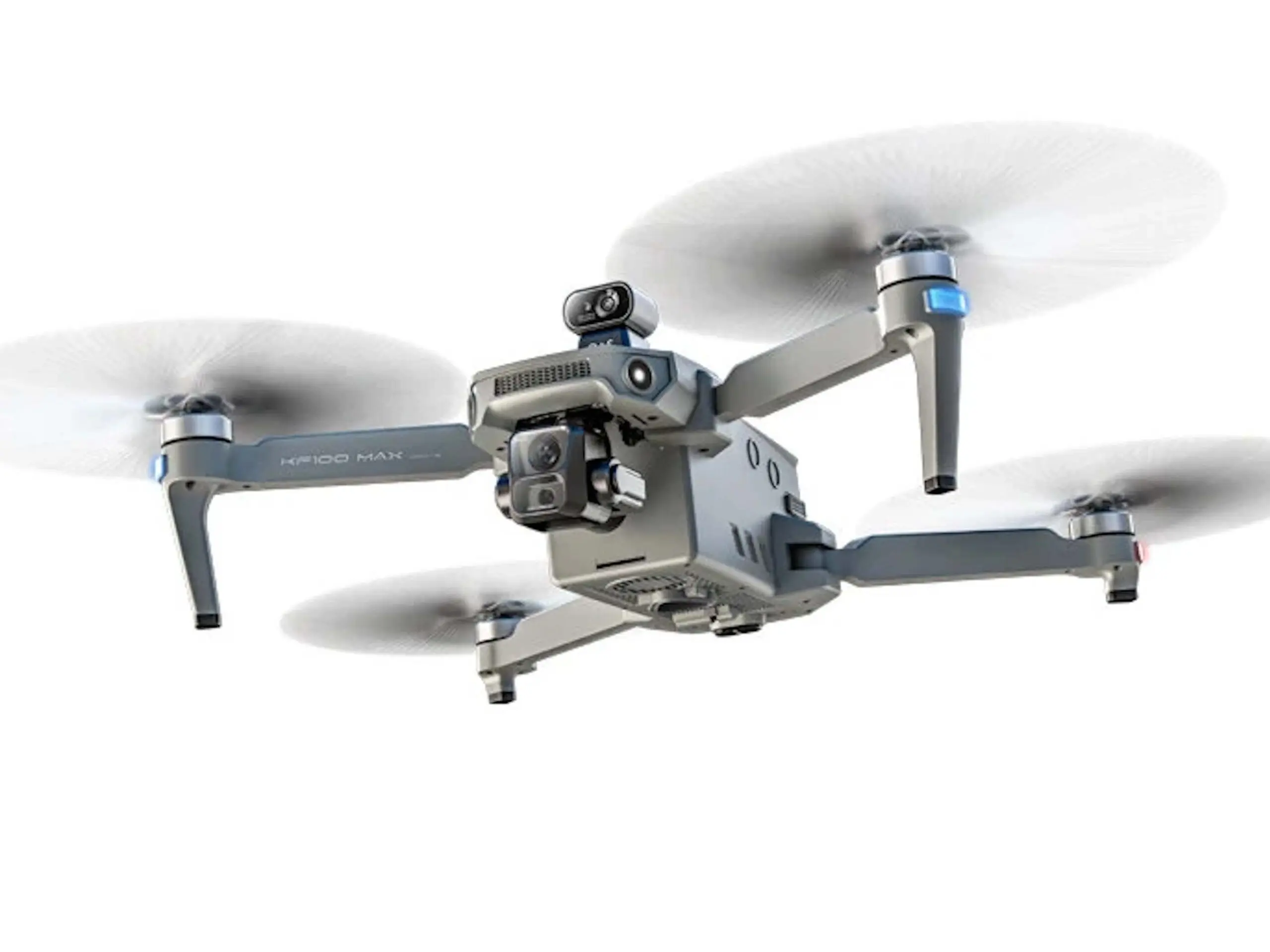
The KF100 Max emerges as a compelling alternative to DJI’s consumer drones by introducing a unique payload drop feature alongside a capable 4K camera. This addition disrupts the conventional drone market, where such functions are notably absent from mainstream consumer models. Yet, this innovation carries regulatory complexities and operational trade-offs that merit scrutiny.
- The KF100 Max offers a payload drop capability not found in DJI consumer drones.
- Equipped with a 4K camera, it records video at 3840 x 2160 pixels and photos up to 7680 x 4320 pixels.
- Its takeoff weight of approximately 1.65 pounds necessitates certification (A1/A3) in EU jurisdictions.
- Priced at $499 with three batteries, it claims up to 50 minutes flight time per battery.
Disrupting the Consumer Drone Norm with Payload Drops
Payload delivery via drones has been largely confined to industrial or commercial applications, often requiring specialized equipment and regulatory clearances. By integrating a drop mechanism into the KF100 Max, the manufacturer taps into an underexplored niche within the consumer segment. This feature could appeal to hobbyists and small businesses seeking basic delivery or release functions without investing in costly professional drones.
However, the introduction of such a feature raises critical concerns about airspace safety and privacy. Payload drops, even of small items, can pose hazards to people and property below if misused or malfunctioning. This necessitates rigorous regulatory oversight, which varies significantly across regions. The KF100 Max’s compliance with EU certification requirements (A1/A3) underscores the increased responsibility placed on operators due to its 1.64 to 1.65 pounds takeoff weight.
Balancing Advanced Features with Regulatory Constraints
The drone’s integrated GPS module enables waypoint navigation and automatic return-to-home functions, aligning with industry standards for intelligent flight control. Its remote control with an integrated screen eliminates the need for smartphones, potentially enhancing user experience and operational reliability.
Yet, the relatively high takeoff weight triggers stricter regulatory frameworks, especially in the European Union, where operators must hold a certificate of competency. This barrier could limit the drone’s accessibility to casual users, positioning it more towards serious hobbyists or commercial users who understand and comply with such regulations.
Economic and Market Implications
At $499 for the version equipped with three batteries and $449 for two, the KF100 Max positions itself as an affordable alternative to DJI’s offerings, which often command higher price points for similar or lesser battery capacity. The claimed 50-minute flight time per battery is competitive and could translate into extended operational windows, a significant advantage for users requiring prolonged drone activity.
This pricing strategy may disrupt DJI’s market dominance by appealing to cost-conscious consumers desiring advanced features like payload drops and high-resolution imaging. However, the limited number of customer reviews and reliance on third-party sellers on Amazon could affect consumer confidence and market penetration.
Data and Privacy Considerations
The drone’s video and photo capabilities at high resolutions raise questions about data ownership and privacy. As drones become more integrated into daily life, the handling of visual data captured by such devices will increasingly attract regulatory scrutiny. Manufacturers and users alike must navigate complex privacy landscapes to avoid infringing on individual rights.
Implications for the Drone Ecosystem
The KF100 Max’s introduction exemplifies the ongoing diversification in drone functionalities, pushing the boundaries of what consumer drones can accomplish. This evolution challenges incumbent players to innovate beyond traditional imaging and flight capabilities, integrating new use cases that intersect with logistics, security, and entertainment.
However, this expansion also complicates the regulatory environment, demanding adaptive policies that balance innovation with safety and privacy. The KF100 Max’s requirement for certification in the EU is a microcosm of the broader tensions between technological advancement and governance.
Global Availability and Market Prospects
Currently available through a third-party seller on Amazon with delivery estimated between June 12 and 13, the KF100 Max’s distribution model may limit its immediate global reach. The absence of direct sales through Amazon could impact supply chain reliability and after-sales support.
For the drone to gain substantial market share, especially against entrenched players like DJI, it must establish robust distribution channels and customer service frameworks. Its unique features and competitive pricing offer a strong value proposition, but execution in market accessibility and regulatory compliance will determine its long-term success.
Reference: Notebookcheck