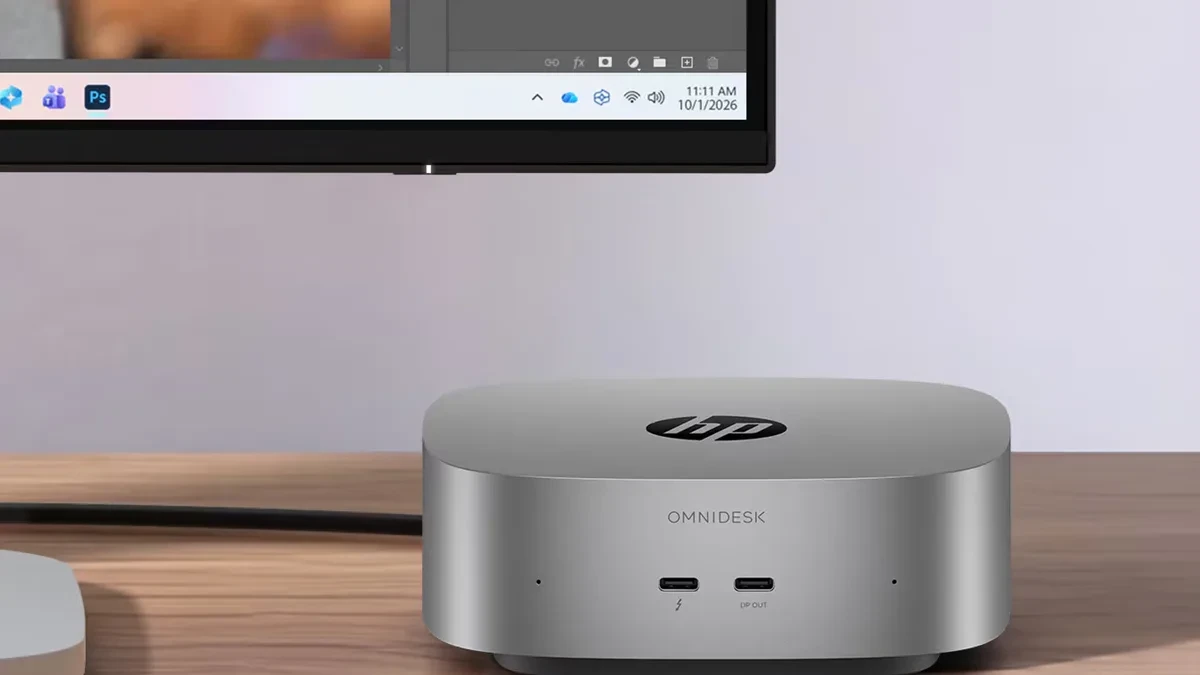
HP has quietly released its OmniDesk Mini equipped with Intel's latest Panther Lake architecture, bringing Core Ultra Series 3 silicon to the compact desktop market. Starting at $1,089.99 for the Core Ultra 5 model and rising to $1,509.99 for the Core Ultra 7 configuration, this compact PC pairs multi-core computing with dual Thunderbolt 4 connectivity. By positioning this hardware well above the entry price of rivals like the Apple Mac mini, HP is prioritizing modular desktop expansion and workstation flexibility over standalone graphic punch.
First teased at Computex 2026, the OmniDesk Mini arrived on retail shelves without major fanfare. The initial lineup targets productivity users who need strong CPU performance and extensive physical connectivity in a small footprint, though hardware enthusiasts will notice a distinct compromise in the default graphics configuration.
Integrated Graphics Compromises and eGPU Reliance
Both initial configurations listed at US retailers feature modest integrated graphics engines. Rather than incorporating Intel's higher-tier Arc B390 or B370 iGPUs, the Core Ultra 5 325 and Core Ultra 7 356H variants rely on a basic 4-core Xe3 iGPU. Benchmark comparisons indicate this built-in GPU struggles to compete even with older integrated solutions like AMD's Radeon 780M, limiting standalone gaming and heavy 3D rendering potential out of the box.
To balance this limitation, HP heavily emphasizes external GPU (eGPU) support. Dual Thunderbolt 4 ports with integrated DisplayPort 2.1 bandwidth allow users to hook up external desktop graphics cards via single-cable expansion chassis. This modular design strategy shifts graphic-heavy computational burdens to external hardware while keeping the main desktop unit lightweight and thermally manageable on tight workspaces.
Modern Connectivity and Multi-Monitor Workflows
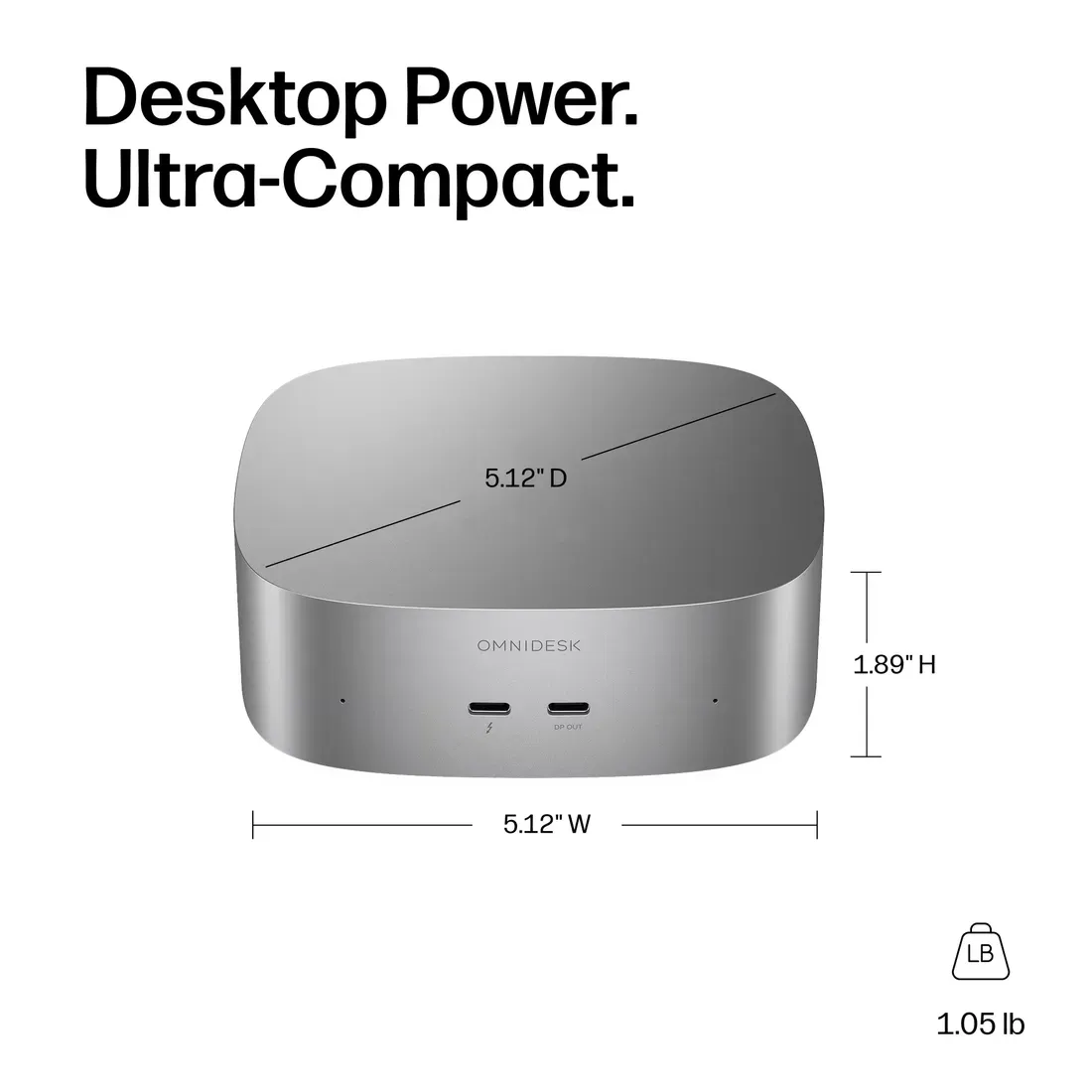
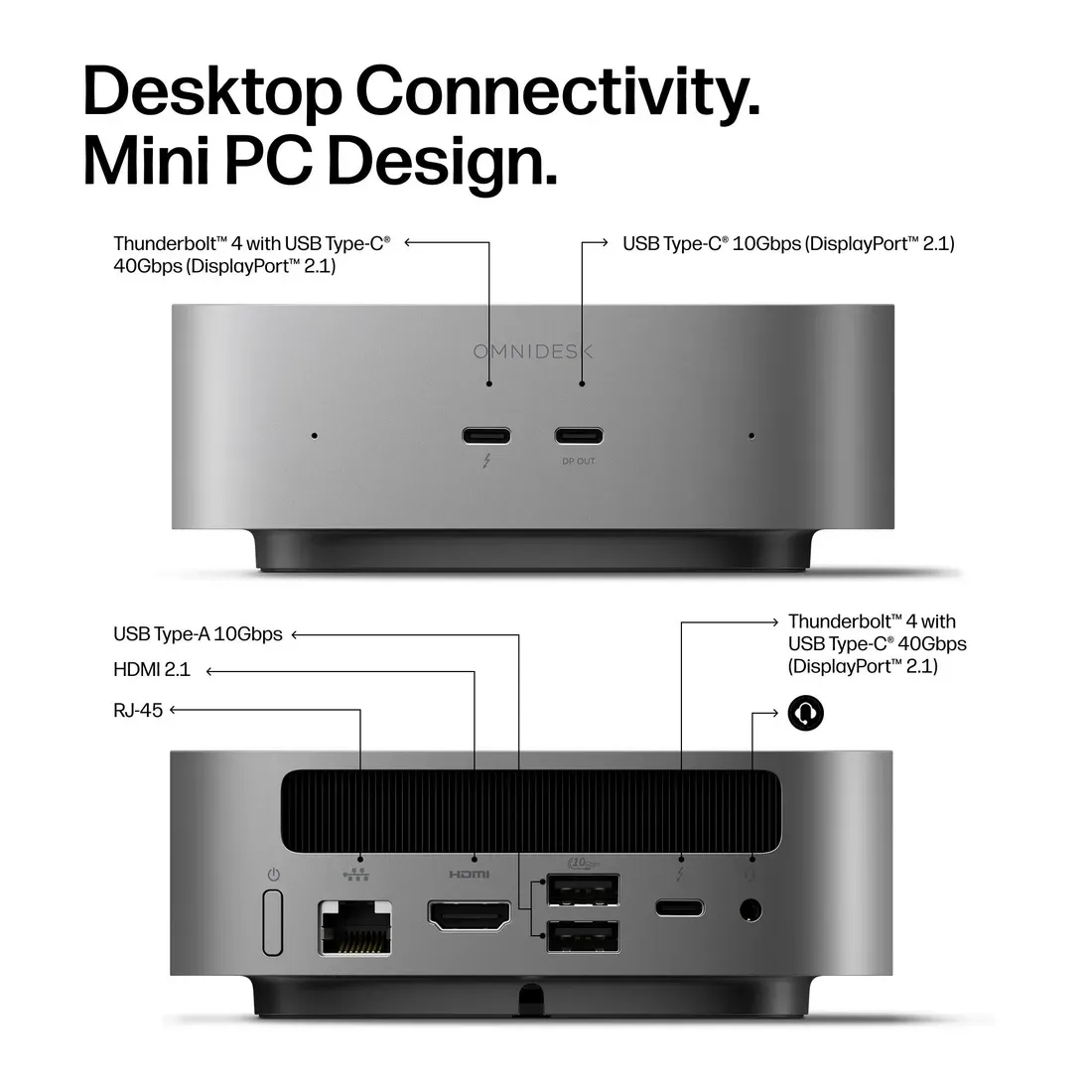
The port layout on the OmniDesk Mini is tailored toward multi-display office environments and heavy peripheral setups. Its rear and front panel selection includes:
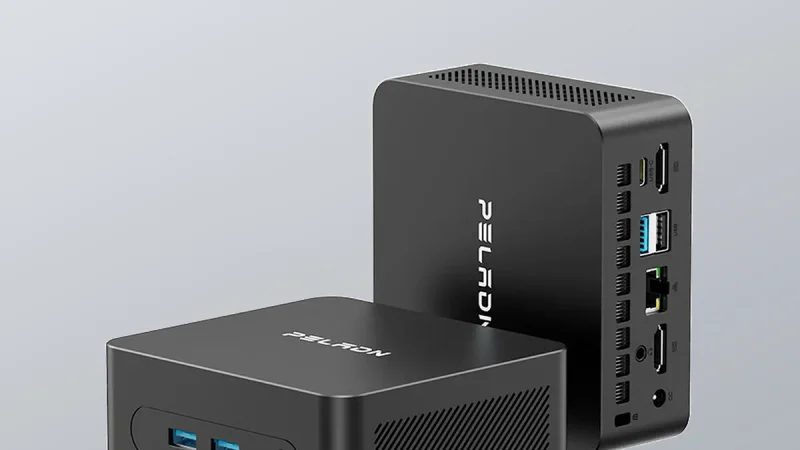
• 2x Thunderbolt 4 with DisplayPort 2.1
• 2x USB 3.2 Gen 2 Type-A
• 1x USB 3.2 Gen 2 Type-A with DisplayPort 2.1
• 1x HDMI 2.1
• 1x RJ45 Gigabit LAN Ethernet
• 1x 3.5mm headphone and microphone combo jack
With native support for up to four simultaneous displays, the system caters well to financial traders, software developers, and multi-window power users. Additionally, HP has implemented support for Thunderbolt Share, a protocol that enables two OmniDesk Mini units to be linked together directly. This setup allows both machines to share storage and peripherals as a unified dual-node system.
Pricing, Availability, and Market Context
The US retail listings feature 16GB of soldered LPDDR5X memory and a 512GB solid-state drive across both models. The Core Ultra 5 325 tier carries a retail price of $1,089.99, while upgrading to the Core Ultra 7 356H pushes the cost to $1,509.99. Meanwhile, HP's European store lists an unreleased flagship model packed with a Core Ultra 9 386H and 24GB of RAM priced at approximately $2,089 (€1,899).
At these price points, HP faces stiff competition from established mini PCs. Buyers opting for the OmniDesk Mini are paying a premium for Intel's Panther Lake architecture and versatile connectivity, making it a specialized choice for setups that rely heavily on external expansion and multi-monitor setups.