
The Gemini North telescope has unveiled a rare glimpse into the final moments of a star, revealing the intricate dynamics within the Crystal Ball Nebula, also known as NGC 1514. Located approximately 1,500 light-years from Earth, this planetary nebula is shaped by a unique binary star system at its core.
- NGC 1514 features a binary system with a giant star and a hot companion orbiting over nine years.
- The stars’ powerful, asymmetrical winds sculpt the nebula’s complex, lumpy gas layers.
- Planetary nebulae like NGC 1514 have lifespans between 10,000 and 25,000 years before dispersing.
- The Gemini Multi-Object Spectrograph (GMOS) provided detailed spectral data of this celestial event.
Binary Stars Orchestrating Nebula Formation
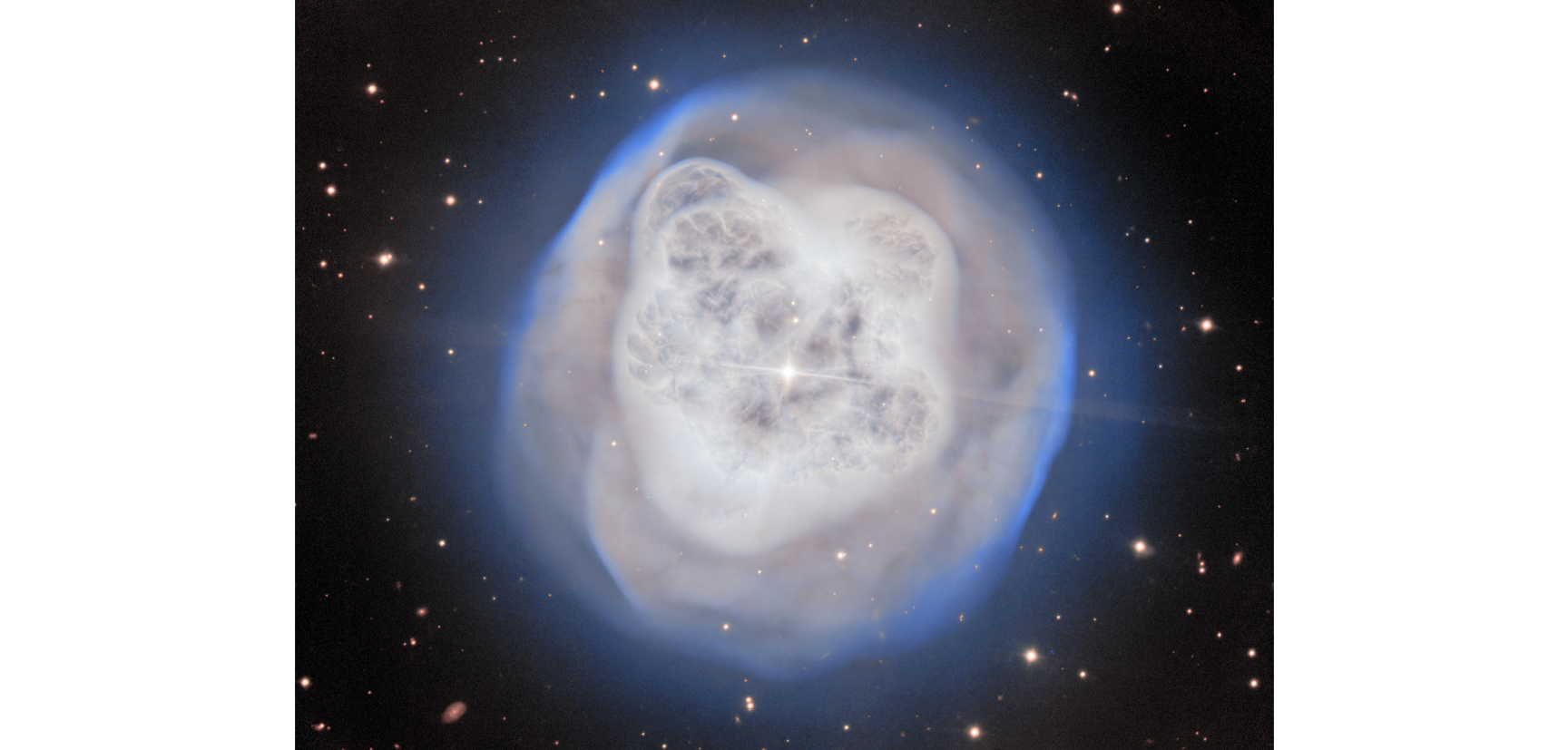
At the heart of NGC 1514 lies a binary system consisting of a giant star nearing the end of its life and a hot companion star. Unlike typical binaries with short orbital periods, these two stars orbit each other every nine years, one of the longest known periods. This extended interaction period allows their stellar winds to intricately shape the surrounding gas into the nebula’s distinctive form.
Stellar Winds Crafting Cosmic Sculptures
The dying giant star has expelled its outer layers, and as the binary companions orbit, their strong, asymmetrical winds collide and mold these layers into the nebula’s complex structure. This process generates the lumpy, layered appearance observed in the Crystal Ball Nebula, showcasing the dynamic interplay between stellar evolution and nebular morphology.
Life Cycle of Planetary Nebulae
Planetary nebulae such as NGC 1514 are transient phenomena with lifespans ranging from 10,000 to 25,000 years. Over time, the ejected gas gradually disperses into space, enriching the interstellar medium with heavier elements and contributing to the cosmic cycle of matter.
Gemini North Telescope’s Role in Stellar Observation
Equipped with the Gemini Multi-Object Spectrograph (GMOS), the Gemini North telescope has captured high-resolution images and spectra of NGC 1514, providing astronomers with valuable data to understand the final stages of stellar life and the formation of planetary nebulae. This observation underscores the telescope’s critical role in exploring complex celestial phenomena.
Potential for Future Discoveries
As the nebula continues to evolve, ongoing observations with instruments like GMOS will shed light on the mechanisms governing nebular dynamics and binary star interactions. Such insights deepen our understanding of stellar evolution and the lifecycle of matter in the universe.
Reference: Gemini North Telescope | Notebookcheck.net