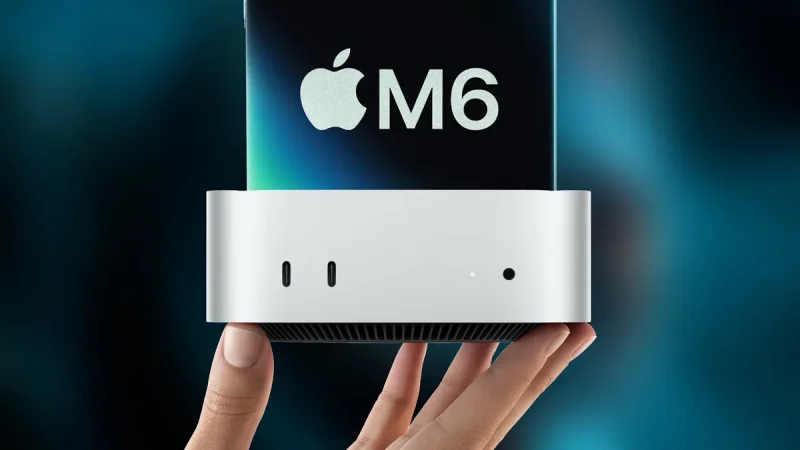
Apple's silicon roadmap is coming into clearer focus through early performance leaks, and the initial numbers point to a notable generational jump. Recent Geekbench listings for the upcoming Apple M6 system-on-chip show significant strides in both processing throughput and graphics capabilities, giving Mac users a preview of what to expect from future hardware.
The newly surfaced benchmark data highlights a 12-core GPU configuration alongside CPU performance that pushes standard entry-level M-series chips into territory previously reserved for higher-tier Max hardware. These leaked results suggest that Apple is continuing to refine its architecture to extract maximum efficiency and raw computing power out of its integrated components.
Graphics Power Takes a 31 Percent Leap in Metal Tests
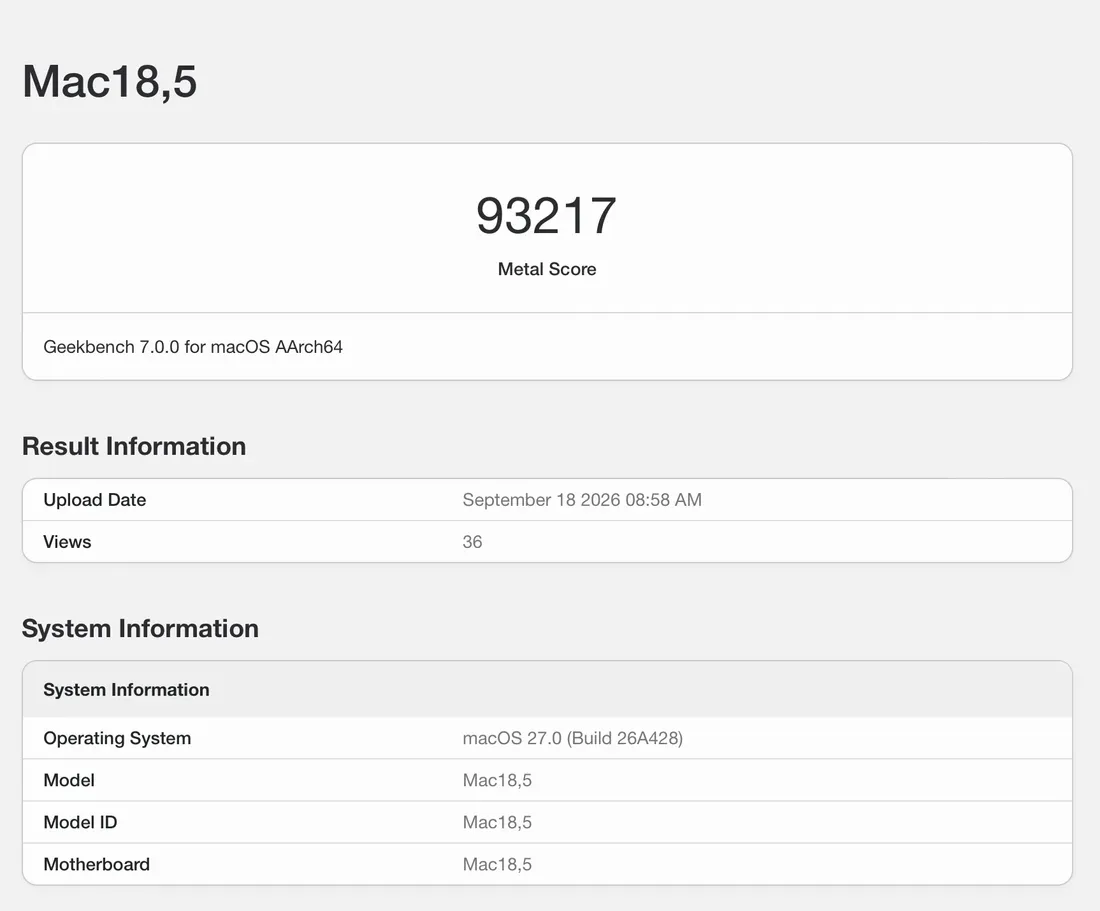
In the Metal benchmark suite within Geekbench 7, the 12-core Apple M6 integrated graphics processor achieved a score of approximately 92,000 points. This represents a roughly 31 percent performance boost over the 10-core GPU found in the preceding M5 processor generation. For creative professionals working with real-time video rendering, complex 3D viewports, and heavy image processing pipelines on macOS, this architectural step forward offers meaningful real-world utility.

When evaluating graphics capabilities outside of Apple's tailored ecosystem, the picture becomes slightly more complex. In legacy OpenCL benchmark runs, the M6 integrated GPU produced a score near 58,000 points. On paper, this figure places the M6 in the same performance bracket as an eight-year-old Nvidia GeForce RTX 2060 Max-Q mobile dedicated GPU. However, hardware enthusiasts should treat this specific figure with caution. Apple officially deprecated OpenCL support on macOS around eight years ago in favor of its native Metal graphics framework, meaning modern Apple silicon receives virtually zero driver optimization for OpenCL workloads.
CPU Muscle Matches M3 Max Capabilities
The graphics gains on the M6 are paired with equally noteworthy performance jumps on the CPU side. Benchmark listings reveal single-core CPU scores ranging from 4,071 up to a remarkable 4,600 points. In multi-threaded evaluation tests, the M6 recorded a score of 22,783 points.
To put those figures into practical perspective, a multicore score near 23,000 allows a standard base M-series processor to match the multi-threaded computing capability of the flagship M3 Max silicon from two generations prior. Meanwhile, the single-core scores highlight three full generations of single-threaded architectural refinements, delivering immediate responsiveness during intensive single-threaded application tasks, complex code builds, and heavy web development workloads.

Release Expectations and Market Context
While these benchmark listings offer a clear look at Apple's architectural progress, concrete details regarding commercial hardware deployment remain unconfirmed. Official release timelines and global pricing structures for M6-powered Mac computers have not yet been announced by Apple.
For users deciding whether to upgrade their current Mac setups or wait for future desktop and portable hardware, these early findings suggest that the M6 generation will deliver a substantial architectural step forward in computing and graphics capability.