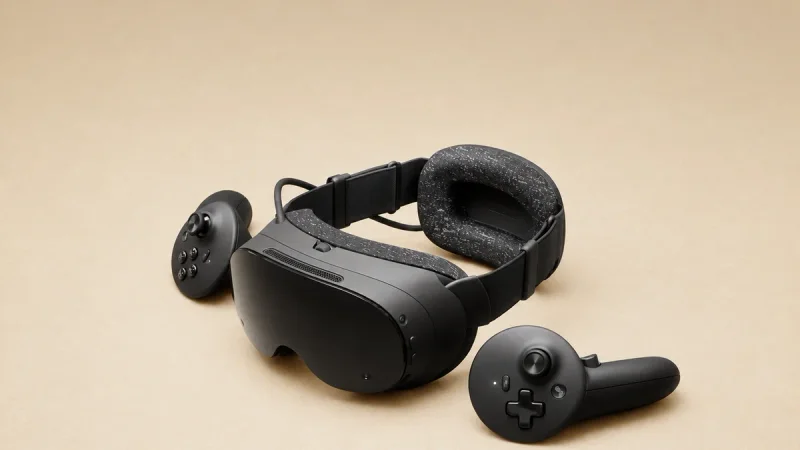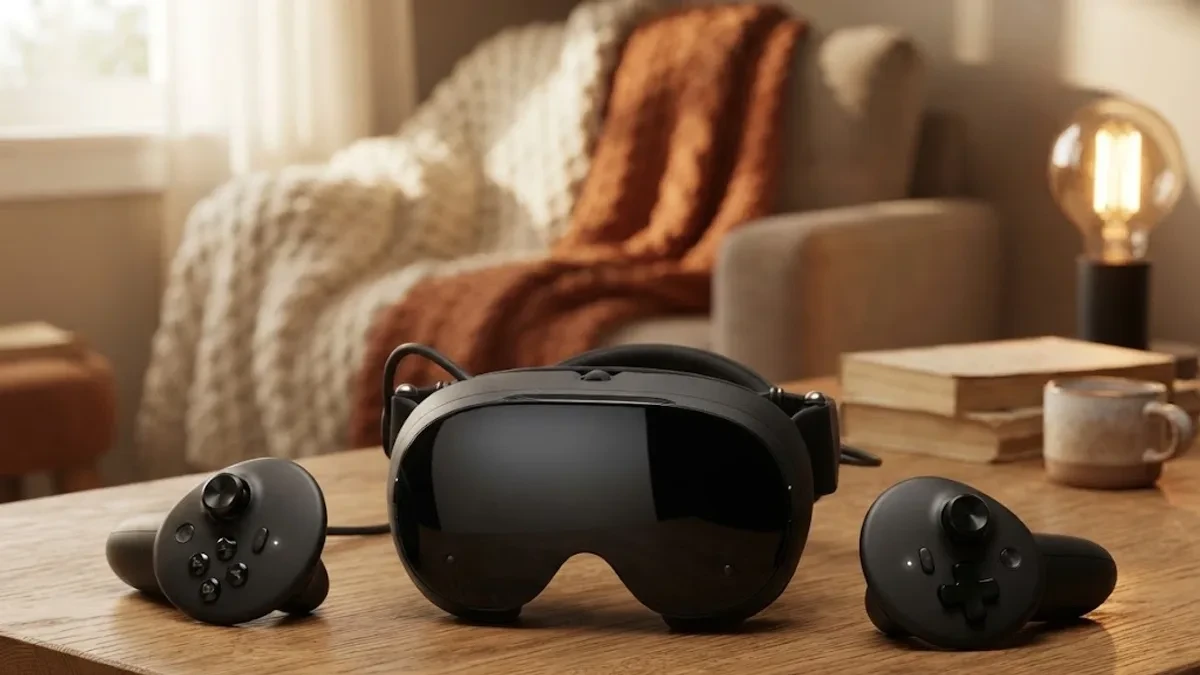
Just three days after shipping the first batch of Steam Frame VR headsets following its September 14 launch, Valve has released SteamOS 0.3.0 to resolve initial hardware and software pain points. The rapid patch focuses heavily on power management, directly targeting the agonizingly slow charging rates reported by early reviewers and day-one adopters.
Early hardware testing, including hands-on reports from Ars Technica, highlighted that the headset struggled to push past 1.5 hours of continuous play when running intense VR titles in Performance mode. While a software patch cannot physically expand internal battery capacity, SteamOS 0.3.0 accelerates battery recovery speeds when the device is powered down or in sleep mode, significantly reducing offline downtime between session sessions.
Tracking, Audio, and Visual Smoothing Refinements
Beyond power intake adjustments, the update targets core input reliability. Early users noticed motion tracking jitters whenever the controllers activated strong haptic feedback. SteamOS 0.3.0 eliminates this vibration interference, maintaining precise positional tracking during heavy gameplay interactions.
Voice communication also receives a clean fix. Valve resolved an audio bug that caused the onboard microphone to transmit distorted, garbled input. On the display side, the per-application Motion Smoothing "Force Always-On" setting now toggles correctly, alongside tailored motion smoothing refinements for Half-Life: Alyx. Players can also turn on a setting that dims active games whenever the system dashboard is brought up, while the Play Area setup menu no longer forces boundary grids onto the screen automatically.

Developer Standards and Driver Optimizations
For VR game creators, SteamOS 0.3.0 relaxes strict hardware certification rules. Valve updated its Playable classification criteria, allowing titles to achieve full compatibility without demanding a locked 1440p rendering resolution. This adjustment gives developers room to dial back baseline render targets in favor of sustained frame rates or demanding visual effects.
Under the hood, Valve upgraded the underlying Mesa graphics drivers and fine-tuned core system files to bolster stability during heavy workloads. Additional Vulkan layer updates aim to reduce rendering glitches and broaden overall game compatibility across the Steam VR library. As more units arrive in hands worldwide, this initial software layer gives the Steam Frame a far more stable foundation.