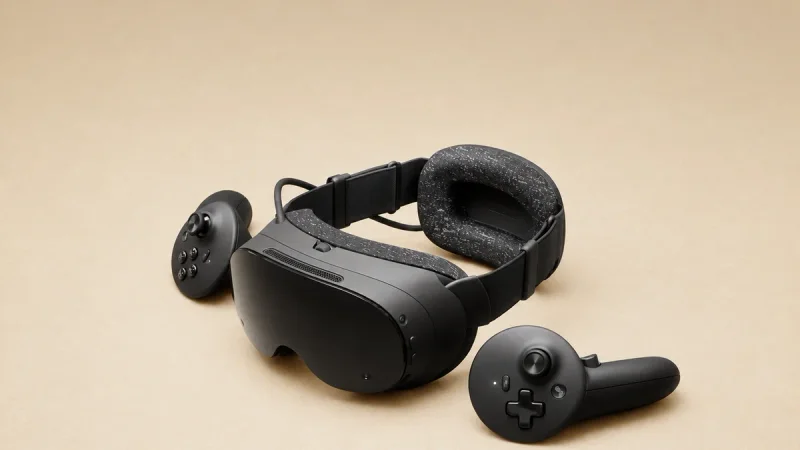
Valve has finally pulled back the curtain on the Steam Frame, detailing its official release date, pricing, and pre-order roadmap. While the prospect of a high-fidelity, standalone VR experience has generated significant excitement, the hardware is already facing scrutiny regarding its stamina. Early hands-on reports indicate that users planning for extended immersive sessions may find themselves tethered to a power outlet far sooner than anticipated.
The primary culprit appears to be the aggressive power demands of high-refresh-rate VR rendering. When pushing the hardware to its 144 Hz limit in standalone mode, the integrated 21.6 Wh battery struggles to keep pace. Specifically, reviewers testing the platform with the benchmark title Half-Life: Alyx found the headset depleted in just 55 minutes. This performance gap creates a tangible barrier for users hoping to dive into lengthy campaigns without interruption.

The Streaming Compromise
Recognizing the limitations of onboard processing, Valve has emphasized the Steam Frame's streaming capabilities. By utilizing the included Wi-Fi 6E USB dongle and multi-link streaming - which aggregates home Wi-Fi signals for increased stability - users can offload the heavy computational lifting to a host PC. This shift in architecture does provide a measurable improvement to longevity, though it remains a partial solution rather than a total fix.
Tests performed while streaming the desktop version of Half-Life: Alyx at 144 Hz extended the session duration to approximately 1 hour and 36 minutes. While this provides a bit more breathing room for a gaming session, it still falls short of the three-to-four-hour threshold that many enthusiasts consider the baseline for a comfortable VR experience. The trade-off is clear: you gain battery life, but you sacrifice the true untethered freedom that standalone VR promises.

Managing Expectations for Pre-orders
For those considering a pre-order, the data suggests that power management will be a constant companion. While dropping the refresh rate to 72 Hz does offer a slight boost to total uptime, it inevitably changes the fluid nature of the VR experience. Valve has positioned the Steam Frame as a premium entry into the portable VR space, but the current battery performance forces users to weigh the convenience of the form factor against the reality of frequent charging cycles.
As the industry watches how early adopters react to these limitations, the conversation highlights a recurring challenge in wearable tech: the difficulty of balancing high-performance silicon with portable energy density. Potential buyers should view the Steam Frame as a device that favors shorter, focused bursts of high-intensity gaming rather than long-form sessions, at least until peripheral battery solutions or software optimizations evolve to bridge the gap.