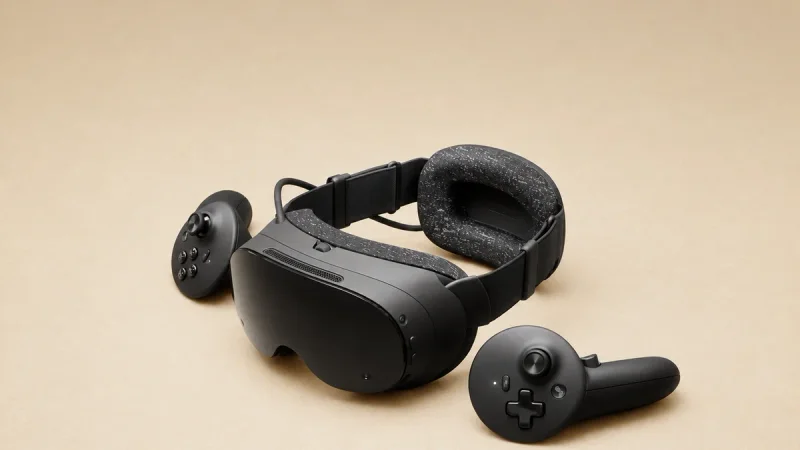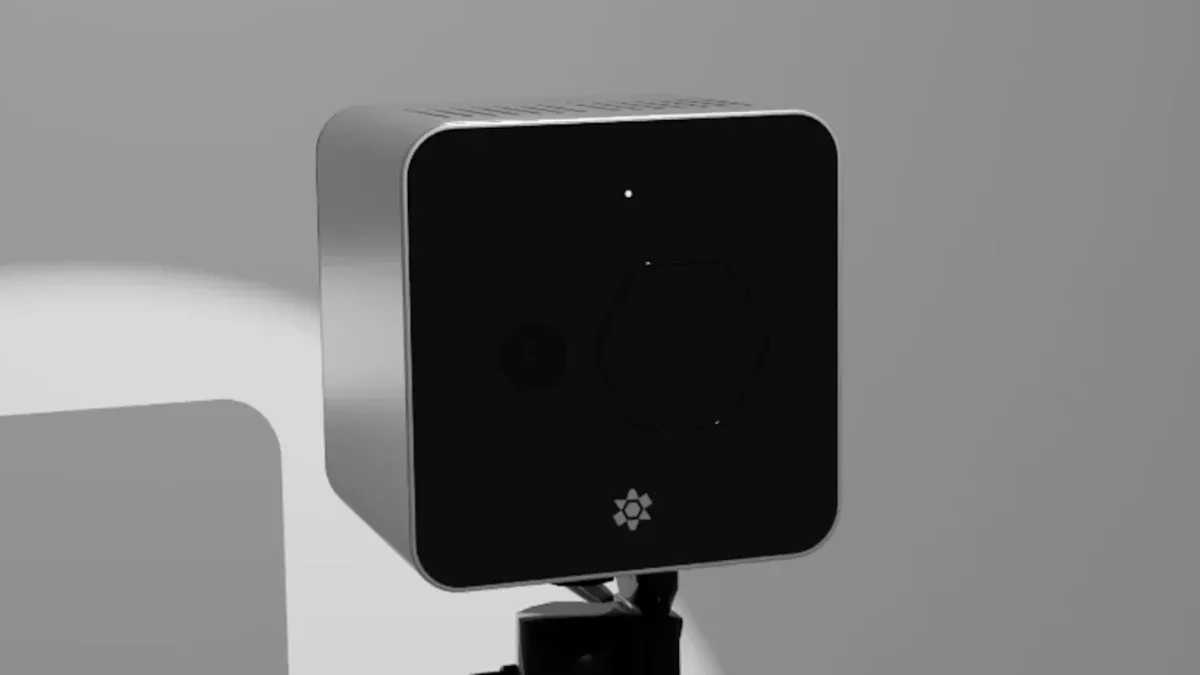
Virtual reality enthusiasts have long faced a compromise: the freedom of inside-out tracking or the precision of full-body motion capture. While standalone headsets like the Valve Steam Frame offer a convenient, wireless experience, they lack the ability to map your entire body's movement, leaving VRChat avatars looking stiff or disconnected. A new solution from Korean startup Soulart, dubbed 'Station', aims to bridge this gap by offloading the heavy lifting of motion tracking to a dedicated, standalone device.
Unlike traditional systems that require you to strap multiple battery-powered 'pucks' to your limbs, the Station functions as a markerless base station. It houses its own neural processing unit, allowing it to interpret physical movement locally without needing a high-end PC to process the data. By running the tracking logic on-device and streaming the results directly into SteamVR, the system promises to simplify the complex ritual of getting 'full-body ready' in virtual spaces.

Rethinking the Tracker Ecosystem
The technology relies on machine learning to map your limbs in 3D space, covering an area of up to 50 square meters with a refresh rate of 120 Hz. While Soulart acknowledges that this markerless approach may introduce slightly higher latency compared to dedicated hardware trackers, the convenience of a 'wear-nothing' solution is a significant trade-off for many. Current alternatives, such as the Fluxpose system, require users to attach multiple sensors to their bodies, which can be cumbersome and prone to battery fatigue.
Soulart is currently positioning the Station as a versatile tool. While a single unit provides basic functionality, the company notes that multi-unit setups will yield superior tracking fidelity and occlusion handling. This modularity allows users to scale their tracking setup based on their specific room size and the complexity of their virtual interactions.
A Standalone Future for Steam Frame
The most compelling aspect of the Station is Soulart's ongoing development of native support for the Valve Steam Frame. Because the Steam Frame operates on an Arm-based Snapdragon architecture running SteamOS, a direct integration could eliminate the need for a PC entirely. This would create a truly portable, high-fidelity VR rig that tracks your full body movements while remaining completely wireless.
For the VRChat community, this is a potential turning point. Combining the Steam Frame - which starts at $1,059 for the 256 GB model and goes up to $1,299 for the 1 TB variant - with a standalone tracking solution would represent a premium investment. While Soulart has hinted at a price point under $400 per unit, the final cost remains speculative as the company prepares for a crowdfunding phase to finalize production. For those deeply invested in the social VR ecosystem, the ability to shed the sensors and the PC cables might just justify the premium entry fee.