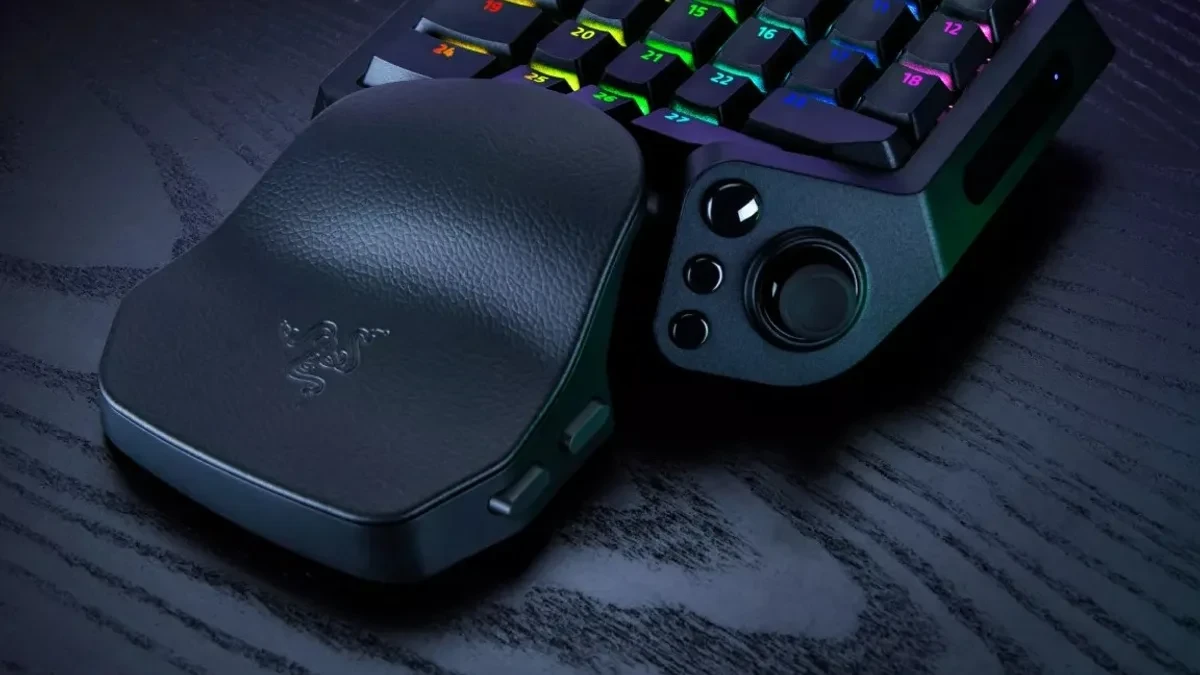
For PC gamers seeking a middle ground between the precision of mechanical keys and the fluid movement of a console controller, standard peripherals often force an awkward compromise. Razer aims to resolve this tension with the global release of the Tartarus V2 Pro, a specialized one-handed gaming keypad. Priced at $199.99, with regional pricing set at £199.99 (approximately $270) and €219.99 (approximately $242), this device targets enthusiasts looking to streamline their desktop setups while maximizing in-game efficiency.
By combining analog optical switches with a high-accuracy thumbstick, the keypad condenses an entire keyboard's worth of gaming commands into a compact, ergonomic footprint. It is designed to keep critical inputs immediately accessible, minimizing hand movement during fast-paced play sessions.
Merging Keyboard Precision with Console Control
At the heart of the Tartarus V2 Pro is a hybrid design that features 31 fully programmable controls. Unlike standard macro pads, this device incorporates an integrated, full-sized thumbstick utilizing Tunnel Magnetoresistance (TMR) technology. TMR sensors are highly regarded for their resistance to drift, a common hardware failure in traditional analog sticks that rely on physical contact potentiometers.
By placing this TMR stick directly under the player's thumb, Razer allows gamers to handle character movement or camera panning with analog precision, freeing up the remaining fingers to execute complex abilities. Accompanying the thumbstick are three dedicated thumb buttons, positioned to ensure that secondary functions like jumping, dodging, or opening inventory menus do not require shifting the hand away from primary movement controls.
Hardware Innovation and High-Polling Performance
This release marks the first time Razer has integrated three of its high-tier performance features into a single keypad: second-generation analog optical switches, 8000Hz HyperPolling, and the integrated TMR stick technology. Of the 31 available inputs, 24 keys utilize these advanced analog optical switches.
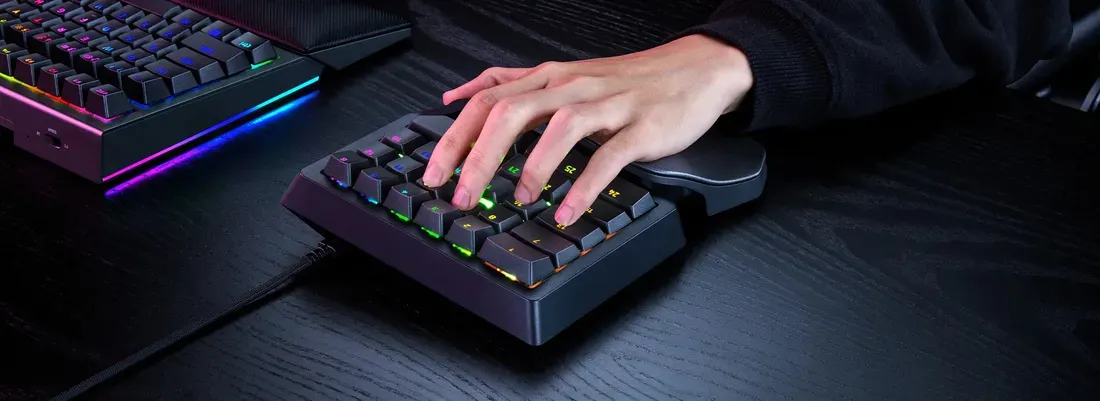
These switches offer customizability that traditional mechanical keyboards cannot match. Gamers can adjust the physical actuation point of each key from a shallow 0.1mm to a deep 4.0mm, tailoring the sensitivity to specific game genres. For instance, a first-person shooter player might configure movement keys for instant, hair-trigger actuation, while setting ability keys deeper to prevent accidental presses.
The keypad also supports advanced software features designed to optimize input responsiveness:
• Rapid Trigger Mode: Allows keys to reset instantly upon upward motion, enabling faster repeated presses.
• Snap Tap and Snap Flex: Features that prioritize the latest input when two opposing directions are pressed simultaneously, eliminating input latency during strafing.
• Dynamic Keystroke: Enables a single key to register two distinct actions based on how far it is pressed.
• Dual-Keypress Priority: Manages overlapping inputs to ensure critical commands are never dropped.
With 8000Hz HyperPolling, the device reports inputs to the computer up to eight times faster than standard gaming keyboards, reducing input latency to a fraction of a millisecond.
Ergonomics and Synapse Customization
Physical comfort is a major focus for a device intended to replace half of a keyboard. The Tartarus V2 Pro features an adjustable wrist rest designed to slide and rotate, allowing users to find the exact angle that matches their hand size and grip style. In real-world testing, CGMagazine highlighted the utility of this design, noting that the keypad is particularly beneficial for one-handed gaming and praising its comfortable wrist support and compact physical footprint.
To manage the extensive programming options, the device relies on Razer Synapse software. Users can configure up to 24 distinct keymaps, which can be stored across three onboard profiles. This allows players to swap layout configurations on the fly when switching between different games or character classes without needing to open the software interface.
Market Availability and Value
The Tartarus V2 Pro is positioned as a premium niche product for competitive players, MMO enthusiasts, and gamers with accessibility needs who require a highly customizable, one-handed control scheme. Razer backs the device with a 2-year warranty, providing security against hardware defects.
The keypad is currently available for purchase through Razer's official online and physical stores, as well as select retail partners globally. At $199.99 (£199.99 or €219.99), it represents a significant investment, but for players looking to eliminate desk clutter and master complex control schemes, it offers a highly specialized solution that standard keyboards simply cannot replicate.