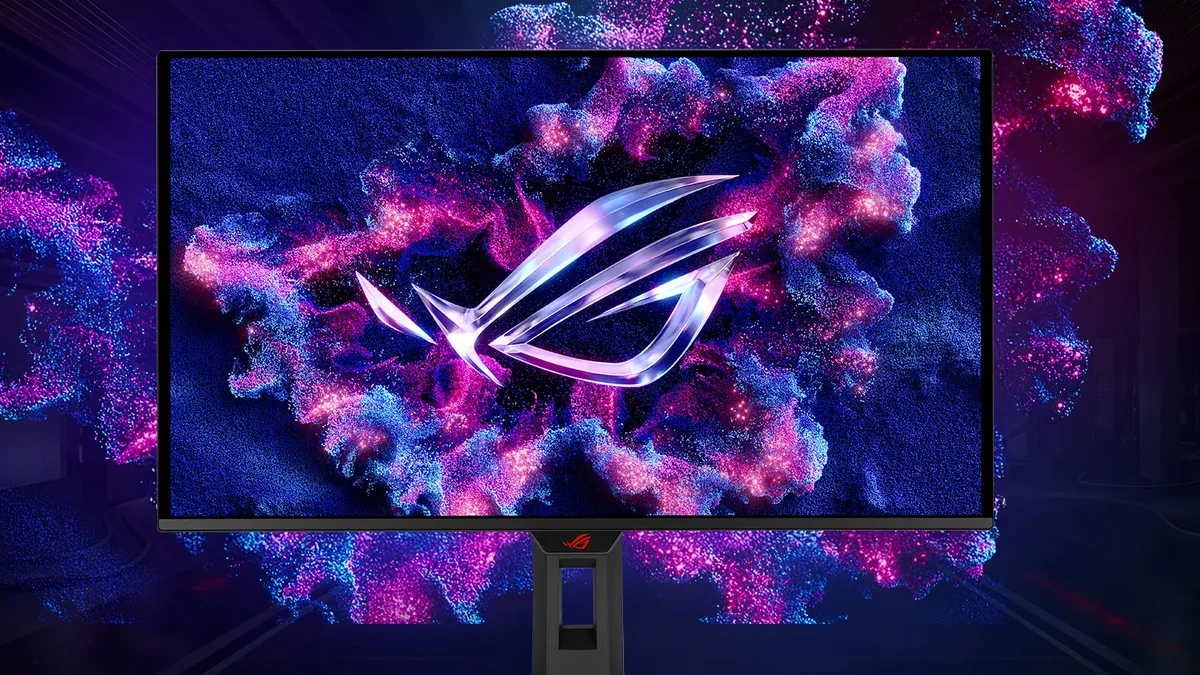
The pursuit of the perfect gaming display often feels like a trade-off between motion clarity and absolute brightness. Asus is looking to bridge that gap with the newly announced ROG Strix OLED XG27ACDMSR. This 27-inch 1440p monitor serves as a refined iteration of the previous XG27ACDMS, trading incremental spec bumps for structural improvements that address the most common complaints regarding OLED longevity and environmental glare.
At the core of the upgrade is a 3rd-generation QD-OLED panel featuring a new Penta Tandem structure. By stacking five layers of organic materials, Asus has pushed peak brightness to 1,300 nits in HDR, a significant jump over the 1,000-nit ceiling of its predecessor. SDR content also benefits, climbing to 300 nits. This increased headroom helps the display secure a VESA DisplayHDR True Black 500 certification, ensuring that shadows retain their depth even in well-lit rooms.

Beyond raw luminance, the most practical addition is the new BlackShield film coating. OLED monitors have historically struggled with ambient light washing out black levels, but Asus claims this new finish improves black level performance by 40%. Perhaps more importantly for long-term owners, the coating also boosts scratch resistance by 2.5 times, providing a much-needed layer of protection for the notoriously delicate surface of OLED panels.
For competitive players, the XG27ACDMSR ups the ante by pushing the refresh rate to 320Hz, up from 280Hz. This shift provides a subtle but noticeable improvement in fluid motion, particularly in twitch-based shooters. Asus has wisely kept the core gaming utility intact, including support for both G-Sync and FreeSync Premium Pro to eliminate tearing, alongside its ELMB (Extreme Low Motion Blur) technology for sharpening fast-moving targets.

While the internal tech has evolved, the physical footprint remains familiar. The monitor retains the same ergonomic stand adjustments and connectivity suite, featuring HDMI 2.1, DisplayPort 1.4, and a USB-C port with 15W Power Delivery. While 15W is sufficient for maintaining a peripheral or keeping a mobile device topped off, it falls short of the power requirements for modern gaming laptops, so users should plan to keep their dedicated power bricks nearby.
Asus continues its commitment to panel health with the inclusion of OLED Care Pro. This suite includes the Neo Proximity Sensor, which intelligently manages power states to mitigate the risk of burn-in during periods of inactivity. While the company has listed the XG27ACDMSR on its official website, global pricing and specific regional release dates have not yet been announced. Given that the previous model launched at $649, enthusiasts should expect a premium price point when it hits retail shelves.