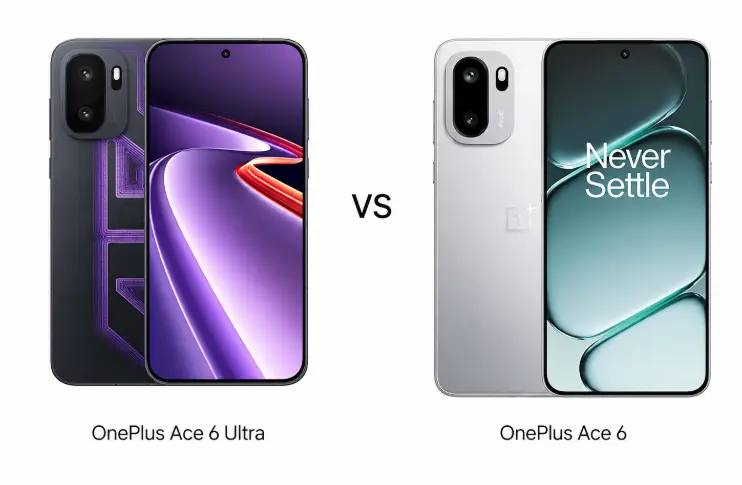
The OnePlus Ace 6 Ultra and OnePlus Ace 6 come with premium builds and flagship specs but cater to two distinct types of users. Both sport stunning 165Hz AMOLED screens, ultra-fast 120W charging, and robust water and dust resistance. Yet, their differences in battery size, chipset choice, camera setup, and pricing paint a clear picture of who each phone is designed for.
- OnePlus Ace 6 Ultra features a massive 8600mAh battery and MediaTek Dimensity 9500 chipset.
- OnePlus Ace 6 offers Snapdragon 8 Elite chipset with a slightly larger 6.83-inch display.
- Both have dual 50MP + 8MP cameras; Ultra has a larger primary sensor, Ace 6 supports 4K 120fps video.
- Price gap of roughly ₹16,500 ($85) reflects Ultra’s premium hardware and design options.
Subtle Design and Display Differences
Starting with looks and feel, both phones share an aluminum frame, Crystal Shield Glass, and IP68/IP69K ratings. The Ultra introduces an optional eco-leather back, adding a luxe, distinctive texture compared to the standard glass back on the Ace 6. While the overall design language is consistent, this eco-leather finish nudges the Ultra into a more premium territory.
Display-wise, both use AMOLED panels with 1 billion colors, Dolby Vision, HDR10+, and a silky smooth 165Hz refresh rate. The Ace 6 edges out slightly with a 6.83-inch screen versus the Ultra’s 6.78-inch. But image quality and color vibrancy are effectively neck and neck, making both equally appealing for gaming and media consumption.
Performance and Battery: Power Users Take Note
Under the hood, the Ace 6 Ultra embraces the MediaTek Dimensity 9500 chipset, a newer 3nm chip targeting raw power and efficiency. Meanwhile, the Ace 6 sticks with Qualcomm’s Snapdragon 8 Elite, a 3nm powerhouse known for gaming optimization and broad app compatibility. Both deliver flagship-level performance, but the Ultra leans into future-ready hardware.
Battery capacity marks a notable upgrade on the Ultra with 8600mAh, topping the Ace 6’s already generous 7800mAh cell. Both support 120W fast charging and feature bypass charging that helps reduce battery stress during gaming sessions. For marathon users, the Ultra’s larger battery promises longer screen time and less frequent charging.
Camera Trade-offs: Bigger Sensor vs. Video Capabilities
Photography fans will find both devices equipped with a 50MP primary and 8MP ultrawide camera. The Ultra’s larger 1/1.55-inch primary sensor should capture more light for better low-light shots and sharper stills. However, the Ace 6 shines in video department, supporting 4K recording at 120fps, ideal for creators looking to capture smooth, high-frame-rate footage.
Selfie cameras remain unchanged at 16MP with gyro-EIS stabilization, ensuring consistent video call and selfie quality across both models.
Price and Value: Is the Ultra Worth the Premium?
The Ace 6 is priced around ₹32,000 ($400), while the Ultra commands approximately ₹48,500 ($485), creating a significant price gap. The Ultra’s added features — newer chipset, bigger battery, eco-leather finish, Bluetooth 6.0, and enhanced gaming hardware like advanced cooling and dedicated Wi-Fi chip — justify the premium for users prioritizing cutting-edge specs and battery endurance.
However, the Ace 6 remains a stellar value, delivering nearly all flagship essentials at a more accessible price. Its Snapdragon 8 Elite processor and slightly larger display make it a balanced choice for most buyers who want flagship performance without breaking the bank.
Choosing Your OnePlus Ace
Both phones impress with their premium builds, vibrant displays, and flagship-level performance, but your choice boils down to priorities. Opt for the OnePlus Ace 6 Ultra if you crave maximum battery life, the latest hardware, and a touch of luxury with eco-leather. The Ultra also edges ahead in still photography thanks to its larger sensor.
On the other hand, the OnePlus Ace 6 is a winner for those who want flagship power, a slightly bigger screen, and advanced video recording capabilities at a compelling price. It’s a smart pick for gamers and content creators who value performance and affordability.
Whichever you choose, both models embody OnePlus’s commitment to blending style, power, and innovation in the mid-range flagship segment.
Via: Gizmochina