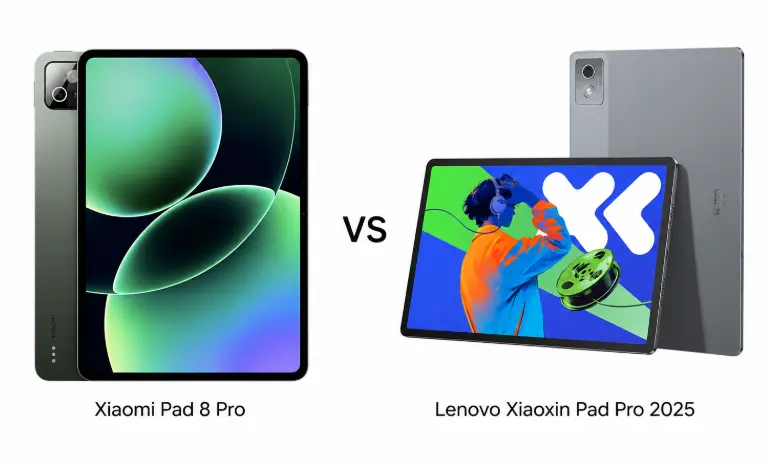
Choosing the right Android tablet often means balancing performance, display size, battery life, and price. The Xiaomi Pad 8 Pro and the Lenovo Xiaoxin Pad Pro 12.7 2025 offer two distinct takes on what a versatile tablet should be. Xiaomi aims for flagship-level power and premium design, while Lenovo leans into a larger screen and productivity features at a more accessible price point.
- Xiaomi Pad 8 Pro features a slim 5.8mm aluminum unibody and weighs around 485g.
- Lenovo Xiaoxin Pad Pro 12.7 2025 boasts a larger 12.7-inch 2.9K 144Hz display with HDR10+ support.
- Xiaomi is powered by Snapdragon 8 Elite with up to 16GB RAM and UFS 4.1 storage.
- Lenovo runs on MediaTek Dimensity 8300 with expandable storage and a 10200mAh battery.
Premium Build Meets Portability on Xiaomi Pad 8 Pro
The Xiaomi Pad 8 Pro stands out with its slim, lightweight aluminum body that fits comfortably in hand for extended use. Its 11.2-inch 3.2K IPS display with Dolby Vision and 144Hz refresh rate offers sharp visuals and smooth scrolling, ideal for gamers and multimedia enthusiasts. The device also supports a magnetic stylus, enhancing its versatility.
In contrast, Lenovo’s Xiaoxin Pad Pro 12.7 2025 focuses on workspace productivity with a larger 12.7-inch display that supports HDR10+ and Dolby Vision. Though bulkier, it’s designed to maximize screen real estate for multitasking, reading, and media consumption. The side-mounted fingerprint scanner and POGO pin support hint at its productivity-first approach.
Performance: Flagship Power vs. Solid Productivity
Under the hood, Xiaomi’s Snapdragon 8 Elite chipset delivers flagship-level CPU and GPU performance, supported by up to 16GB RAM and speedy UFS 4.1 storage. This setup handles demanding gaming, video editing, and multitasking with ease, making it a future-proof choice for power users.
Lenovo’s MediaTek Dimensity 8300 is a strong upper-midrange processor that handles daily tasks, office work, and casual gaming smoothly. While it doesn’t match the raw power of Xiaomi’s chipset, it offers sufficient performance for productivity and entertainment without strain.
Battery and Accessories: Fast Charging vs. Extended Endurance
Xiaomi includes a 9200mAh battery with 67W fast charging, allowing quick top-ups and even reverse wired charging for accessories—a handy feature for users on the go. Lenovo counters with a larger 10200mAh battery, favoring longer screen-on times for video streaming and work sessions. Its slower charging pace is balanced by this endurance advantage.
Both tablets support accessories like styluses and keyboards. Xiaomi benefits from its HyperOS ecosystem integration, enhancing connectivity with other devices. Lenovo’s POGO pin connector and expandable storage make it well-suited for students and professionals who need a reliable workstation setup.
Camera and Media Capabilities: Xiaomi Takes the Lead
While tablet cameras aren’t usually a dealbreaker, Xiaomi equips the Pad 8 Pro with a 50MP rear camera and a 32MP ultrawide front camera, enabling detailed photos and high-quality video calls. It also supports 4K recording at 60fps and Dolby Atmos audio with high-resolution support.
Lenovo’s Xiaoxin Pad Pro offers a 13MP rear and 8MP front camera suitable for essential tasks like document scanning and video conferencing. Its four-speaker JBL system with Dolby Atmos provides excellent audio, especially paired with its larger display, enhancing entertainment experiences.
Price and Value: Premium vs. Practical
The Xiaomi Pad 8 Pro is priced around $500 (approximately ₹47,000), positioning it firmly in the premium Android tablet segment. It justifies this with flagship performance, superior cameras, and fast charging.
The Lenovo Xiaoxin Pad Pro 12.7 2025 targets a lower price bracket but delivers a large 144Hz display, solid performance, expandable storage, and a bigger battery. This makes it attractive for users seeking maximum value without needing top-tier specs.
Choosing Between Two Strong Contenders
The Xiaomi Pad 8 Pro is ideal for users who want a powerful, premium-feeling tablet with excellent cameras and fast charging—great for gamers, content creators, and those who value cutting-edge specs.
Conversely, the Lenovo Xiaoxin Pad Pro 12.7 2025 suits buyers prioritizing screen size, battery life, and productivity at a more accessible price. Its larger display and expandable storage make it a practical choice for students and professionals focused on multitasking and media consumption.
Both tablets serve distinct needs, so your decision hinges on whether you prefer flagship performance and portability or a bigger screen with extended endurance and productivity features.
Via: Gizmochina