High-speed trains like the TGV often face a trade-off between seating capacity and passenger comfort, especially in second class. The new TGV M addresses this by increasing seats up to 740 in a low-cost configuration, while maintaining a reasonable level of comfort on its 656-foot length.
- Seating capacity rises from about 600 to 740 seats in low-cost layout
- Power cars are shortened to add an extra carriage
- Seat pitch slightly improved compared to predecessors
- Eurostar Celestia variant offers fewer seats but more classes
How Shorter Power Cars Unlock More Space
The TGV M achieves its higher capacity mainly by redesigning its power cars and passenger carriages. Each power car is 13 feet shorter than before, and the cars themselves are 3.3 feet shorter. This allows the train to add an extra carriage without increasing overall length.
Additionally, technical systems previously housed in the bar car have been moved into the power cars, freeing up room for more seats. This flexibility means the train can be configured with or without a bar car, depending on whether the operator prioritizes low-cost seating or onboard amenities.
Balancing More Seats With Passenger Comfort
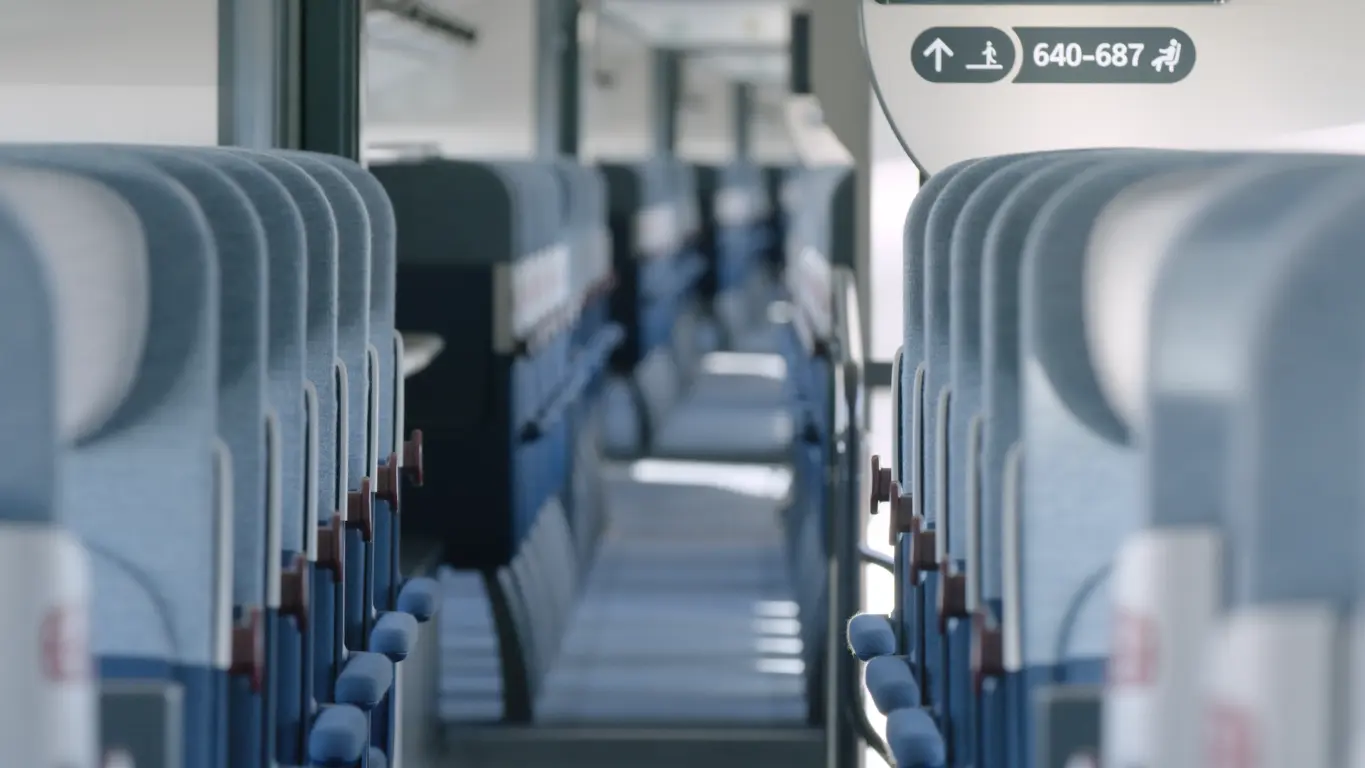
Despite the high seating density—up to 3.7 seats per foot in the low-cost variant—the TGV M maintains a seat pitch of around 35.6 inches. This is a slight improvement over the predecessor’s 35.4 inches and notably more generous than typical economy airline seats, which often squeeze passengers into 31 inches or less.
However, the sense of spaciousness will also depend on design factors such as lighting and sightlines. The TGV’s traditionally darker interiors have been criticized for feeling cramped, so whether the TGV M improves this perception remains to be seen during passenger service.
When Will You See the TGV M in Action?
Approved for the French network in May 2024, the TGV M is scheduled to begin commercial service in early September 2026 with SNCF’s Inoui branding. Initial deliveries began in June 2024, with 13 trains expected by the end of the year. The full fleet will eventually reach about 130 trains, comparable to previous TGV generations.
The TGV M promises improved connectivity as well, with 5G-based WiFi planned. This could make working onboard more comfortable, even for larger laptops, although some choices like USB configurations seem less optimized.
Eurostar Celestia: A Different Take on the TGV M
Eurostar’s version of the TGV M, called Celestia, will focus on premium travel and offer fewer seats—around 540 per trainset in a three-class layout. These trains will run in double traction during peak times to provide up to 1,080 seats, addressing capacity constraints in the Channel Tunnel.
Celestia trains are expected from 2031 and will support multiple rail networks beyond France, potentially operating routes connecting London with Germany. Their lower seating density reflects a different market focus compared to SNCF’s low-cost variants.
Consider the Trade-Offs Before Booking
The trade-off is capacity. While the TGV M can carry significantly more passengers, the low-cost 740-seat layout may feel more crowded than the 600-seat standard configuration. Buyers and travelers should consider whether they prefer more affordable fares or a bit more space and amenities.
Consider the TGV M if you need efficient, high-capacity travel across France with decent onboard comfort. Skip it if you prioritize spacious seating and premium service, where other variants like Eurostar Celestia may be more suitable when available.
(Via)