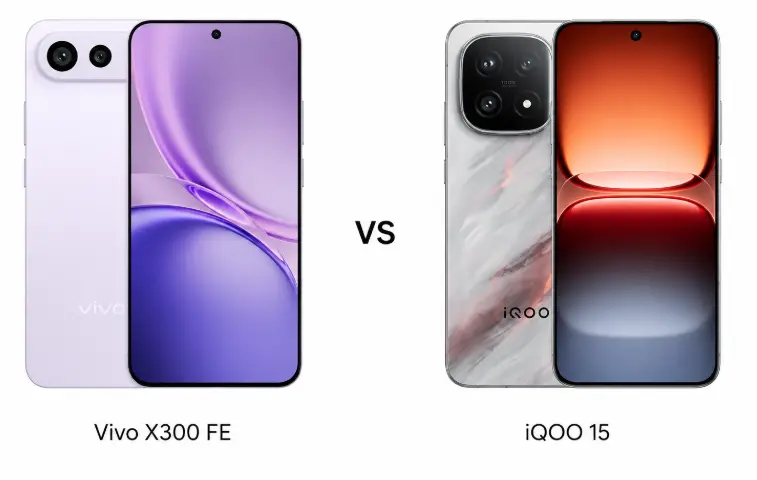
The Vivo X300 FE and iQOO 15 represent two very different takes on the flagship phone game. Vivo bets on compact size, refined camera work, and polished day-to-day use. iQOO throws specs, battery, and price into the ring for users who want raw power without the usual flagship tax.
- Vivo X300 FE offers a premium compact design with Zeiss camera tuning.
- iQOO 15 boasts Snapdragon 8 Elite Gen 5 and a 7000mAh battery with 100W charging.
- Vivo focuses on balanced display and refined selfies; iQOO pushes 2K 144Hz and aggressive image tuning.
- Pricing splits the audience: Vivo around $950, iQOO undercuts at about $600.
Flagship Power, Mid-range Compromises
The Vivo X300 FE sticks to a smaller footprint with a glass-and-metal body that feels easier to grip. It’s the kind of phone that won’t leave your hand tired after extended use. iQOO 15 goes bigger and louder — a larger chassis, sharper edges, and a color-shifting rear panel that screams performance over subtlety. Both phones have IP68/IP69 ratings, so protection is tight across the board.
The display story favors iQOO 15 if you’re chasing sheer multimedia punch: a 2K LTPO AMOLED panel running at 144Hz with Dolby Vision and HDR Vivid support. Vivo’s 5000-nit LTPO AMOLED is bright and less saturated, making it gentler on the eyes. The catch is simple: if you want a practical daily driver, Vivo edges out; if you want a screen that dazzles, iQOO takes the lead.
Raw Power and Battery Life Play Different Games
Under the hood, Vivo X300 FE runs Snapdragon 8 Gen 5 with UFS 4.1 storage — smooth for daily tasks and smart thermal management. iQOO 15 revs that up with Snapdragon 8 Elite Gen 5, higher RAM options, and even a 1TB storage variant. It’s clearly for users who want to max out benchmarks and gaming performance.
Battery capacity is another area where iQOO flexes: 7000mAh and 100W wired charging. Vivo offers a respectable 6500mAh with 90W wired, plus wireless and reverse charging. Real-world usage, especially with 5G and bright screens, will likely narrow those differences, but iQOO’s numbers are hard to ignore if endurance matters.
Camera: Zeiss Refinement vs Hardware Versatility
Vivo X300 FE leans heavily into camera quality with Zeiss optics and a 50MP primary sensor that promises natural colors and solid dynamic range. The periscope telephoto lens and optional Zeiss zoom accessory add photography tricks rarely seen at this price point. Its 50MP autofocus front camera also beats the competition in sharpness and portrait separation.
iQOO 15 counters with three 50MP sensors, a stronger ultrawide lens, and punchier image tuning. It handles video better but tends to overdo saturation in some lighting. Selfie performance is adequate but falls short of Vivo’s flagship-level finesse.
Price Tags Tell Different Stories
Vivo X300 FE hits around $950, reflecting its premium build, camera partnership, and wireless charging. It’s pitched at users who care more about polish and camera quality than raw specs. iQOO 15 disrupts the premium space by offering Snapdragon 8 Elite Gen 5, a 2K 144Hz display, and massive battery for about $600. That’s a bold value play that makes it a tough competitor for traditional flagships.
GizmoIndo’s Take
Neither phone is outright better — they’re designed for different priorities. Vivo X300 FE is the compact flagship for camera enthusiasts who want a refined, balanced experience without chasing specs. It feels like a mature product tailored for comfort and photography.
iQOO 15 caters to power users and gamers who don’t mind a bigger phone and less subtle design. Its aggressive pricing and high-end specs challenge the notion that flagship means overpriced. However, the trade-offs include less finesse in camera tuning and bulkier handling.
Ultimately, your choice boils down to what matters more: polished usability and camera finesse or sheer hardware muscle and battery endurance. Both phones stick to their guns, but don’t hold your breath for perfect all-day battery life or flawless camera output — real-world use will tell the final story.
(Via)