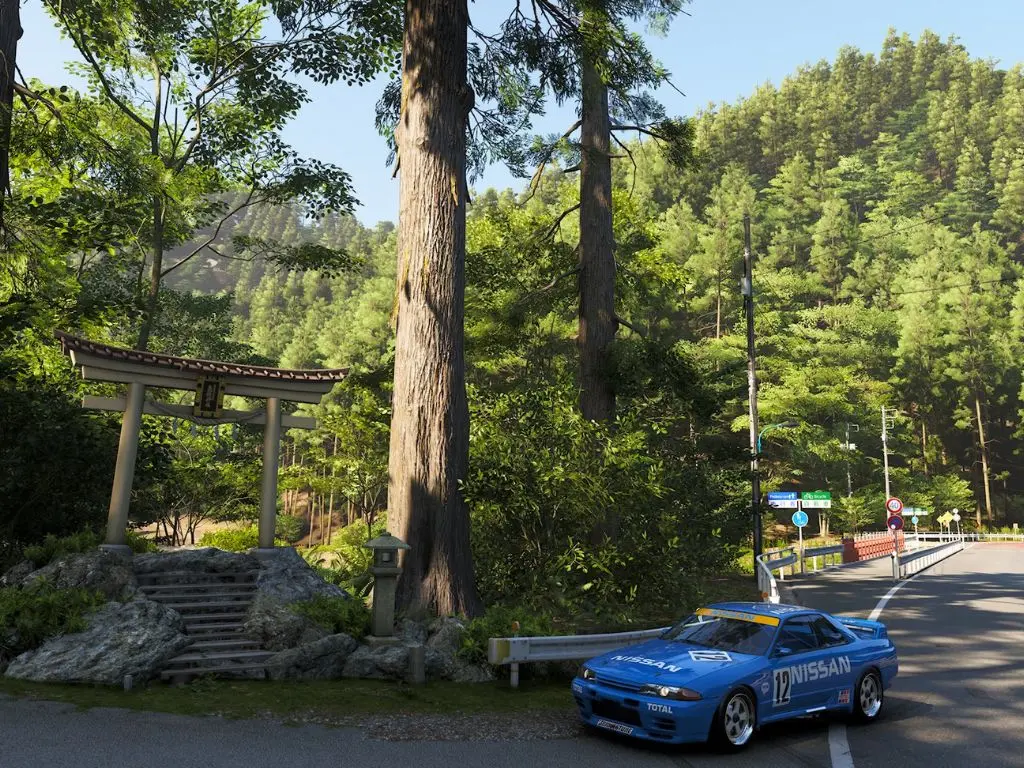
How often does a racing game get praised by the creator of Silent Hill for its realistic world? Forza Horizon 6, released in May 2026, has drawn significant attention for its detailed recreation of Japan’s diverse landscapes. Many Japanese players, including renowned game designer Keiichiro Toyama, have expressed surprise at how closely the in-game environments resemble real places.
- Japanese players find the game’s map strikingly lifelike, blending urban and rural scenes.
- Keiichiro Toyama highlights the uncanny similarity to real Tokyo streets.
- Architect Yuta Horie analyzed the map using urban design theory, confirming its cultural accuracy.
- The map features iconic landmarks and subtle local details like parking lots and mountain roads.
Authenticity Through Familiar Urban and Rural Details
Forza Horizon 6’s Japanese map goes beyond generic landscapes by incorporating specific urban elements such as chamfered mixed-use buildings and pedestrian bridges common in Tokyo. The rural areas are equally detailed, with features like narrow private roads and rice paddies that resonate deeply with locals.
Architect Yuta Horie credits the developers for assembling “fragments” of visual language, creating a cohesive environment that triggers subconscious recognition among Japanese players. This approach draws on Kevin Lynch’s urban design principles, emphasizing paths, edges, nodes, and landmarks to craft a believable world.
When Game Design Meets Cultural Respect
Keiichiro Toyama’s enthusiasm reflects a broader appreciation for Playground Games’ effort to respect Japanese culture. His reaction—”I was like, ‘Whoa, it’s Forza Horizon 6 in real life lol!’”—captures the experience of many who feel the game is less a virtual world and more a parallel reality.
Local players from rural Japan also praise the game for its attention to detail, noting how the transition from paved to unpaved roads and the familiar retaining walls evoke a strong sense of place. These intricate environmental touches help the game resonate authentically with its audience.
The Trade-Off Is the Usual Gaming Limitation
While the map’s realism is impressive, it remains a curated version of Japan meant for gameplay enjoyment rather than perfect replication. Players looking for a fully accurate navigation experience should note that some landmarks and road layouts may be simplified or altered for fun and flow.
Why Forza Horizon 6’s Japan Map Matters
For international players, this means getting a taste of Japan’s atmosphere without leaving the house, blending iconic sights with local subtleties. The attention to detail suggests a growing trend where games respect regional cultures deeply, enhancing immersion.
Consider Forza Horizon 6 if you value a racing game that offers more than just speed—one that also captures the spirit of a place with care and precision. Skip it if you expect a perfect digital twin, as some compromises remain for gameplay balance.
(Via)