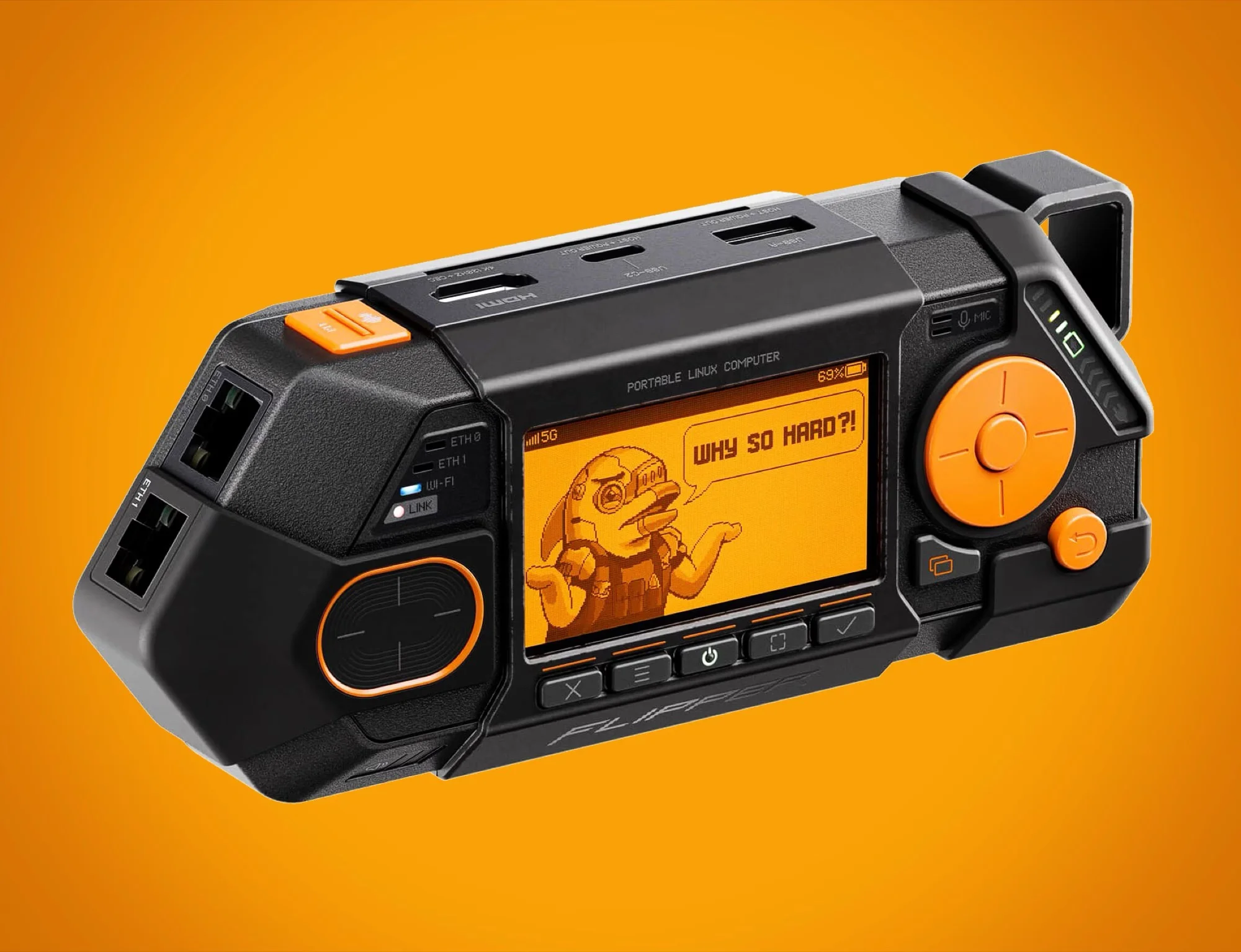
Network professionals and tech enthusiasts often juggle several devices to manage Wi-Fi, cellular, and wired connections. The newly announced Flipper One multitool attempts to consolidate these functions by supporting 5G, Wi-Fi 6E, and wired Ethernet in one compact device. But how practical is it for everyday use, and what compromises come with this versatility?
- Supports Wi-Fi 6E and dual Ethernet ports for flexible networking.
- M.2 slot lets users add a 5G modem for mobile connectivity.
- Runs a full Linux system on an ARM-based Rockchip RK3576 chip.
- Can output 4K at 120Hz via HDMI, usable as a desktop PC.
The 5G and Wi-Fi 6E Combination Targets Network Flexibility
Flipper One is designed less as a successor to the popular Flipper Zero and more as a complementary device focused on network functionality. With Wi-Fi 6E onboard, the device can access less crowded 6 GHz wireless bands, improving speed and latency. Two Ethernet ports allow for wired connections, making it suitable for bridging different network types.
The standout feature is the M.2 slot, which accepts a 5G modem module. This lets users turn Flipper One into a mobile router or VPN gateway on the go, a practical tool for professionals needing secure and flexible internet access in changing environments.
Linux on ARM Brings Desktop-Like Usability
Beyond networking, the device runs a Rockchip RK3576 processor with eight ARM cores and 8 GB of LPDDR5x RAM, enough to support a full Linux OS. The HDMI output supports 4K resolution at 120 Hz, allowing Flipper One to function as a lightweight desktop PC when connected to a monitor.
This opens possibilities for developers or IT specialists who want a single device that can handle both network management and basic computing tasks without carrying multiple gadgets.
The Trade-Offs Are in Availability and Open Source Status
Although promising, Flipper One is still in development with no confirmed release date or pricing. It will launch via crowdfunding, so buyers should be prepared for uncertainties in availability and final specs.
Another consideration is firmware openness. While Flipper plans to maintain an open source approach, running Linux on ARM currently involves proprietary components, which may delay full open source implementation. This could affect customizability for some users.
Consider It If You Need a Versatile Network Tool
Flipper One makes sense for network enthusiasts, IT professionals, or developers who want one device to manage Wi-Fi, cellular, and wired networks with added Linux capabilities. Its modular design offers flexibility for various environments, especially when stable mobile internet is needed.
Skip it if you prefer a ready-to-use product with established support or if you don’t require advanced networking features. The crowdfunding nature means it may take time before it’s widely available and fully polished.
(Via)