
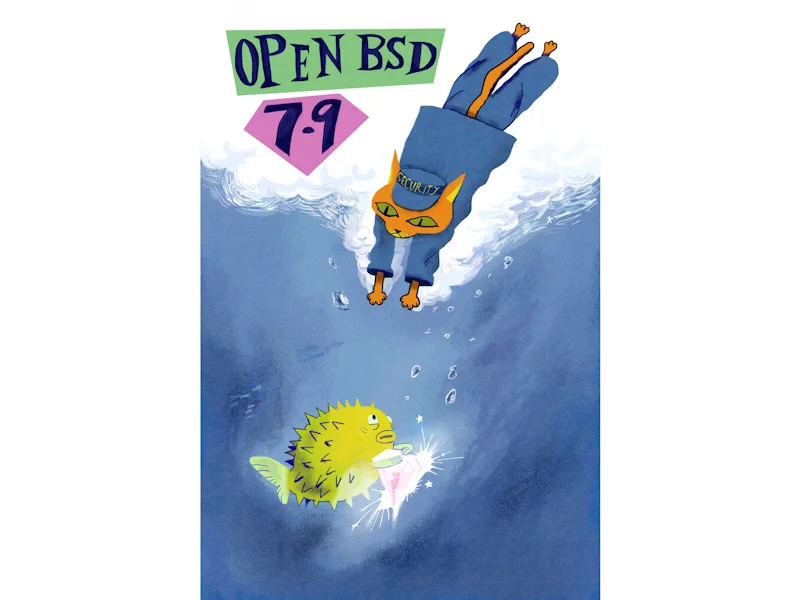
Maintaining security and compatibility often means balancing innovation with stability, especially for open-source operating systems. OpenBSD 7.9 continues this approach by refining CPU core management and expanding hardware support, addressing real-world needs for reliable multi-core performance and up-to-date device compatibility.
- Improved CPU scheduling for processors with varying core speeds
- New support for ARM64 SoCs including RK3588 and RK3576
- Updated LibreSSL and OpenSSH enhance security protocols
- Expanded virtualization and wireless stack improvements
Better Handling of Multi-Core Processors
OpenBSD 7.9 introduces more nuanced CPU core management, which is particularly useful for systems with heterogeneous cores running at different speeds. This update helps the OS schedule tasks more efficiently, improving performance and responsiveness without compromising OpenBSD’s security-first design.
New Hardware Support Broadens OpenBSD’s Reach
With ARM64 architecture gaining traction, OpenBSD 7.9 now enables ice on arm64 and adds support for the RK3588 and RK3576 SoCs, along with the Genesys Logic GL9755 SDHC controller. These additions increase the range of devices that can run OpenBSD reliably, making it a more practical choice for users with modern ARM hardware.
Security Updates Keep Pace With Modern Needs
Security remains a core focus. The release upgrades LibreSSL to version 4.3.0, introducing MLKEM768_X25519 keyshare support and numerous tweaks that enhance TLS security. OpenSSH also moves to version 10.3, ensuring secure remote access with the latest protocols and fixes.
Virtualization and Wireless Improvements
OpenBSD 7.9 includes various enhancements in virtualization with updates to VMM and VMD, which boost stability and performance for virtual machines. The IEEE 802.11 wireless stack also receives bug fixes and improvements, aiding users who rely on Wi-Fi connectivity in diverse environments.
Practical Trade-Off: Legacy Support vs. Modern Features
Interestingly, OpenBSD 7.9 retains support for booting from floppy disks—a nod to legacy systems. While this flexibility benefits niche users, it also highlights the trade-off between maintaining backward compatibility and focusing resources on newer technologies. Users should consider if legacy support is relevant to their setup or if a leaner, more modern configuration suits their needs better.
OpenBSD 7.9 is available now, with pre-built packages including GNOME 49, Firefox 150, and Xfce 4.20. Depending on your hardware and security priorities, this update offers practical improvements without sacrificing the system’s core reliability. Consider it if you need solid multi-core support and modern ARM compatibility. Skip it if your focus is on the latest user interface innovations, as OpenBSD keeps a measured pace with desktop features.
(Via)