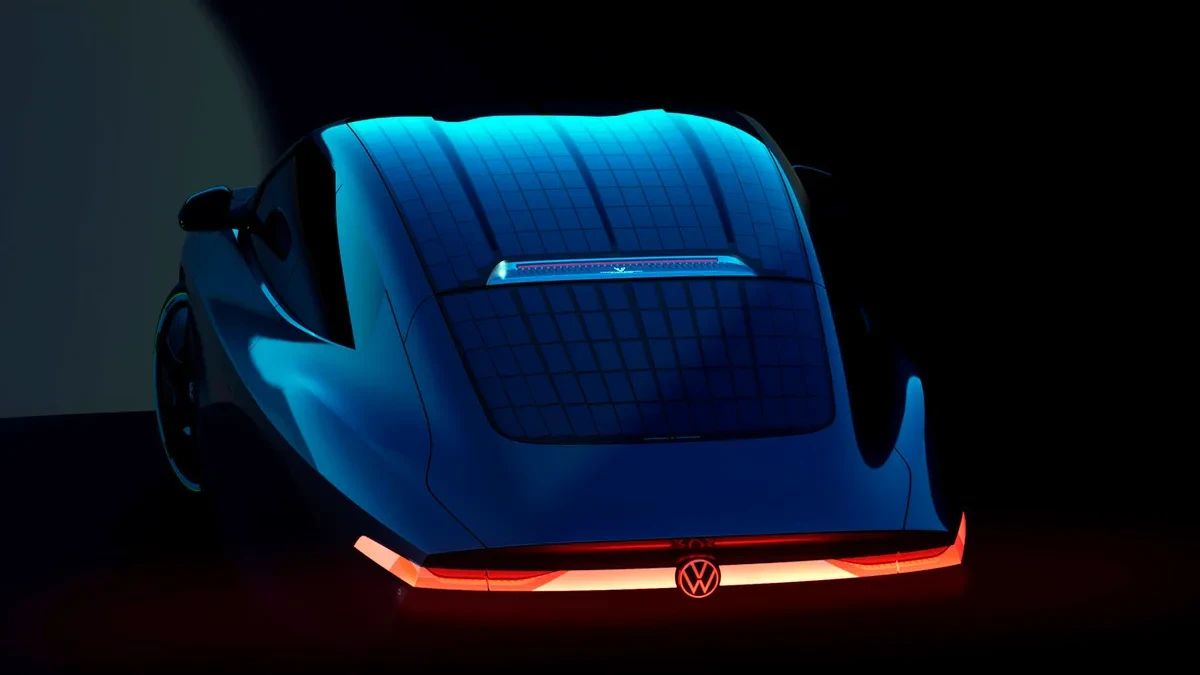
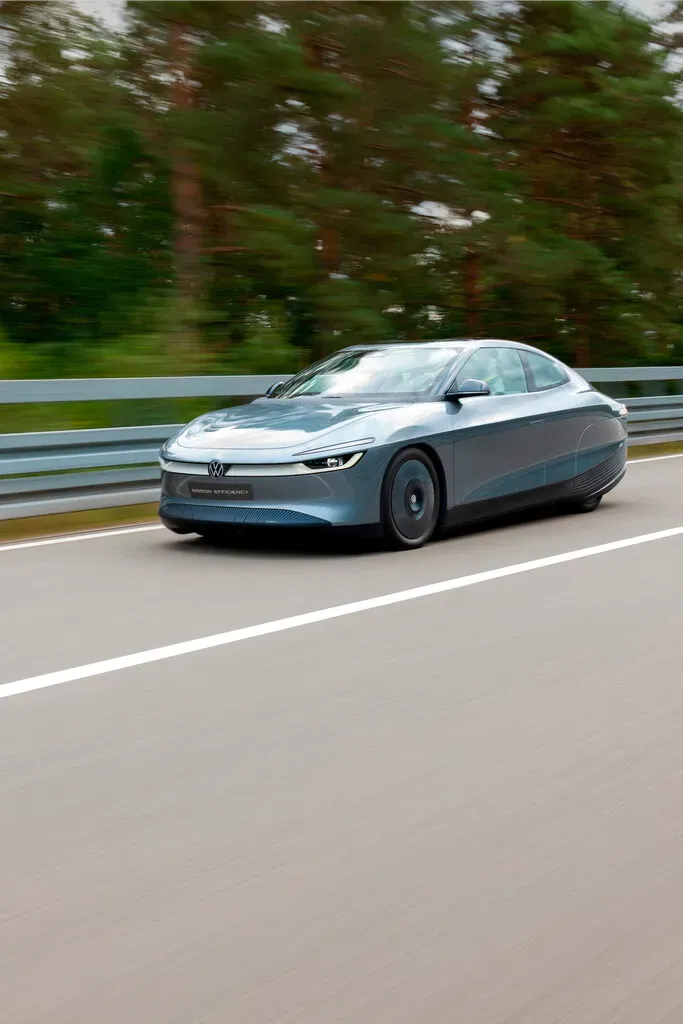
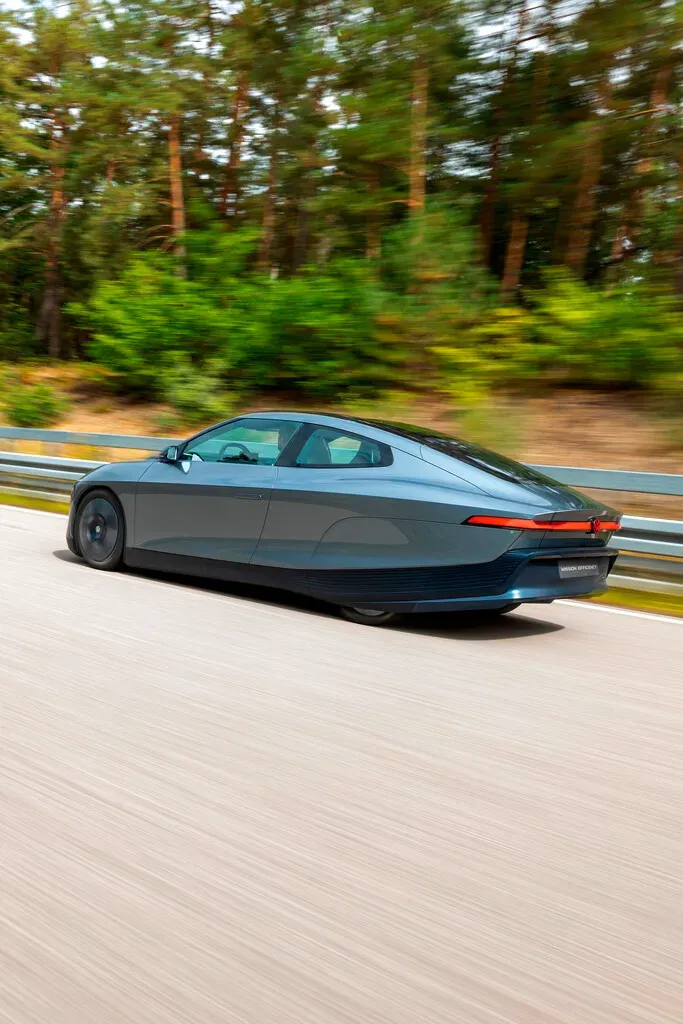
The electric vehicle industry has spent the last few years stuck in a battery-size arms race, prioritizing massive, heavy packs to alleviate range anxiety. Volkswagen is now pushing back against that trend with its latest engineering exercise: the Mission Efficiency concept. By focusing on aerodynamics and rolling resistance rather than raw capacity, the German manufacturer has created a vehicle capable of covering over 450 miles on a modest 55 kWh battery, effectively challenging the efficiency claims of future fleet vehicles like the Tesla Cybercab.
This teardrop-shaped coupe is not just a design study. It has officially verified its credentials with a drag coefficient of 0.158 and a real-world consumption figure of 6.89 kWh per 100 km. To put that in perspective, the upcoming Tesla Cybercab is estimated to consume roughly 9.0 kWh per 100 km under the WLTP cycle. Volkswagen achieved these numbers not with exotic, expensive components, but by utilizing existing hardware from the MEB+ platform, including the same 99 kW motor found in the current ID. Polo.
Engineering for Real-World Gains
The brilliance of the Mission Efficiency lies in its accessibility. Rather than relying on aerospace-grade materials or complex silicon-carbide electronics, the team focused on fundamental physical improvements. The car features patented rim deflectors to smooth out airflow, a 370 W solar roof to supplement auxiliary power, and custom Continental tires engineered with rolling resistance 25 percent lower than the industry standard for Class A tires.
These modifications allow the car to outperform the legendary Mercedes-Benz Vision EQXX. While the EQXX was a triumph of exotic materials, the Mission Efficiency proves that these efficiency gains can be achieved using parts that are already in mass production. This approach is central to Volkswagen CEO Thomas Schäfer's vision, which positions this technology as a solution for the masses rather than a luxury for the few.

A New Benchmark for Production Potential
While consumers currently look to the Lucid Air Pure as the efficiency king among production vehicles - boasting an EPA-rated 5.0 miles per kWh - the Mission Efficiency leaves it in the dust. The Lucid, despite its impressive 0.197 drag coefficient, consumes roughly 12.4 kWh per 100 km. Tesla's Model 3 RWD, another efficiency favorite, sits closer to 13.5 kWh per 100 km. Volkswagen's concept is significantly more efficient than anything currently sitting on a dealership lot.
Though Volkswagen has not announced plans to sell this specific model, the implications for the ID series are clear. By applying these aerodynamic refinements and tire technologies to upcoming mass-market vehicles, the company could significantly lower the barrier to entry for long-range electric mobility. If the tech trickles down to the of the ID. Polo, it would signal a major shift in how the industry approaches range, moving away from heavy, expensive battery packs and toward smarter, more efficient vehicle architecture.