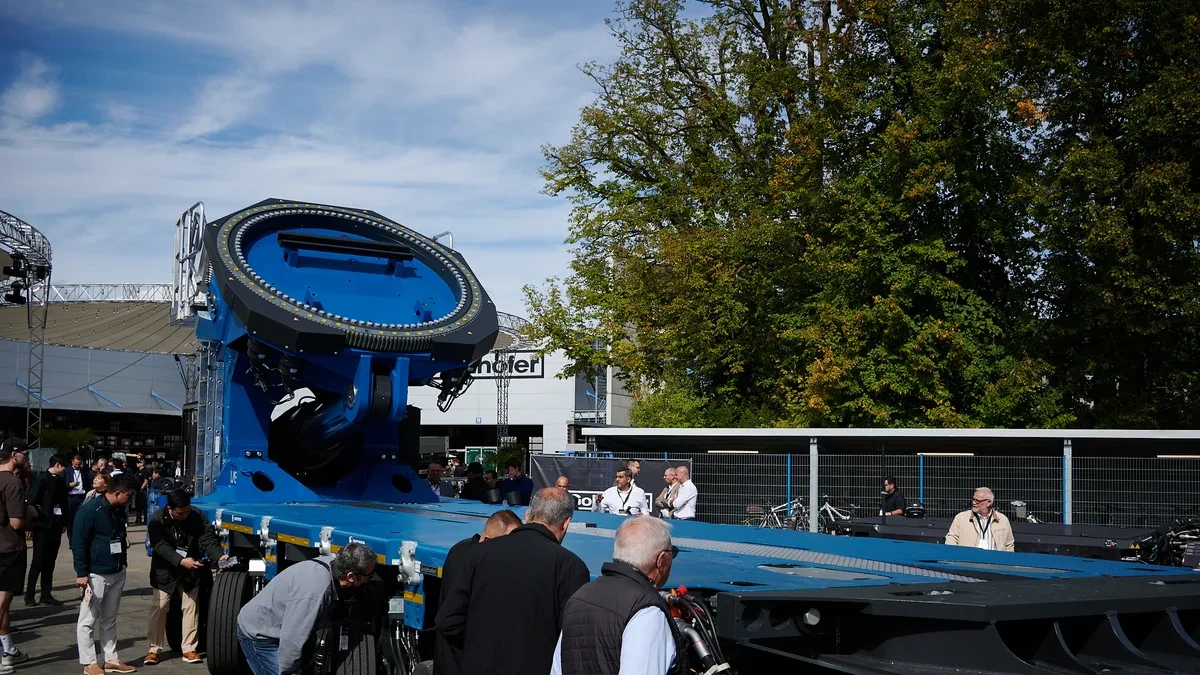
At its annual Innovation Days in Memmingen, German heavy-haul machinery specialist Goldhofer introduced the PST/SL-ES (285), an advanced modular transport vehicle engineered to tackle the extreme logistics of wind turbine rotor blades and heavy industrial cargo. Featuring an innovative dynamic track-widening mechanism that expands axle width by 300 millimeters (11.8 inches) under full load, the vehicle provides unprecedented lateral stability to prevent catastrophic tipping during complex transit routes.
In addition to its stability enhancements, Goldhofer showcased a forward-thinking dual-power philosophy by unveiling an optional zero-emission electric power pack alongside the traditional diesel powertrain. Designed to lower transit times and open up previously inaccessible transport corridors, the PST/SL-ES (285) directly addresses critical infrastructure challenges facing the renewable energy logistics sector, where route constraints frequently dictate project timelines and operational budgets.
Tackling High Centers of Gravity with Dynamic Track Expansion
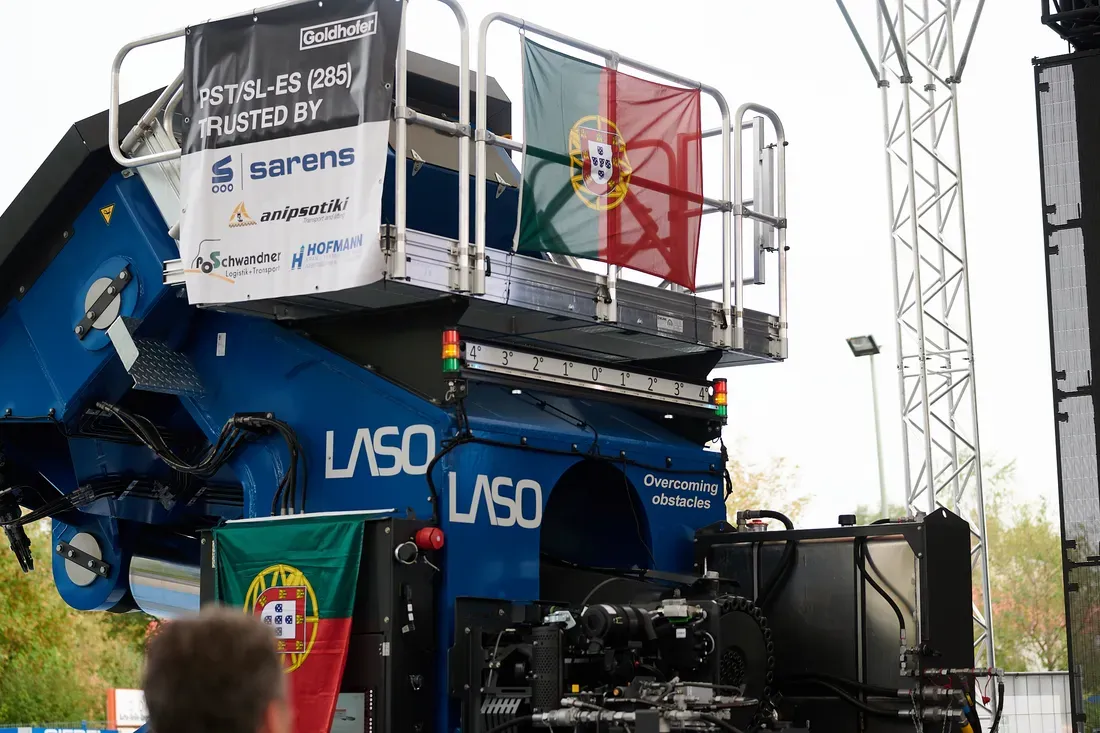
Transporting modern wind turbine blades presents unique logistical hurdles. As turbine designs scale up to capture higher wind energy yields, individual blades routinely stretch beyond 80 to 100 meters in length. Navigating these immense components through tight roundabouts, narrow village roads, and sharp mountain passes requires specialized hydraulic lifting units that tilt the blades at steep angles. However, elevating cargo raises its center of gravity dramatically, exposing transport rigs to severe lateral tipping hazards—a vulnerability that has historically led to costly transit accidents and infrastructure damage.

Goldhofer addresses this critical vulnerability directly with its hydraulically rotatable axle technology on the PST/SL-ES (285). By pivoting its axles outward during operation, the vehicle expands its physical track width by 300 millimeters. Crucially, Goldhofer demonstrated at its factory that this adjustment can be executed seamlessly while carrying a full payload. The enlarged footprint enhances the rig's roll stability margin significantly, granting transport operators the structural confidence to navigate off-camber roads, uneven surfaces, and steep angles without risking load tipping.
Optimizing Transport Routes and Reducing Operational Costs
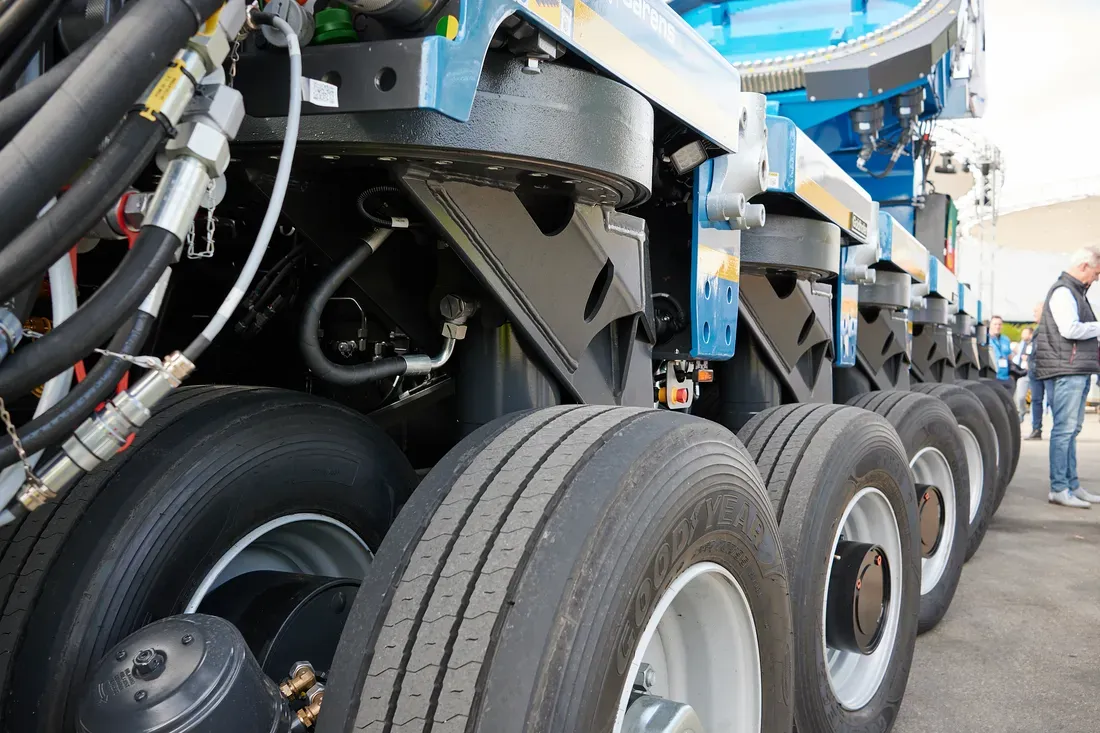
The practical benefits of heightened lateral stability extend far beyond safety compliance; they fundamentally alter route planning dynamics. Historically, logistics teams transporting high-center-of-gravity loads were forced to map out circuitous detours to avoid narrow bridges, banked highways, or uneven terrain where instability posed a threat. With the PST/SL-ES (285)’s expanded stance, transport teams can safely navigate routes that were previously deemed unviable.
During the live presentation, Goldhofer highlighted several real-world route comparisons demonstrating substantial time and fuel savings achieved by using shorter, more direct transit paths. Furthermore, the PST/SL-ES (285) maintains impressive versatility across various industrial applications. Beyond wind turbine components, the module supports multi-vehicle setups, such as a side-by-side '+1' configuration for oversized industrial equipment. Goldhofer is also testing an integrated digital tilt-monitoring system to provide operators with real-time feedback on cargo inclination during transit.

Transitioning to Green Logistics: Diesel vs. Electric Power Packs
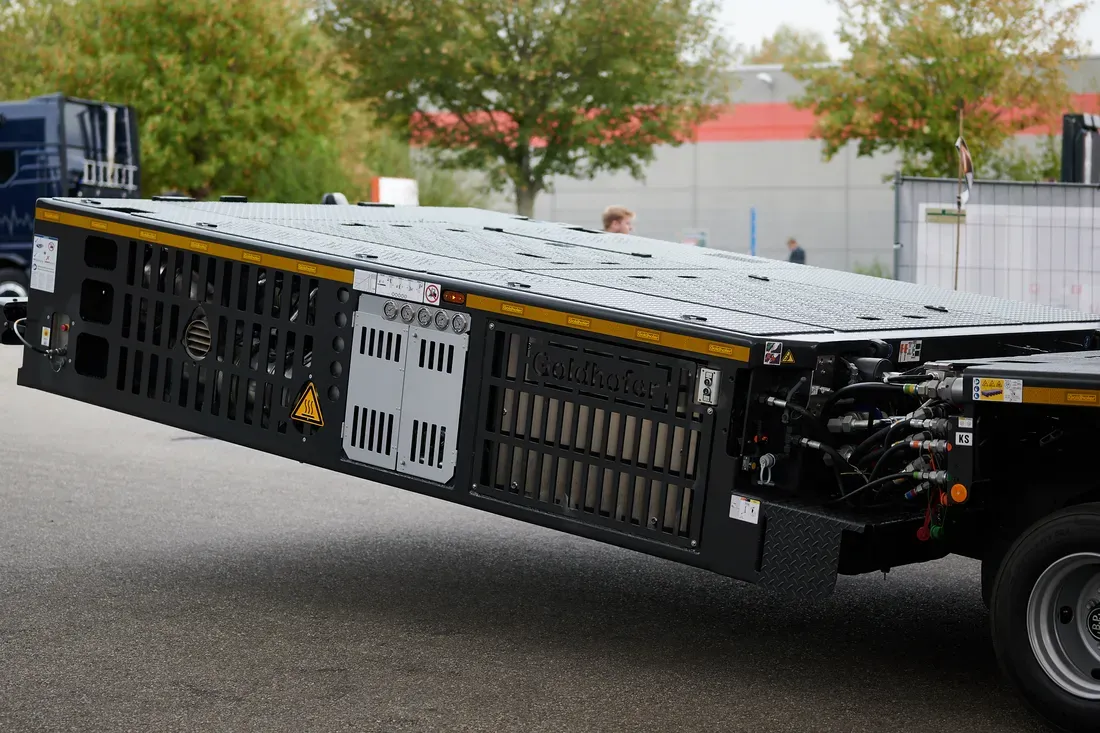
Another key highlight of the vehicle's unveiling was Goldhofer's dual-drive flexibility. Heavy-haul hydraulic transporters typically rely on modular power packs—rear-mounted units containing internal combustion engines and hydraulic pumps—to drive the axles and maneuver steering systems. While Goldhofer's standard diesel power pack offers a reliable six-to-eight-hour operational shift per fuel tank, its noise output and exhaust emissions restrict its usability in urban or environmentally sensitive areas.
To solve this, Goldhofer introduced a prototype electric power pack engineered for silent, zero-emission operation. Although current battery density yields a shorter operating window compared to diesel fuel tanks, the electric drive represents a major step forward for urban heavy-haul operations and green construction projects. The modular power pack design allows fleet owners to select the power source best suited to their specific project requirements, balancing long-range endurance against local environmental regulations.