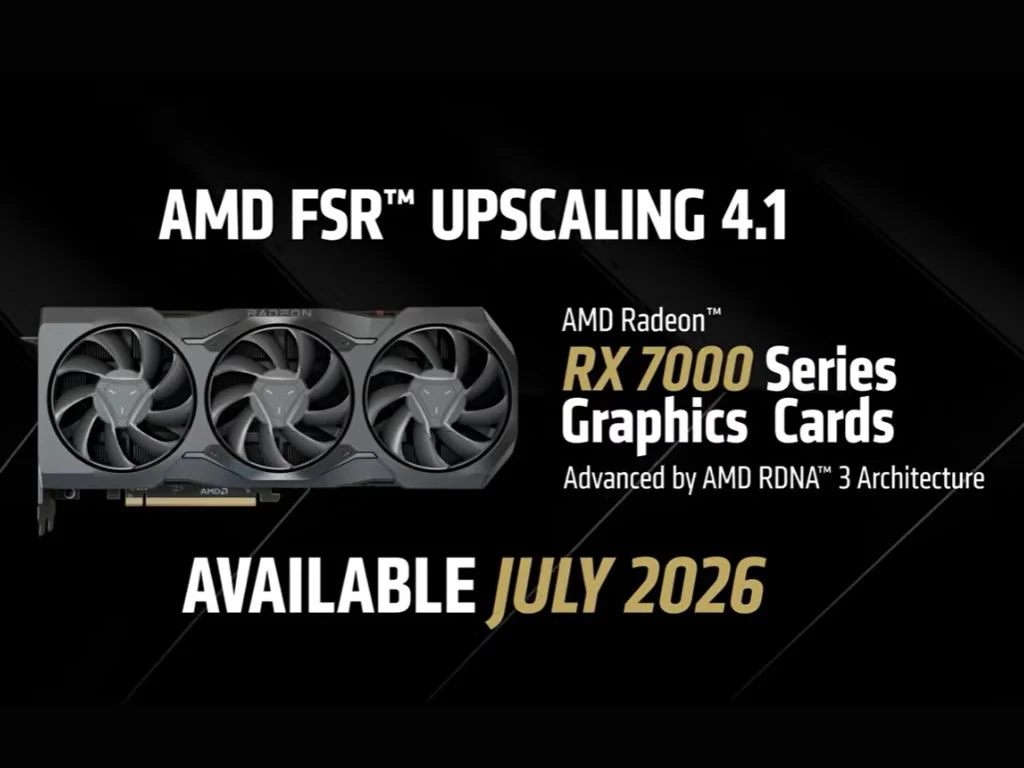
AMD is finally expanding FSR 4.1 upscaling beyond its initial RDNA 4 exclusivity to include RDNA 3 and RDNA 2 GPUs. The official rollout will start in July 2026 for RX 7000 series cards and early 2027 for RX 6000 series GPUs. This move follows heavy backlash from AMD’s community, who felt betrayed when RDNA 2 and 3 GPUs were left out despite their market presence and owners expecting long-term support.
When FSR 4.1 launched earlier this year, it was limited strictly to RDNA 4 GPUs powering the RX 9000 series and the PS5 Pro’s PSSR 2.0 upscaling. This exclusivity alienated a large chunk of AMD’s PC user base, forcing some to use unofficial mods like OptiScaler to patch in FSR 4.1 support — a solution that was inconsistent and unreliable.
FSR 4.1 Hits RDNA 3 GPUs First, Then RDNA 2
- July 2026: Official FSR 4.1 support for RDNA 3-based RX 7000 series GPUs
- Early 2027: FSR 4.1 rollout for RDNA 2-based RX 6000 series GPUs
- 300+ games: Expected support at launch on RDNA 3 GPUs
- Improved out-of-the-box experience: No more hit-or-miss third-party injector tools
AMD’s Senior VP Jack Huynh confirmed the timeline on X (formerly Twitter), emphasizing thorough testing across hundreds of PC setups to ensure the upscaling feature works smoothly and improves visual fidelity. The staggered rollout indicates AMD is prioritizing newer RDNA 3 hardware before backporting to the older RDNA 2 generation.
The Real-World Compromises You Should Know
On paper, this sounds great, but the timeline leaves a lot to be desired. RDNA 2 users, many of whom bought GPUs with the expectation of ongoing support, must wait nearly three years after FSR 4.1’s initial launch to get official support. That’s a long wait in GPU lifecycle terms and risks pushing gamers toward rival Nvidia DLSS or cheaper AMD alternatives meanwhile.
Users relying on unofficial workarounds will welcome the official implementation, which should be more stable and better optimized. However, the delay also highlights AMD’s cautious approach to supporting older architectures — possibly due to technical challenges or marketing priorities.
What This Means for the Average User
- RDNA 3 owners: Expect sharper visuals and smoother gameplay with FSR 4.1 in over 300 games starting mid-2026.
- RDNA 2 owners: Brace for early 2027 before official FSR 4.1 arrives; meanwhile, unofficial solutions remain your only option.
- Long-term support: AMD is listening but on its own terms, rolling out features years after launch.
- Performance gains: FSR 4.1’s INT8 model promises better quality upscaling without major performance hits.
AMD’s Ecosystem Play and Price-to-Performance Angle
AMD’s RX 7000 and RX 6000 series GPUs remain competitive against Nvidia’s offerings, often at better price points. Adding FSR 4.1 support to these GPUs enhances their value proposition by enabling better visuals and performance without a hardware upgrade.
However, the slow rollout risks losing mindshare among PC gamers who want the latest upscaling tech now. Nvidia’s DLSS and other competitors are more widely available across GPU generations. For buyers on a budget or those with RDNA 2 cards, patience is key — or consider alternatives if immediate FSR 4.1 support is a priority.
Our takeaway based on the data: AMD’s reversal on FSR 4.1 support is a win for users but a reminder that promises of long-term GPU support often come with caveats and delays. For daily gaming, RDNA 3 owners will benefit sooner, while RDNA 2 users should plan accordingly.
(Via)