MSI's MS-C9ZA is a compact, fanless industrial mini PC built around Nvidia's Jetson Orin Nano platform. Pricing has not been announced, but its 67-TOPS AI capability, dual Ethernet, GPIO, and industrial control interfaces make it far more specialized than a typical consumer mini PC.
That distinction matters because the MS-C9ZA is designed to process data close to machines, cameras, and sensors rather than send every task to a remote server. Its passive cooling and small footprint also allow it to operate in tight spaces where a conventional desktop or actively cooled edge computer may be impractical.
Compact hardware for edge AI and automation
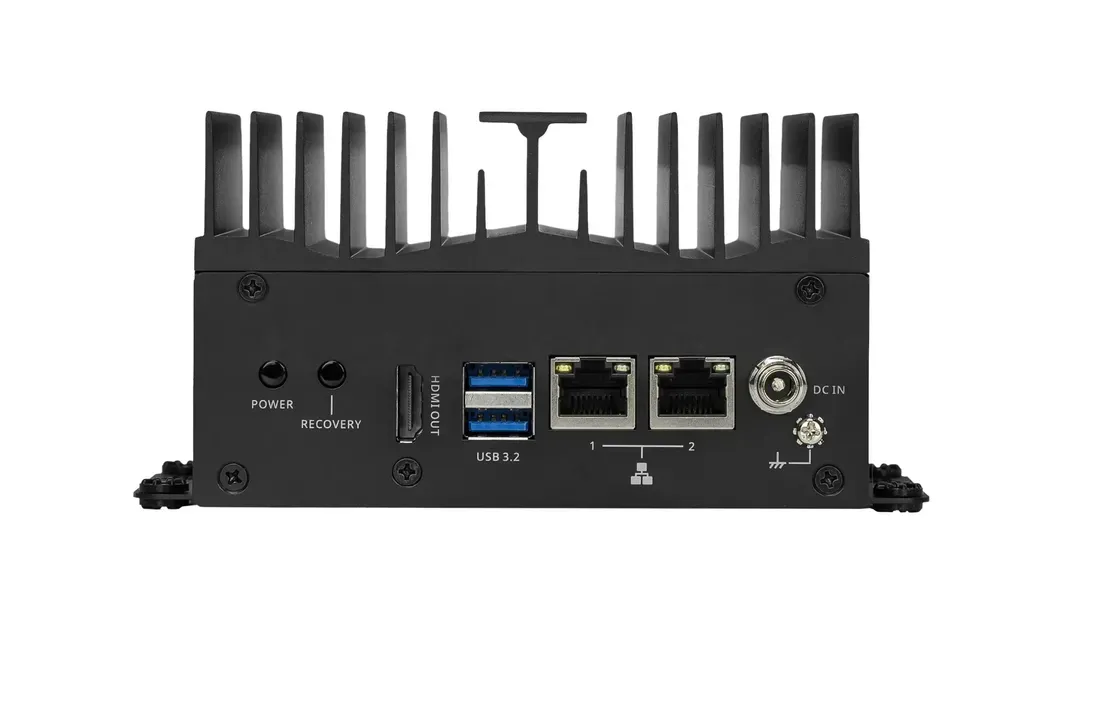
The core of the system is Nvidia's Jetson Orin Nano platform, combining a hexa-core ARM CPU with Cortex-A78 AE cores and 4 MB of L3 cache. The processor is paired with 8 GB of LPDDR5 memory running at 3,200 MT/s, with memory bandwidth rated at approximately 102 GB/s.
Graphics and AI workloads are handled by an Ampere-based integrated GPU with 1,024 CUDA cores and 32 tensor cores. Nvidia's own figures put the platform's AI performance at up to 67 TOPS using INT8 workloads. In practical terms, that gives the MS-C9ZA the processing headroom for machine vision, object detection, factory monitoring, edge inference, and robotics control without depending entirely on a cloud connection.
The 8 GB memory is fixed, so buyers will need to select a configuration that matches the intended workload from the outset. This is less of a concern for a dedicated industrial controller than for a general-purpose workstation, but it could limit the system's useful life as AI models and software requirements grow.
Industrial connectivity in a small enclosure
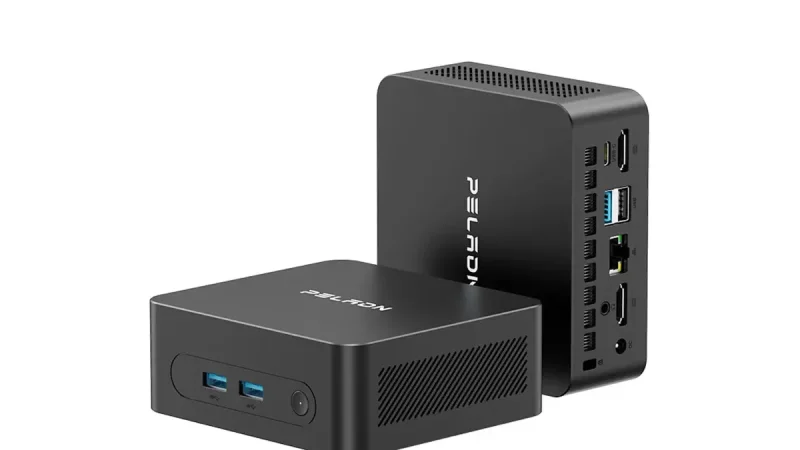
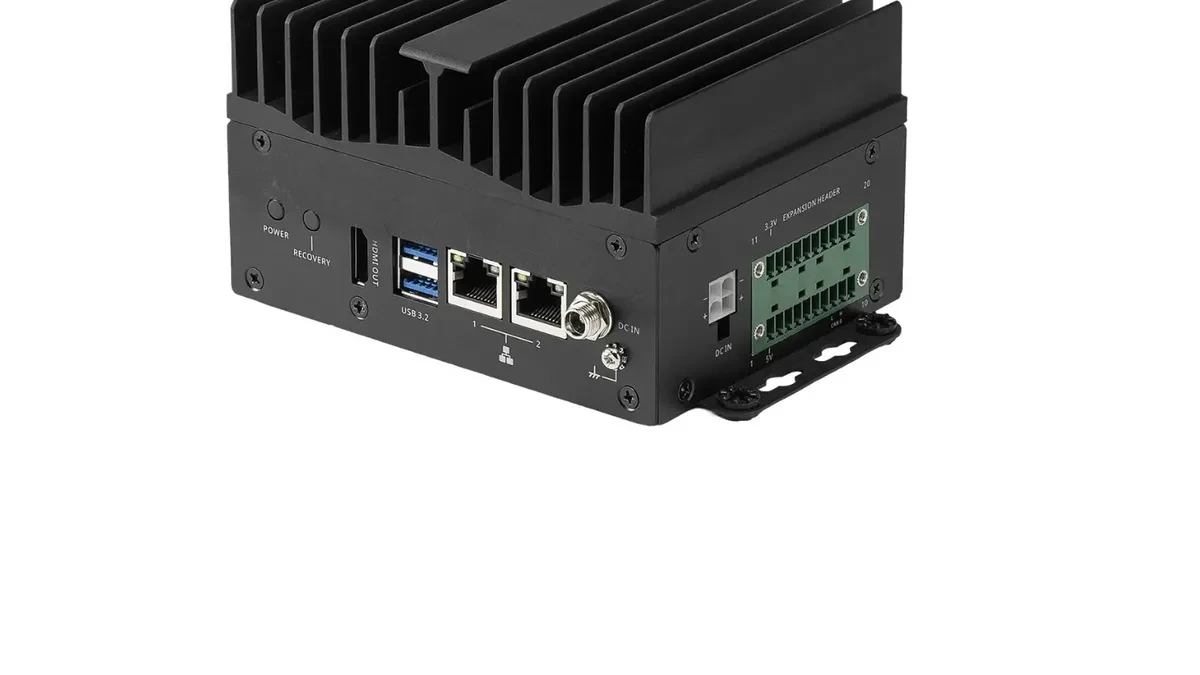
MSI has equipped the MS-C9ZA with a wider selection of ports than most consumer mini PCs. The system includes dual Gigabit Ethernet, two USB 3.2 Gen 2 Type-A ports, one USB 2.0 Type-C port, and HDMI output. Dual wired networking can be useful for separating machine traffic from an administrative network or connecting directly to multiple industrial devices.
The system also includes an 8-bit GPIO interface supporting 5V to 35V, along with dual I2C, dual UART, and one CAN interface. Those connections allow the computer to communicate with sensors, controllers, motors, and other equipment that would typically require additional interface hardware on a conventional PC.
Storage starts with a 256 GB SSD. Unlike the soldered memory, storage can be replaced through an M.2 2280 slot. A second M.2 2230 slot is available for additional hardware, while an optional 5G daughterboard provides a route to cellular connectivity for installations without reliable wired internet access.
Fanless cooling brings benefits and trade-offs
The MS-C9ZA measures 126 x 96 x 74 mm, or approximately 4.96 x 3.78 x 2.91 inches. It weighs about 1 kg, a relatively substantial figure for such a small computer, because the enclosure relies on a large heatsink rather than a cooling fan.
Removing the fan eliminates a moving part that can collect dust or fail in harsh environments. It also reduces acoustic noise, which can be useful around workstations or in equipment rooms. The trade-off is that sustained workloads will depend heavily on the enclosure's ability to shed heat. Industrial designers will need to account for ambient temperature, mounting position, and airflow around the chassis, even though the computer itself does not use an active fan.
Pricing and availability remain unclear
MSI has not disclosed pricing or a release schedule for the MS-C9ZA. Global pricing and regional availability have not yet been announced. Interested industrial customers are expected to contact MSI directly for a quotation, which means the final cost may depend on configuration, storage, cellular connectivity, and order volume.
For casual users seeking a conventional mini PC, this is not a direct alternative to a Ryzen-based desktop. The fixed RAM, ARM software environment, limited consumer-oriented expansion, and industrial focus make the MS-C9ZA a poor fit for everyday office computing unless its specialized interfaces are essential.
Its appeal is much clearer in factories, laboratories, warehouses, and robotics systems. The MS-C9ZA combines Nvidia's edge-AI acceleration with a durable, quiet enclosure and the control interfaces that industrial deployments actually need. Until MSI publishes pricing, its value cannot be judged against other Jetson systems, but the hardware is clearly aimed at dependable machine-side processing rather than living-room convenience.