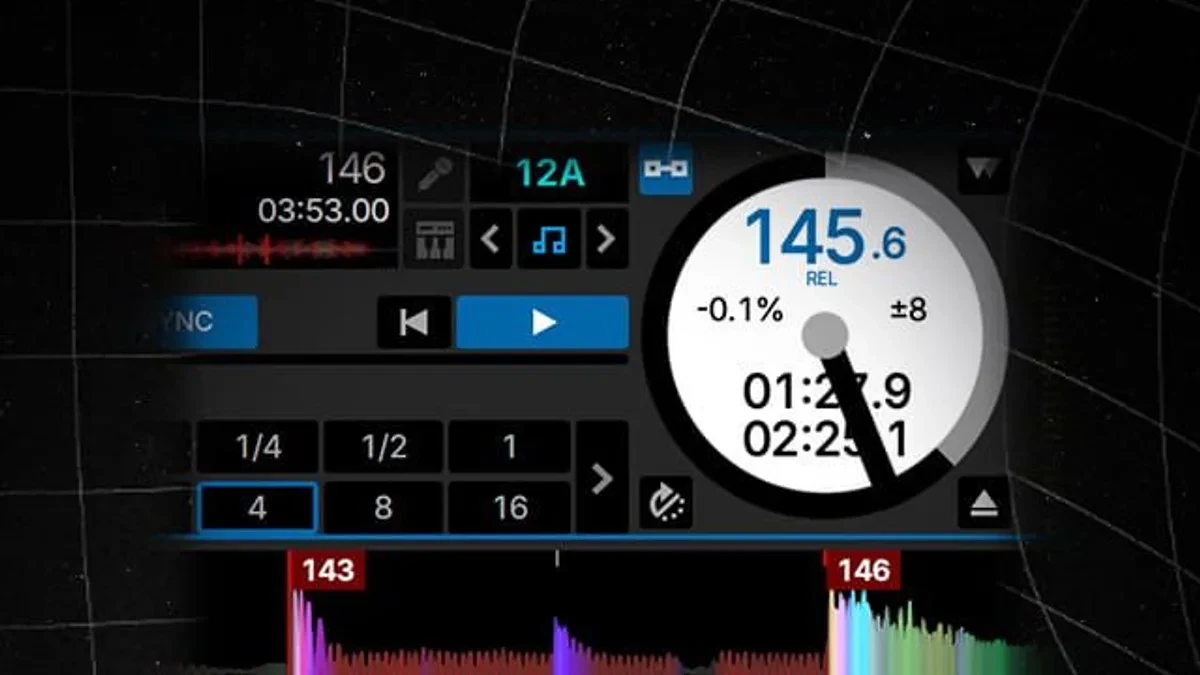
DJing classic funk, 70s disco, or vintage rock tracks recorded with live drummers has long been a headache for digital performers. Because human drummers naturally fluctuate in speed, traditional DJ software forces rigid, fixed beatgrids onto fluid music. The result is rapid grid drift, broken audio loops, and constant jog-wheel corrections throughout a set. Serato is addressing this friction directly with the release of the Serato DJ 5.0 Public Beta, introducing a feature known as Lucid Beatgrids.
The update delivers a fundamental shift in how Serato processes audio, allowing the software to continuously track micro-tempo shifts across an entire song. Available now as a public beta test for all registered users, Serato DJ 5.0 aims to eliminate the manual labor historically required to prepare non-quantized vinyl rips and classic recordings for modern digital rigs.
Dynamic Grid Mapping for Human Timing
Traditional beatgrid engines operate on the assumption that a track follows a single, mathematically precise tempo from start to finish. When applied to live recordings, these static grids quickly fall out of alignment, making automated functions practically useless. Lucid Beatgrids overcome this limitation by dynamically flexing alongside the performer's natural timing.

If a drummer subtly speeds up during an intense chorus or slows down during a bridge, the new analysis engine adjusts the beatgrid spacing measure by measure. This continuous tracking ensures that beat-synchronized effects, roll loops, and tempo-sync modes stay locked in time without requiring manual beatgrid warping or endless re-drum edits. For mobile and club DJs working with classic soul, classic rock, and unquantized acoustic records, this dramatically reduces workload during live sets.
Open Streaming and Workflow Enhancements
Beyond flexible beatgrid tracking, Serato DJ 5.0 Beta introduces major updates to software flexibility. The headline addition alongside Lucid Beatgrids is Open Streaming integration, designed to streamline multi-platform music discovery.
DJs can now access music across multiple supported streaming services within a single unified performance session. The update supports platforms including Apple Music, Tidal, Spotify, Beatport, and SoundCloud, eliminating the need to jump between separate library containers or perform complex subscription workarounds. Additionally, Serato DJ Pro users gain access to dedicated Cue Loops, enabling hot cues to immediately transform into active loop regions for extended mix transitions and live mashups.
Re-Analysis Requirements and Beta Precautions
While Lucid Beatgrids bring significant improvements to live performance workflows, adopting the feature requires some administrative setup. Tracks previously analyzed in older versions of Serato DJ will not automatically receive dynamic beatgrids. Users must run their local music libraries through a fresh re-analysis process inside version 5.0 to generate the new tempo-tracking data.
Because Serato DJ 5.0 is currently in public beta, active touring DJs should exercise caution. Running beta software on main-stage rigs or high-stakes event setups carries inherent stability risks. Testing the new analysis engine in a home studio or rehearsal environment is highly recommended before replacing stable gig setups. The beta update is available to existing license holders, with full Serato DJ Pro access starting at $11.99 per month or $249 for a perpetual license.