A newly surfaced Geekbench 7 benchmark submission has exposed the computational output of Apple's flagship silicon, the 36-core M5 Ultra. Tested inside what appears to be an upcoming Mac Studio prototype running macOS 27.0 with 256 GB of unified memory, the processor achieved performance metrics previously reserved for dedicated dual-socket server platforms and ultra-expensive workstation rigs.
The system recorded a single-core score of 3,774 points and an enormous multi-core result of 52,516 points. These figures align closely with internal performance estimates indicating a 1.3x multi-threaded CPU output increase over the earlier M3 Ultra, pushing Apple's integrated desktop silicon directly into contention with top-tier hardware from AMD.
Benchmark Numbers Reveal Huge Multi-Core Scaling
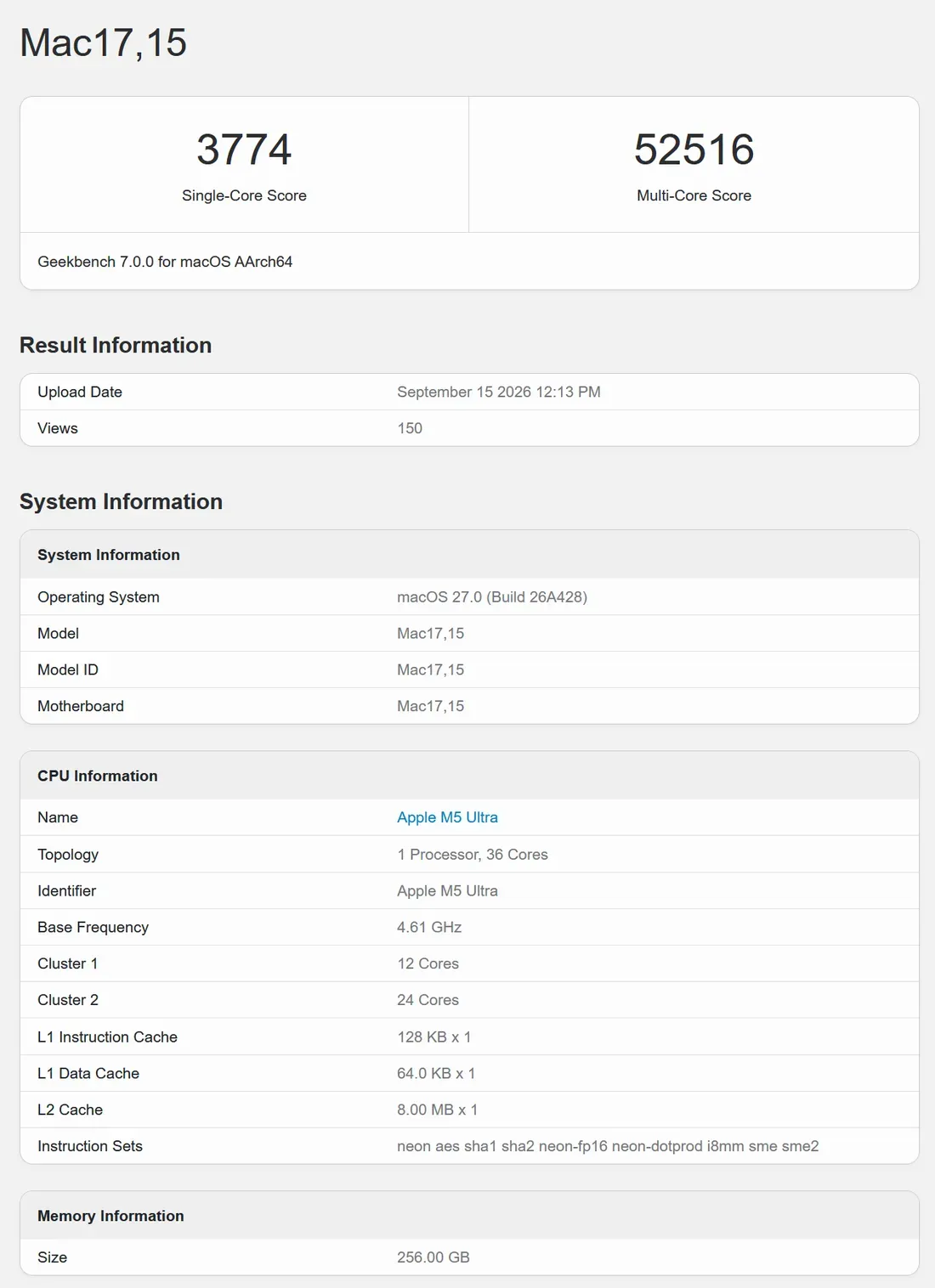
The hardware configuration detailed in the leak features a fully enabled 36-core CPU architecture split between 12 high-capacity super cores and 24 performance cores, operating at a peak frequency near 4.6 GHz. Operating alongside 256 GB of high-bandwidth unified memory, the hardware setup is aimed squarely at heavy local artificial intelligence model execution, complex physics simulations, and dense multi-layer 8K video pipelines.

Single-core performance remains a clear highlight at 3,774 points, reflecting steady IPC (instructions per clock) enhancements. However, the multi-core result of 52,516 points is where the architecture makes its biggest statement, proving that Apple's unified memory approach can scale multi-threaded throughput effectively across a high core count without encountering memory bandwidth bottlenecks.
Direct Head-to-Head With AMD Threadripper Pro
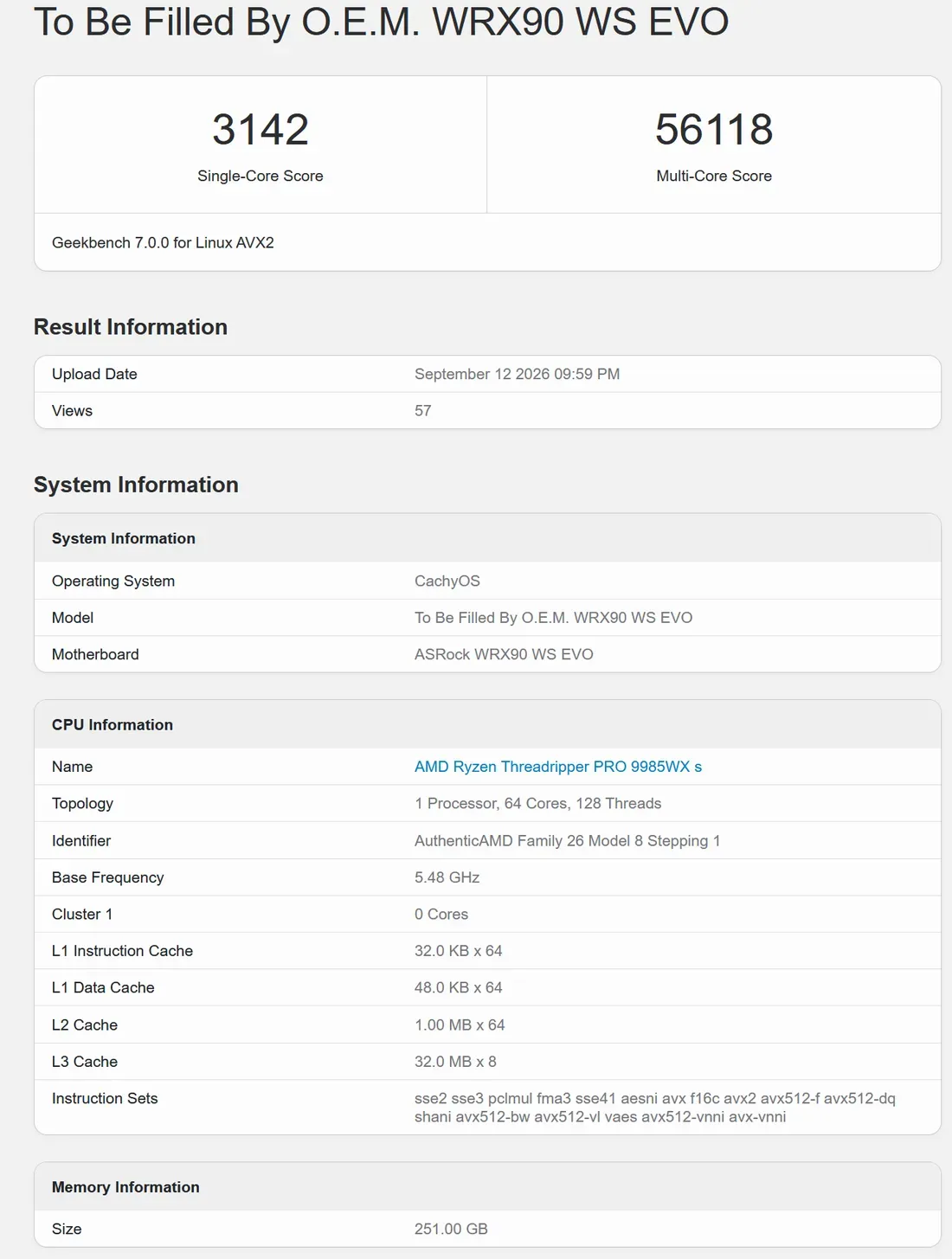
To put a score of 52,516 into practical perspective, it helps to compare it directly against the fastest enterprise hardware currently listed in the Geekbench 7 database. AMD's 64-core Ryzen Threadripper Pro 9985WX workstation processor averages around 56,118 points on high-end configurations, leaving it only about 6.4 percent ahead of Apple's 36-core chip despite possessing significantly more physical CPU cores.
The comparison becomes even more interesting when looking at AMD's top-tier workstation flagship, the 96-core Ryzen Threadripper Pro 9995WX. On a high-end WRX90 motherboards, single runs of the 192-thread 9995WX registered 50,911 points, with other submissions ranging between 48,700 and 50,600 points. In this specific cross-platform test, the 36-core M5 Ultra actually outpaces the 96-core Zen 5 assembly by roughly 3 percent.
Thermal Efficiency vs Raw Architecture Realities
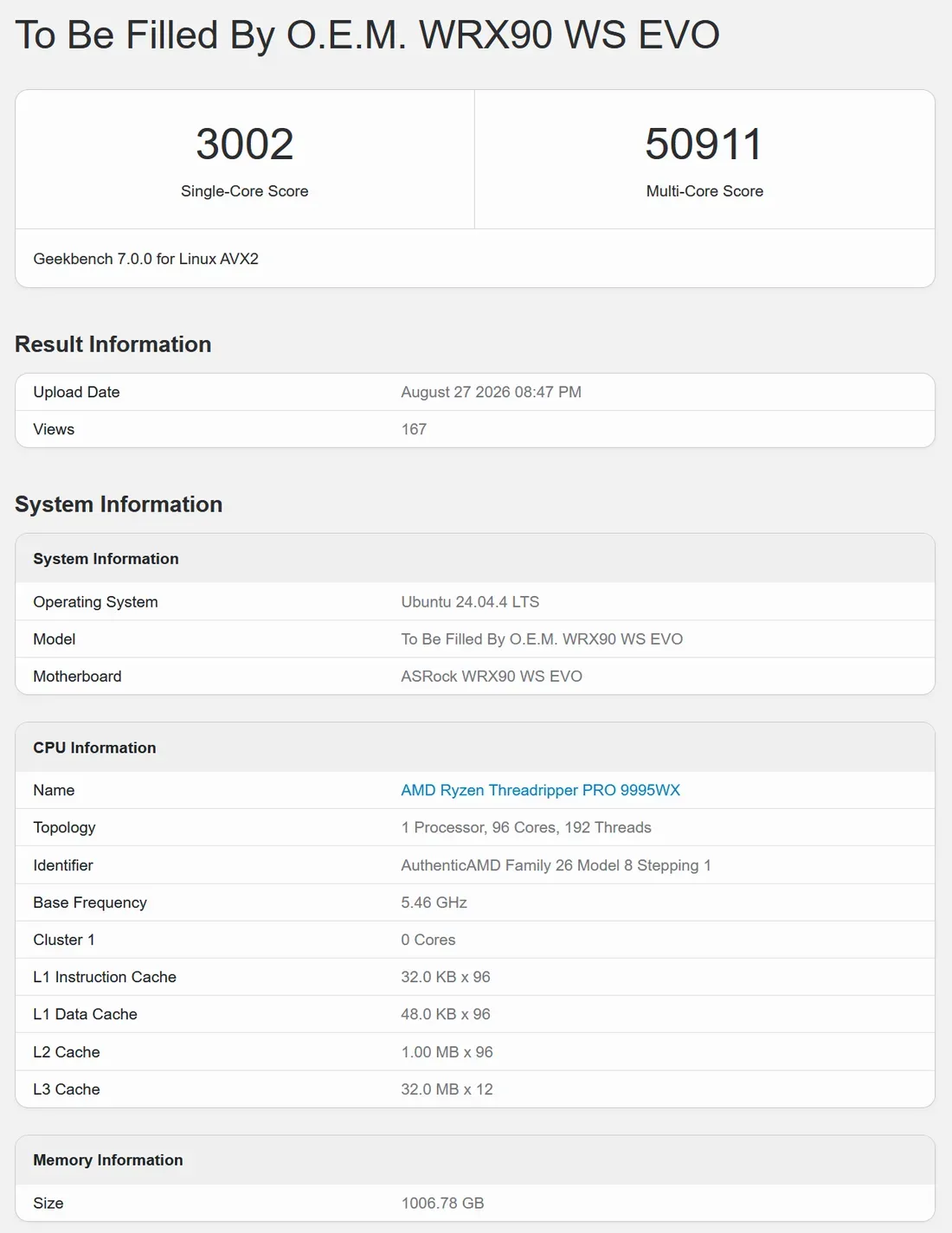
These benchmark comparisons do not automatically imply that a 36-core Mac Studio will outperform a 96-core Threadripper Pro or a dual-socket AMD Epyc server across all real-world professional tasks. Synthetic testing suites like Geekbench execute relatively short computational bursts, which do not always scale linearly on multi-socket system architectures featuring over 100 threads under sustained heavy loads.
Even so, achieving parity in short-burst multi-core workloads demonstrates the architectural efficiency of Apple's unified silicon design. Where dedicated x86 workstations demand massive power supplies, complex liquid cooling loops, and high power consumption, a compact Mac Studio chassis delivers similar burst computation at a small fraction of the thermal footprint.
Pricing and Global Release Expectations
Official global pricing and regional availability dates for the M5 Ultra Mac Studio have not yet been announced by Apple. For historical context, top-tier Mac Studio configurations equipped with Ultra-series chips generally begin around $3,999 and can scale beyond $6,999 when paired with maximum unified memory allocations such as 256 GB. Official announcements regarding release dates and retail availability are expected in upcoming hardware reveals.