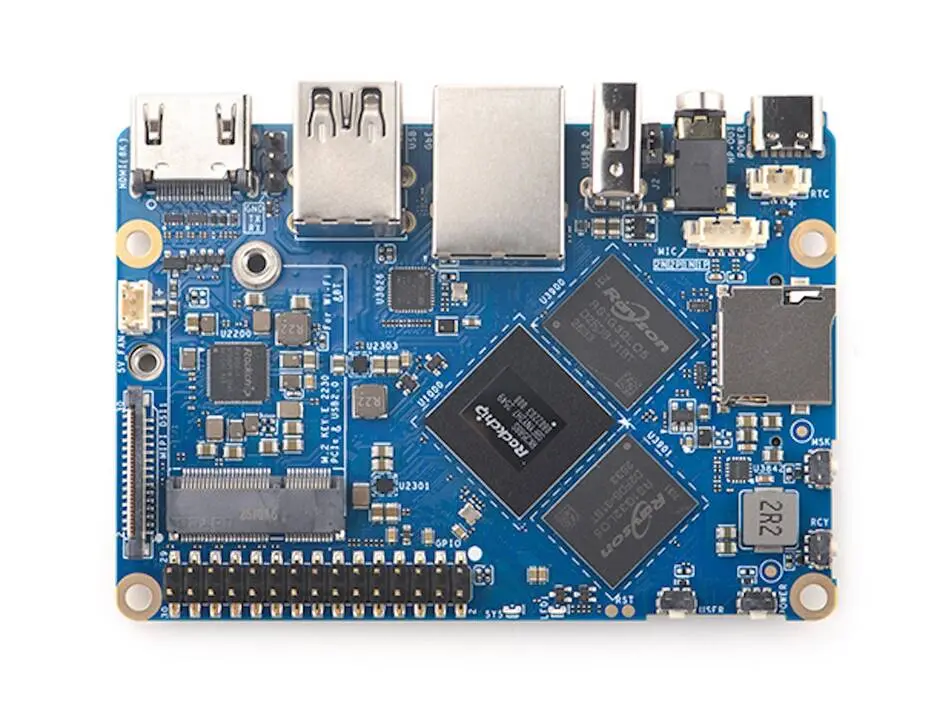
FriendlyElec has introduced the NanoPi M6V2, a refreshed single board computer positioned as a direct competitor to the Raspberry Pi ecosystem. By utilizing the Rockchip RK3588S SoC, this board aims to provide a balance of processing power and connectivity for developers looking to integrate local artificial intelligence into their projects.
- Features the Rockchip RK3588S SoC with 8 GB of LPDDR5 RAM.
- Delivers up to 6 TOPS of AI performance for tasks like object recognition.
- Supports high resolution video output via HDMI 2.1 at 8K 60Hz.
- Includes an M.2 2280 slot for PCIe 2.1 SSD expansion.
- Priced at $172 for the base model.
Hardware Capabilities for Edge Computing
The core of this board is the RK3588S, which packs four Cortex A76 and four Cortex A55 cores. While the 6 TOPS NPU is not intended for training large language models, it provides sufficient overhead for edge computing applications, such as real time object detection or automated vision tasks. The inclusion of MIPI CSI and DSI ports ensures compatibility with standard camera modules and display panels favored by the maker community.
Storage flexibility is a key design choice here. Beyond the traditional microSD card slot, users can leverage the M.2 2280 interface to connect faster NVMe storage. This is a significant advantage for projects requiring high data throughput or reliable operating system performance compared to standard SD cards. Networking is handled by a native Gigabit Ethernet port, with optional wireless expansion available through an M.2 2230 slot.
Usage Context and Market Positioning
This board is intended for enthusiasts and engineers who require more than what entry level development boards offer, yet want to avoid the complexities of industrial grade hardware. With its compact 62 x 90 mm footprint and integrated IR receiver, it fits well into home automation or media server builds. Users should note that while it offers a robust feature set, those needing specialized software support often found in the Raspberry Pi community may face a steeper learning curve with FriendlyElec firmware.
When compared to the Raspberry Pi 5, the NanoPi M6V2 differentiates itself through its specific focus on integrated AI acceleration and M.2 storage support out of the box. While the Raspberry Pi maintains a massive advantage in community documentation and software availability, the M6V2 provides a more integrated solution for those prioritizing hardware connectivity and local inference performance.
Source: FriendlyElec | Notebookcheck