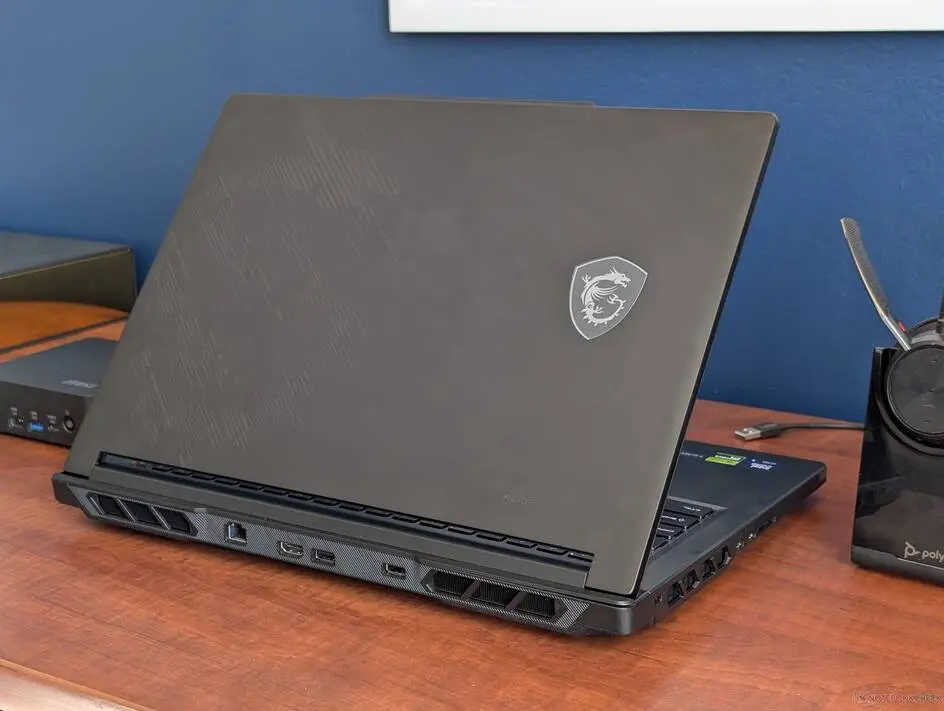
Intel’s Arrow Lake architecture finds a formidable home in the newly shipping MSI Raider 16 Max HX. While the industry shifts focus toward newer platforms, this machine prioritizes sheer computational throughput by integrating the Core Ultra 9 290HX Plus. The result is a device that positions itself at the very top of raw performance charts, even as it forces a conversation about the trade-offs between speed and power consumption.
- Features the Intel Core Ultra 9 290HX Plus processor.
- Outperforms the AMD Ryzen 9 9955HX3D in raw benchmark testing.
- Requires up to 276 W under heavy load during Prime95 testing.
- Delivers higher performance than the Core Ultra 9 285HX found in the Titan 18 HX AI.
Performance Benchmarks and Power Trade Offs
The Core Ultra 9 290HX Plus pushes the boundaries of what the Arrow Lake platform can achieve. In direct comparisons, it manages to edge out the Ryzen 9 9955HX3D, securing its status as a high-end contender for users who prioritize absolute speed over battery longevity. It also provides a slight advantage over the Core Ultra 9 285HX found in the premium Titan 18 HX AI, effectively making the Raider 16 Max HX a peak performer in its category.
However, this level of output comes with a significant cost in power efficiency. During intensive stress tests like Prime95, the system draws up to 276 W. For context, more efficient alternatives like the Razer Blade 16 with the Core Ultra 9 386H consume roughly 93 W. This disparity highlights that while the 290HX Plus is roughly twice as fast in specific tasks, the energy requirement can be two to three times higher, resulting in a lower performance-per-watt ratio compared to more modern, efficiency-focused chips.
Usage Context for Power Users
The MSI Raider 16 Max HX is engineered for users who operate in a desktop-replacement capacity where the device remains plugged into a power source. With its robust thermal management and high-wattage power delivery, the machine is optimized for heavy multi-core workflows, such as 3D rendering, complex data compilation, or high-end professional content creation. It is not designed for portability or long battery-powered sessions, as the hardware is tuned to extract every ounce of frequency from the silicon regardless of the thermal and electrical footprint.
Competitive Positioning
When placed against the Dell Alienware 16X Aurora, which utilizes similar Arrow Lake configurations, the MSI unit manages to maintain a slight edge in raw performance. The Raider 16 Max HX effectively serves as a showcase for the ceiling of the current generation, proving that Intel’s previous flagship architecture remains a dominant force for those who refuse to compromise on top-tier processing power.
Source: MSI | Notebookcheck