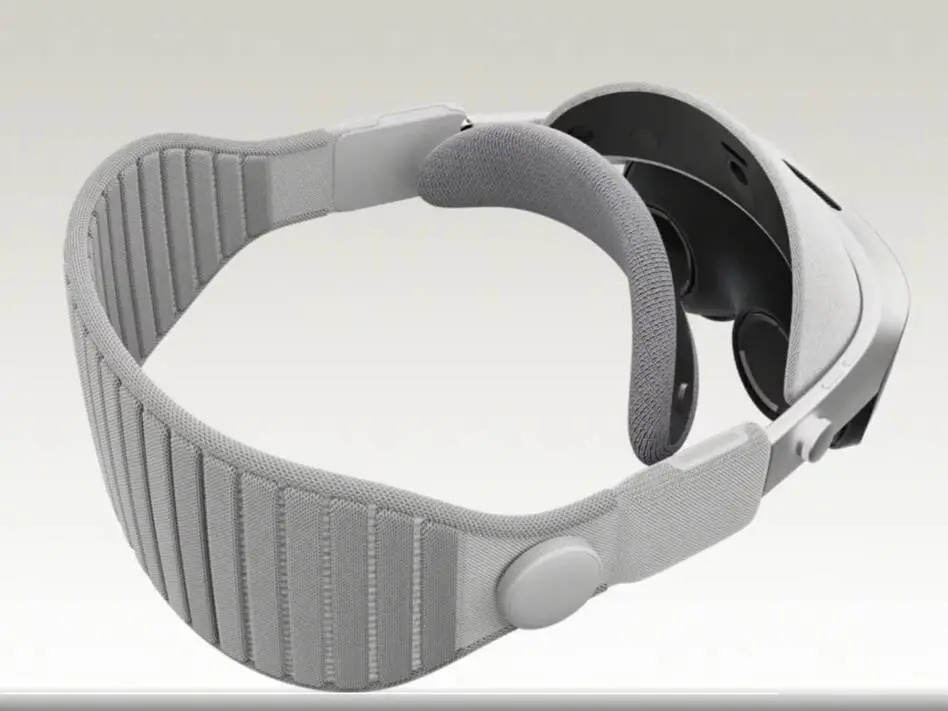
A leaked video has unveiled detailed visuals of Pico’s upcoming Project Swan mixed reality headset, stirring curiosity and speculation about the future of immersive technology. The footage, surfaced on X by user Luna (@Lunayian), was reportedly accessible via Pico’s public software development kit (SDK). Independent verification adds credibility to the leak, offering a rare glimpse into a device slated for a global launch in late 2026.
- Project Swan’s design echoes elements from Apple Vision Pro and Samsung Galaxy XR, indicating competitive ambitions.
- The headset integrates a dual-chip architecture promising significant performance gains over Qualcomm’s XR2 Gen 2 platform.
- Pico OS 6 introduces a Spatial Engine layer, enabling Android apps to function within immersive 360-degree environments.
- Launch is targeted for late 2026, with additional details expected at GDC 2026 developer session.
Visual Leak Highlights Strategic Design Choices

Project Swan’s leaked visuals reveal a headset that balances aesthetic familiarity with functional innovation. The side-mounted control button suggests streamlined system command access, while the reliance on hand gestures and head tracking points to a user experience that emphasizes natural interactions. Notably, the headset features detachable components such as the battery pack and headband supports, hinting at modularity and user customization.
These design decisions underscore Pico’s intent to position Project Swan as a serious contender in the mixed reality space, directly challenging established players by borrowing and refining successful elements rather than reinventing the wheel.
Under the Hood: Dual-Chip Architecture Promises Performance Leap
Technical disclosures reveal that Project Swan will be powered by a dual-chip architecture. A custom-built “Pico Silicon” processor is dedicated to sensing, spatial computing, and image processing, working alongside a flagship SoC that reportedly delivers more than double the CPU and GPU performance of Qualcomm’s XR2 Gen 2 platform.
This approach suggests Pico’s strategic focus on reducing latency and enhancing computational efficiency, with an end-to-end mixed reality latency of just 12 milliseconds. Such specifications signal a potential leap in user experience fluidity and responsiveness, crucial factors in immersive technologies.
Pico OS 6 and Spatial Engine: Rethinking Application Integration
The introduction of Pico OS 6 with its Spatial Engine layer represents a significant shift in how applications operate within mixed reality environments. By enabling standard Android apps to be integrated directly into immersive spaces, Pico is attempting to blur the lines between traditional and spatial computing platforms.
Features like PanoScreen allow users to arrange multiple application windows around them in a 360-degree workspace, controlled via hand gestures, controllers, keyboards, or mice. This innovation could disrupt conventional user interface paradigms and expand the utility of mixed reality headsets beyond gaming and entertainment.
Implications for the Mixed Reality Market and Beyond
The leak and accompanying details position Project Swan as a device that could recalibrate expectations for mixed reality hardware and software integration. Pico’s modular design, performance claims, and OS innovations collectively challenge dominant narratives set by Apple and Samsung, potentially diversifying the ecosystem.
However, the ambitious timeline targeting a late 2026 global launch raises questions about market readiness and competitive responses. The upcoming GDC 2026 developer session will be pivotal in revealing whether Pico’s bold claims translate into tangible advantages or if they expose trade-offs in user experience or developer adoption.
Global Availability and Market Prospects
With a planned global rollout, Project Swan aims to penetrate diverse markets, but success will hinge on how well Pico navigates regulatory landscapes, developer ecosystems, and consumer expectations. The integration of Android-based applications through the Spatial Engine could ease developer entry barriers, yet the mixed reality sector’s fragmented nature may pose challenges in achieving widespread adoption.
Ultimately, Project Swan’s leaked insights invite critical examination of platform power dynamics and the evolving economics of immersive technology, emphasizing the need for ongoing scrutiny of how such devices reshape user control, data governance, and market competition.
Reference: Pico | notebookcheck.net