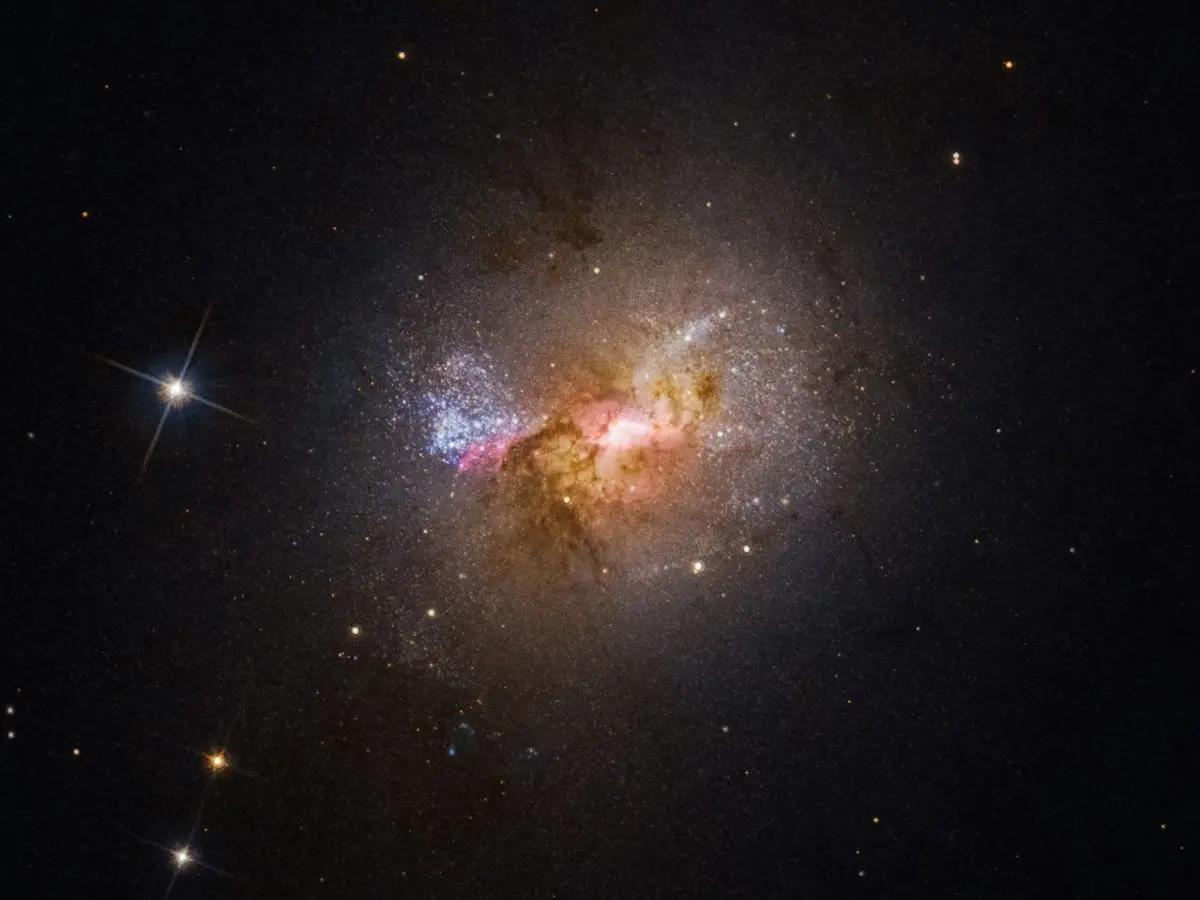
The Large Magellanic Cloud (LMC), a prominent satellite galaxy of the Milky Way located approximately 163,000 light-years away, exerts a significant gravitational influence on its smaller companion, the Small Magellanic Cloud (SMC). Recent infrared observations spanning eleven years with the Vista telescope in Chile have revealed that the LMC is actively distorting the SMC’s structure, a finding with implications for our understanding of galactic dynamics and satellite interactions.
- The SMC’s stars near its core are moving outward at speeds of 17 kilometers per second, indicating tidal disruption by the LMC.
- Infrared data from Vista telescope allowed astronomers to penetrate interstellar dust and map stellar motions with unprecedented ground-based precision.
- The SMC’s current extended and distorted shape contrasts with its likely more compact past, underscoring the transformative impact of gravitational interactions.
- This phenomenon highlights the complex interplay between satellite galaxies and their hosts in the Local Group.
The Hidden Power of the Large Magellanic Cloud
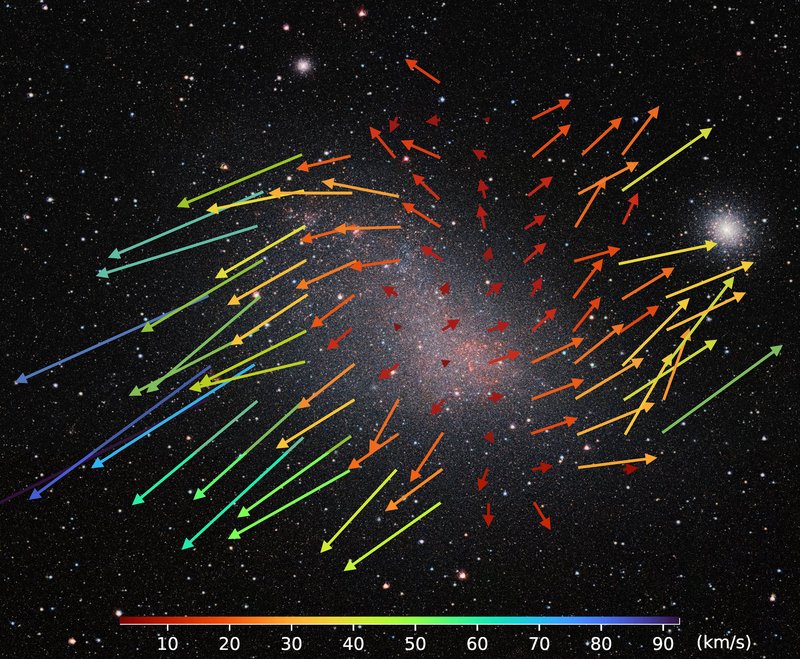
While the Milky Way’s gravitational influence on its satellite galaxies is well established, the role of the LMC as an active agent reshaping its companions has only recently become clearer. The new study, leveraging infrared observations that bypass the obscuring effects of cosmic dust, has mapped the internal kinematics of the SMC with remarkable detail. Florian Niederhofer, a key researcher, remarked on the quality of the data, emphasizing that over a decade of observations enabled an unprecedented view of the SMC’s stellar dynamics from the ground.
Gravitational Tug and Stellar Motions
The core revelation is that stars within the heart of the SMC are moving away from its center at approximately 17 kilometers per second (10.6 miles per second). This outward motion is a direct sign of tidal forces exerted by the LMC, effectively pulling and stretching the smaller galaxy. Such forces can lead to the distortion of galactic shapes and potentially influence star formation rates and the distribution of interstellar material.
Implications for Galaxy Evolution and Interactions
This gravitational interplay suggests that the SMC was once more compact, with its current elongated and disrupted morphology being a relatively recent development. These findings contribute to a more nuanced understanding of how satellite galaxies evolve under the influence of their larger neighbors. The LMC’s distorting effect challenges simplified models of satellite dynamics and highlights the importance of considering mutual interactions among satellites in the Local Group.
Technological Advances Enable Deeper Insights
The use of the Vista telescope’s infrared capabilities was crucial, as it allowed astronomers to see through interstellar dust that typically hampers optical observations. This technological edge enabled the precise tracking of stellar motions over an extended period, underscoring how advancements in observational astronomy continue to reshape our understanding of cosmic structures and their evolution.
Looking Beyond: Broader Context of Galactic Power Dynamics
The LMC’s distorting influence on the SMC is a vivid example of the complex power dynamics at play within galaxy groups. It raises questions about the long-term fate of satellite galaxies, the redistribution of matter, and the potential triggers for star formation or quenching driven by tidal interactions. Moreover, these insights may inform models of dark matter distribution and the overall mass profiles of satellite systems.
Understanding such phenomena is critical not only for astrophysics but also for broader cosmological models that rely on accurate depictions of galaxy formation and evolution. The LMC-SMC interaction serves as a natural laboratory for studying these processes up close, providing empirical data to test theoretical frameworks.
As astronomical instrumentation and data analysis techniques continue to improve, future studies will likely uncover even more intricate details of how galactic companions influence each other, further illuminating the subtle forces shaping the universe.
Reference: Notebookcheck.net